Parking lot drainage controls how long pavement lasts and how safe it is to use. When water sits on the surface or soaks into the base, it causes potholes, edge cracking, ice patches and eventual pavement failure. Good drainage depends on correct slope, working catch basins and regular maintenance, and it should be part of every asphalt paving and commercial paving decision, whether you are building a new lot or repairing an existing one.
Most parking lot problems trace back to water. Standing puddles after a rainstorm, ice patches that never seem to melt and potholes that return every spring are usually signs of a drainage problem, not just a surface one. That matters for property managers, commercial owners and condominium and townhouse boards alike. Whether you are planning new asphalt paving in Toronto or maintaining an existing lot, drainage should be built into every commercial paving project. This guide explains why parking lot drainage matters, what good drainage looks like and how to fix a lot that holds water.
Why Is Parking Lot Drainage So Important?
Asphalt and concrete are strong, but they depend on a dry, stable base underneath. Water is the biggest threat to that base. When parking lot drainage fails, water collects in low spots, seeps through cracks and softens the granular layer that supports the surface. Once the base weakens, the pavement above it sags, cracks and breaks apart under traffic.
Good parking lot drainage is not an add-on. It is part of the engineering of the lot, and it should be considered from the first day of any asphalt paving or commercial paving plan for your property.
What Does Poor Drainage Cost a Commercial Property?
Pavement Failure
Low spots that hold water become potholes. Areas where water runs along the pavement edge wear away the base and cause edge cracking. Over time, a drainage problem that could have been fixed with regrading turns into sections that need full-depth parking lot repairs, or even new commercial paving.
Freeze-Thaw Damage in Ontario
In the GTA, water that stays in or under the pavement freezes and expands overnight, then thaws during the day. Each cycle pushes cracks wider and lifts sections of asphalt. Lots with poor parking lot drainage often show the worst winter damage, with potholes and heaving that return every spring no matter how often they are patched. This is why commercial paving in Ontario has to account for winter from the start.
Safety and Liability
Standing water creates slip hazards for pedestrians and reduces traction for vehicles. In winter, puddles turn into ice patches near entrances and walkways. Water can also hide pavement markings and potholes, which increases the risk of trips, falls and vehicle damage. For property owners and managers, that adds up to real liability exposure, and better parking lot drainage is the most direct way to reduce it.
Higher Lifetime Costs
Every repair on a poorly drained lot is temporary until the water problem is solved. Patches fail, sealcoat wears early and the surface needs replacement sooner. Fixing parking lot drainage first protects every dollar spent on asphalt paving, sealcoating and repairs afterward.
What Does Good Parking Lot Drainage Look Like?
Correct Grading and Slope
On a well-designed lot, asphalt paving is graded so water moves steadily toward drains instead of pooling. Industry guidance for asphalt paving typically calls for a minimum slope of about 1 to 2 percent across the surface. Too flat, and water sits. Too steep, and runoff moves fast enough to cause erosion at the edges.
Catch Basins in the Right Places
Catch basins collect runoff and send it into the storm sewer system. They need to sit at the low points of the lot, with frames and collars set at the correct height. A catch basin that has sunk or shifted creates a depression around it that holds water and breaks down the surrounding asphalt. Setting catch basins correctly is a core step in any commercial paving project.
Controlled Edges and Curbs
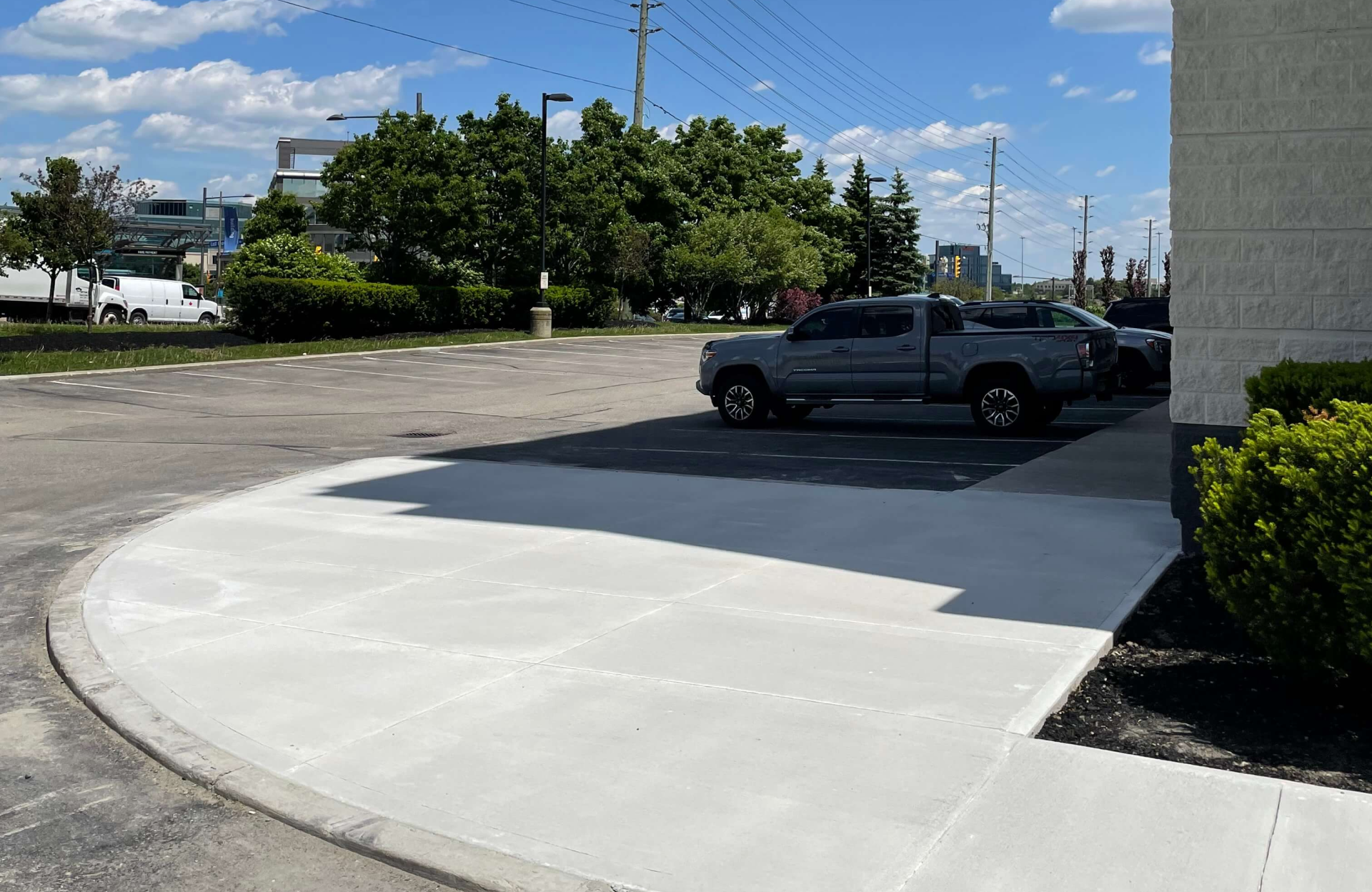
Concrete curbs and gutters guide water toward drains and protect the pavement edge. Where curbs are damaged or missing, water runs off the edge and undermines the base, which is a common cause of edge cracking on commercial paving and older asphalt paving alike.
Pollution Control
Parking lot runoff carries oil, grease, salt and debris. Many municipalities require stormwater controls on commercial sites, so proper parking lot drainage also helps owners stay compliant and protect local waterways.
How Do You Fix a Parking Lot That Holds Water?
The right fix depends on the cause, which is why every parking lot drainage project should start with a site assessment. Common solutions include:
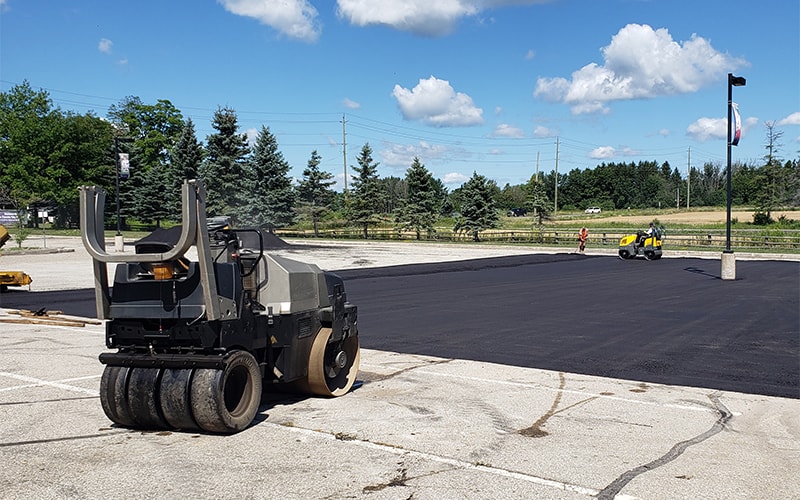
• Regrading low areas: milling and repaving sections with new asphalt paving so water flows to existing drains.
• Catch basin repair: rebuilding sunken or cracked catch basins and resetting frames to grade.
• New catch basins: adding drains where a large area has no outlet for water.
• Curb repair or replacement: restoring curbs that no longer channel water correctly.
• Full reconstruction: rebuilding the base and installing new commercial paving when water damage has spread too far for spot repairs.
For new asphalt paving, the best time to get drainage right is at the design stage, before any material is placed. For existing lots, correcting drainage before resurfacing or sealcoating keeps the new work from failing early.
How Often Should Drainage Be Inspected?
Inspect parking lot drainage at least twice a year, ideally in spring and fall. Walk the lot after a heavy rain and note where water collects and how long it stays. Check catch basins for debris, sinking frames and cracked collars, and look for asphalt breaking up around drains. Cleaning catch basin sumps on a regular schedule keeps them from backing up during storms. Recording what you find each season gives you a clear history of how parking lot drainage is performing over time. Building these checks into your commercial paving maintenance plan catches small issues before they turn into major repairs.
Why Choose Seal Canada for Parking Lot Drainage Solutions?
Seal Canada works with property managers, facility managers, condo corporations and commercial owners across Toronto, Vaughan, Mississauga, Markham, Richmond Hill, Barrie and the wider GTA. Our services cover asphalt paving, commercial paving, site servicing and grading, catch basin repair and installation, concrete curbs, asphalt repairs and sealcoating, so drainage fixes and pavement work are handled by one team.
Every project starts with a free site assessment and a detailed written report that shows where water is collecting, what is causing it and what should be fixed first. We schedule around tenants and residents, respond promptly and offer 24/7 emergency service. The goal is work completed well above industry standards, on time and on budget, with honest advice on the right fix for your lot, from drainage repairs to full asphalt paving and commercial paving projects.
Frequently Asked Questions
1. What causes standing water in a parking lot?
The most common causes are low spots from settlement, a slope that is too flat, sunken or blocked catch basins and damaged curbs. A site assessment identifies which one applies and whether the fix needs regrading or new asphalt paving.
2. What slope does a parking lot need for drainage?
Most asphalt lots are designed with a minimum slope of about 1 to 2 percent toward drains. The exact grade depends on site conditions and municipal requirements.
3. Can drainage be fixed without repaving the whole lot?
Often, yes. Regrading low areas, rebuilding catch basins or adding a new drain can solve the problem without full replacement or new commercial paving, as long as the base is still sound.
4. How often should parking lot catch basins be cleaned?
Most commercial lots benefit from an annual cleaning, with more frequent service on sites with heavy debris, sand or leaf buildup.
5. Why do potholes keep coming back in the same spot?
Repeat potholes usually mean water is collecting there and weakening the base. Until the parking lot drainage issue is fixed, patches in that area will keep failing.
Standing water today means pavement failure tomorrow. Contact Seal Canada to book a free drainage assessment and a pavement specialist will find where water is collecting, identify the cause and give you a detailed written report with clear, prioritized recommendations for your parking lot drainage.
Key Takeaways
• Water is the leading cause of pavement failure, and parking lot drainage controls how long a lot lasts.
• Poor drainage leads to potholes, edge cracking, ice patches and liability risk.
• Good drainage relies on correct slope, well-placed catch basins and intact curbs.
• Fix drainage before resurfacing or sealcoating so new work does not fail early.
• Inspect drains in spring and fall and after heavy rain.
• Plan drainage at the design stage of any asphalt paving or commercial paving project.