The most useful asphalt paving innovations for commercial properties are warm mix asphalt, recycled asphalt pavement (RAP), polymer-modified binders, perpetual pavement design, intelligent compaction, porous asphalt and infrared repair. Each one targets a different goal, from lower emissions to better compaction and stronger asphalt durability under heavy traffic. The right choice depends on your lot, your traffic and Ontario’s freeze-thaw climate, so newer paving technology works best when it is matched to the site by an experienced contractor.
Asphalt paving innovations have changed the industry in the last two decades. Mix designs, binders and paving technology have all improved, and new methods now help pavement last longer, cost less to maintain and leave a smaller environmental footprint. For property managers, facility managers and commercial owners, knowing what is available makes it easier to ask the right questions before signing a paving contract. This guide explains the latest asphalt paving innovations, what each one does well and where it fits on a commercial lot. Seal Canada follows these developments closely so clients get dependable commercial asphalt paving services built for GTA conditions.
Why Do Asphalt Paving Innovations Matter for Commercial Lots?
A commercial parking lot is a long-term asset. It carries cars, delivery trucks, garbage trucks and snowplows every week, and it goes through dozens of freeze-thaw cycles every winter. Small improvements in mix quality, compaction and material selection can add years to its service life, which is why paving technology matters to owners.
That is where modern asphalt paving innovations earn their place. Better paving technology can improve asphalt durability, reduce lifetime maintenance and lower the environmental impact of construction. For anyone planning parking lot paving in Toronto or across the GTA, understanding these options helps you compare quotes on more than price alone.
What Are the Latest Asphalt Paving Innovations?
1. Warm Mix Asphalt (WMA)
Warm mix asphalt is produced and placed at temperatures roughly 20 to 40°C lower than traditional hot mix asphalt. Additives or foaming processes let the mix stay workable at those lower temperatures. The benefits include reduced fuel use, lower emissions, less smoke on site and better working conditions for crews. WMA can also extend the paving season slightly, because the mix stays workable longer in cooler weather, which is useful in Ontario’s spring and fall. Of all asphalt paving innovations, it is the one most focused on cleaner production.
2. Recycled Asphalt Pavement (RAP)
RAP is old asphalt that has been milled, processed and blended into new mix. Reusing it reduces the need for new aggregate and binder, cuts trucking and landfill waste and can lower material costs. Properly designed RAP mixes perform comparably to all-new mixes, though the aged binder in RAP is stiffer, so the percentage used needs to be controlled to protect asphalt durability and crack resistance. It is one of the most widely used asphalt paving innovations in Ontario today.
3. Polymer-Modified Asphalt
Polymer-modified binders add materials that make asphalt more elastic in cold weather and more resistant to rutting in summer heat. This paving technology is especially useful in truck courts, loading areas, drive-thru lanes and entrances where heavy vehicles turn and stop. The result is stronger asphalt durability in the spots that usually fail first. Among asphalt paving innovations for commercial sites, it offers the clearest benefit in high-stress areas.
4. Perpetual Pavement Design
Perpetual pavement is a layered paving technology that uses multiple asphalt layers designed so that structural damage never reaches the bottom of the section. A strong, flexible base layer resists fatigue cracking for long-term asphalt durability, while a renewable top layer takes the wear. When the surface eventually ages, only the top lift needs milling and replacing. The approach is most common on highways and heavy industrial sites, but the same thinking applies to warehouse yards and distribution centres, which makes it one of the more practical asphalt paving innovations for industrial owners.
5. Intelligent Compaction
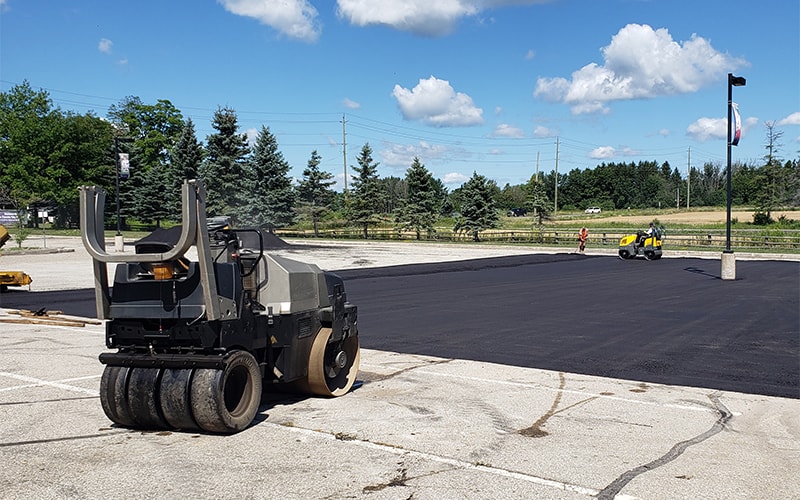
Intelligent compaction is paving technology that uses rollers equipped with sensors and GPS to measure stiffness and track every pass in real time. It helps crews reach the right density across the whole surface and spot weak areas before the job is finished. Correct compaction is one of the biggest factors in asphalt durability, because under-compacted asphalt lets in water and fails early, leading to premature parking lot repairs.
6. Porous Asphalt
Porous asphalt is a drainage-focused paving technology with open spaces in the mix that let water drain through the surface into a stone reservoir below. It reduces runoff, helps with stormwater management and can cut down on ponding. It requires careful design, a suitable subgrade and regular vacuum cleaning to stay open, so it suits some sites better than others. Like other asphalt paving innovations, it delivers the most value on the right site.
7. Infrared Asphalt Repair
Infrared repair heats damaged asphalt in place so it can be reworked and blended with fresh mix, creating a seamless patch without cut joints that supports asphalt durability around the repair. It is a useful maintenance tool for potholes, raised areas and utility cuts, and it shows how paving technology is improving repairs as well as new construction.
How Does Paving Technology Handle Ontario Winters?
Ontario’s climate is the real test for any pavement. Freeze-thaw cycles, road salt and snowplows punish weak spots, so the most valuable asphalt paving innovations for GTA properties are the ones that improve flexibility, density and drainage, the three pillars of asphalt durability. Polymer-modified binders resist low-temperature cracking, intelligent compaction reduces the air voids that let water in, and well-designed RAP mixes balance cost with performance.
No paving technology replaces the basics, though. A properly prepared granular base, correct slope and working drainage still decide how long a lot lasts and how much asphalt durability you get from any mix. New materials work best when they are added to a solid foundation.
How Do You Choose the Right Asphalt Paving Innovations?
Not every new paving technology makes sense for every lot. Before your next paving project, ask your contractor a few direct questions:
• Traffic: Does the lot carry heavy trucks or mostly cars, and where do heavy vehicles turn and stop?
• Mix design: Which asphalt mix is specified for each layer, and how much RAP does it contain?
• Compaction: What compaction paving technology will be used, and how will density be checked and documented?
• Drainage: How will the design move water off the lot and away from the base?
• Maintenance: What crack sealing and sealcoating schedule will protect asphalt durability after paving?
Clear answers to these questions tell you more about long-term value than the price on the quote. The best asphalt paving innovations are the ones chosen for your specific site, not the ones with the newest name.
How Seal Canada Applies Modern Paving Technology
Seal Canada works with property managers, facility managers, condo corporations and commercial owners across Toronto, Vaughan, Mississauga, Markham, Richmond Hill, Barrie and the wider GTA. We handle asphalt paving, repairs, crack sealing, sealcoating, line painting and concrete work, and we recommend materials, methods and asphalt paving innovations based on what each site actually needs.
Every project starts with a free site assessment and a detailed written report covering current condition, recommended mix and scope, and a maintenance plan to protect asphalt durability after the work is done. Learn more about our commercial paving and maintenance services. We schedule around tenants and operations, respond promptly and offer 24/7 emergency service, with work completed well above industry standards, on time and on budget.
Frequently Asked Questions
1. What is the newest technology in asphalt paving?
Leading asphalt paving innovations include warm mix asphalt, higher-recycled-content mixes, polymer-modified binders, intelligent compaction, porous asphalt and infrared repair. Each targets a different goal, from emissions to compaction quality. The best paving technology for a lot depends on traffic, drainage and budget.
2. Is recycled asphalt as strong as new asphalt?
When the mix is designed correctly and the recycled percentage is controlled, RAP mixes perform comparably to all-new asphalt and are widely used in Ontario, with no loss of asphalt durability.
3. Does warm mix asphalt last as long as hot mix?
Yes, when properly designed and compacted. Warm mix is mainly about lower energy use, lower emissions and better working conditions, not shorter service life or weaker asphalt durability.
4. Is porous asphalt a good choice for a commercial parking lot?
It can be on sites with suitable soils and stormwater goals, but it needs careful design and regular vacuum cleaning. A site assessment will show whether it fits your lot.
5. What improves asphalt durability the most?
A solid base, correct compaction, good drainage and a regular maintenance program of crack sealing and sealcoating. New materials add to those basics but do not replace them.
Planning a paving project and want to know which asphalt paving innovations fit your site? Contact Seal Canada to book a free site assessment and a pavement specialist will review your lot and give you a detailed written report with clear, prioritized recommendations.
Key Takeaways
• Asphalt paving innovations improve durability, efficiency and sustainability on commercial lots.
• Warm mix and recycled asphalt reduce emissions and material use without sacrificing performance or asphalt durability when designed correctly.
• Polymer-modified binders and intelligent compaction target the weak spots that fail first in Ontario winters.
• Porous asphalt and infrared repair are paving technology options for specific sites and repair needs.
• Base preparation, drainage and maintenance still decide how long any lot lasts.