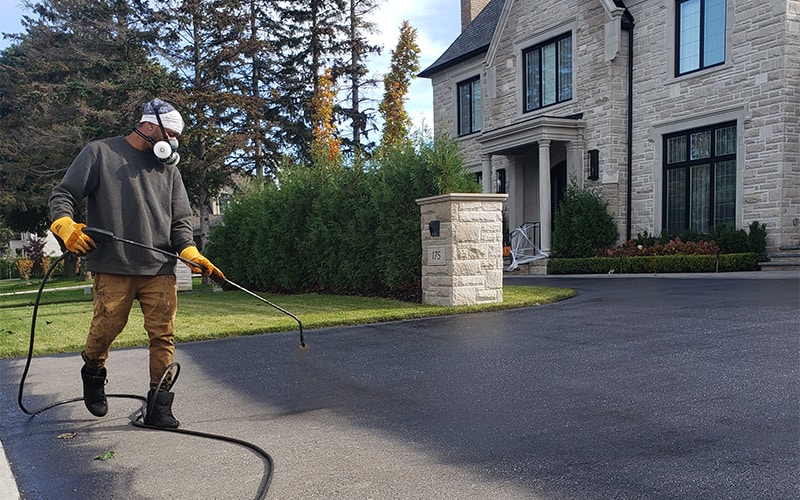
A commercial paving project is a significant capital outlay for any property manager or owner. Whether you are paving a new parking lot, resurfacing an existing one, or planning a phased maintenance program, the decisions made at the start determine how well that investment holds up over the next 15 to 25 years. This guide covers the material choices, design principles, and maintenance practices with the highest documented impact on pavement longevity.
The Lifecycle Approach to Commercial Pavement Management
Commercial pavement is not a one-time expense. It is an asset that either appreciates through good management or degrades into a liability through neglect. Property managers, asset managers, and commercial property owners in Ontario who approach paving as a long-term asset consistently achieve better outcomes and lower total lifecycle costs than those who make decisions based on lowest upfront bid price alone.
The concept of maximizing your paving investment is straightforward: spend wisely upfront, maintain consistently, and address problems at the smallest and least expensive stage. Seal Canada works with commercial clients across the GTA to help them structure paving programs that deliver this outcome.
Start With Material Selection That Matches Your Site
Asphalt vs. Concrete for Commercial Properties
The first decision that shapes your paving investment is material selection. Asphalt and concrete serve different commercial applications well, and the wrong choice for a given site condition significantly increases long-term maintenance costs.
Asphalt is the dominant choice for commercial parking lots in Ontario for several reasons. It is less expensive to install, can be opened to traffic within hours of placement, and is well-suited to the province’s freeze-thaw climate because of its flexibility. Surface distress is also localized and repairable without replacing the entire installation. The primary ongoing cost is sealcoating every two to three years and periodic crack sealing.
Concrete performs better in areas of concentrated heavy traffic: loading dock aprons, drive-through lanes, and areas with significant vehicle turning stress. Its compressive strength handles point loads that would deform asphalt, and its lifespan is longer when properly installed and maintained. However, concrete is significantly more expensive to install and repair, and Ontario’s de-icing salt environment requires protective sealing to manage chloride ingress.
Quality of Materials
Within either material category, mix design and material quality are decisive factors. Asphalt mixes specified for high-traffic commercial applications use polymer-modified binders that resist rutting and cracking more effectively than standard mixes. Concrete mixes should be specified for the anticipated traffic classification and exposure class. The National Asphalt Pavement Association publishes mix design guidance for commercial applications that contractors working at Seal Canada’s standard reference as a baseline.
Design and Drainage: Where Most Paving Investments Fail
Poor drainage design is the single most common reason a commercial paving project fails to deliver its expected lifespan. Water is asphalt and concrete’s most damaging exposure agent, and a lot that does not drain properly concentrates water in areas where it accelerates deterioration through freeze-thaw cycling and sub-base saturation.
A well-designed commercial lot incorporates a minimum 1-2% slope toward collection points, catch basins positioned at actual drainage low points, and subsurface drainage aggregate designed to carry water away from the base. These are engineering decisions made at the design stage that cannot be corrected cheaply after pavement is laid. Seal Canada’s commercial paving process includes a drainage review on every new installation to confirm that the proposed layout will actually perform.
Quality of Installation: The Foundation of Pavement Value
The difference between a 10-year pavement and a 25-year pavement is often determined in the first days of installation. Sub-base preparation, compaction quality, lift thickness, and joint construction are construction-phase decisions that cannot be retroactively corrected without significant expense.
- Sub-base depth should be specified based on a geotechnical assessment of the existing soil, not a generic rule of thumb.
- Asphalt compaction should achieve a minimum of 92-95% of maximum theoretical density. Insufficient compaction creates a pavement that fails under load and in freeze-thaw cycles.
- Lift thickness must be appropriate for the compactor being used. Applying too thick a single lift traps air voids that become weakness zones.
- Cold joints, where fresh asphalt meets a cooled existing edge, are primary locations for early cracking. Skilled contractors manage joint temperatures and use tack coat to bond them correctly.
Choosing a contractor based on the lowest bid without verifying their compaction practices, equipment, and sub-base specification is among the most expensive decisions a property manager can make. Seal Canada carries detailed project documentation on every asphalt paving engagement so clients can verify what was actually built.
The Maintenance Program That Protects Your Investment
Sealcoating
Applied every two to three years, sealcoating is the single highest-return maintenance action for an asphalt paving investment. It replaces oxidized surface oils, seals micro-pores against water and chloride infiltration, and extends pavement flexibility. The cost of sealcoating is a fraction of the overlay or replacement cost it defers. Seal Canada’s sealcoating services are calibrated to Ontario’s climate and are typically scheduled in late spring or early fall when temperatures are stable.
Crack Sealing
Any crack that opens in the surface layer should be sealed within the same season it appears. Hot-applied rubberized crack sealant remains flexible through freeze-thaw cycles, preventing the crack from widening and blocking water infiltration at the point where it is least expensive to address. Seal Canada’s crack sealing program classifies cracks before applying material to match the sealant type to the crack behavior.
Regular Inspections
An annual post-winter inspection documents all new cracks, surface distress, drainage concerns, and line marking degradation. This inspection creates a prioritized maintenance list for the season and provides the data needed to budget accurately. Properties that operate from a documented inspection record consistently spend less on emergency repairs than those that respond to problems as they become severe.
Environmental Factors That Affect Pavement Value in Ontario
Ontario’s climate presents specific challenges that should inform both material and maintenance decisions. Freeze-thaw cycles, which can number 40-60 in a typical Toronto area winter according to Environment and Climate Change Canada, are the primary natural deterioration force for both asphalt and concrete.
De-icing salt management is equally important. Salt accelerates both asphalt oxidation and concrete chloride ingress. Using less harmful de-icing agents, applying sealcoating before winter, and cleaning residual salt off surfaces in spring are all practices that extend pavement life at low incremental cost. The Transportation Association of Canada publishes de-icing product guidance for commercial property operators that outlines less pavement-damaging alternatives to road salt.
Protecting Your Paving Investment Over the Long Term
A well-managed commercial pavement program is not complicated. It requires good upfront decisions on materials and design, quality installation from a contractor who can document their work, and a consistent maintenance rhythm that catches problems at their least expensive stage. The properties that achieve 20-plus-year pavement lifespans are not doing anything unusual. They are simply maintaining consistently.
Whether you are planning a new installation, evaluating an existing lot, or building a long-term maintenance budget, Seal Canada can help you structure an approach that maximizes the return on your paving investment. Contact us to schedule a free site assessment.
Frequently Asked Questions
1. What is the biggest factor in determining how long a paving investment lasts?
Drainage is consistently the most significant factor in pavement longevity. A lot that pools water or allows moisture to penetrate the sub-base will deteriorate faster than a lower-quality installation with excellent drainage. After drainage, sub-base preparation quality and compaction during installation are the next most influential factors. Sealcoating and crack sealing determine how well the surface holds up between major interventions.
2. Is asphalt or concrete a better paving investment for Ontario commercial properties?
Asphalt provides a better return in most commercial parking lot applications in Ontario because of lower installation cost, freeze-thaw flexibility, and ease of targeted repair. Concrete is the better choice for heavy-duty loading zones, dock areas, and high-stress turning lanes where concentrated stress loads exceed asphalt’s practical limits. A site with mixed use often benefits from both materials in their appropriate zones.
3. How much does sealcoating add to a pavement’s lifespan?
Industry data from the National Asphalt Pavement Association indicates that sealcoated pavement consistently outlasts unsealed pavement by 30-50% under comparable traffic and climate conditions. The mechanism is simple: sealcoating replaces oxidized binder oils that make asphalt brittle, keeping the surface flexible and impermeable to water. The cost of a sealcoating program over 20 years is a fraction of the cost of one early resurfacing that proper maintenance would have deferred.
4. What should I look for when choosing a commercial paving contractor?
Verify that the contractor uses calibrated compaction equipment and can provide compaction test results on request. Ask for references from commercial projects of similar scale and scope. Confirm that the contractor’s warranty is in writing and specifies what conditions it covers. Review their sub-base specification before signing any contract.
5. When is the best time of year to pave in Ontario?
Asphalt paving in Ontario is typically scheduled between late April and late October when ground temperatures are above 10 degrees Celsius. The optimal window is late spring through early fall when temperatures are stable and rainfall is moderate. Paving during unseasonably cold periods increases the risk of premature cooling of the asphalt mix before adequate compaction is achieved.
Request a Free Paving Assessment
Whether you are planning a new installation or evaluating the long-term maintenance strategy for an existing lot, a conversation with Seal Canada is the best starting point. We assess current pavement conditions, review drainage, and develop a maintenance or installation plan structured around your property’s specific needs.
Reach us at 1-866-672-2022 or 416-827-5072.
Key Takeaways
- Material selection, drainage design, and installation quality are the three decisions with the highest long-term impact on your paving investment.
- Asphalt is the better choice for most Ontario commercial parking lots; concrete is preferred for heavy loading zones and high-stress turning areas.
- Sealcoating every two to three years extends pavement life by 30-50% compared to unsealed surfaces under comparable conditions.
- Crack sealing within the same season a crack appears is the most cost-effective maintenance action available for asphalt surfaces.
- Poor drainage is the most common reason a paving investment fails to deliver its expected lifespan. Address drainage at the design stage, not after installation.
- A post-winter inspection and documented maintenance log are the operational habits that separate well-managed commercial pavement from reactive, high-cost pavement.