Oil stains and pavement surface damage are predictable and preventable with the right combination of protective treatments, regular maintenance, and prompt spill response. This guide covers the most effective oil stain prevention methods for commercial asphalt and concrete, along with strategies for managing the surface damage that chemical and weather exposure cause over time.
Why Oil Stains Are More Than a Cosmetic Problem
A motor oil or hydraulic fluid stain is not just an eyesore on a commercial parking lot. Petroleum products soften the asphalt binder when they penetrate the surface, reducing the structural integrity of the pavement layer and accelerating the breakdown that produces raveling, surface deformation, and cracking. A heavily oil-stained area that receives no treatment becomes a localized soft spot that deforms under vehicle loads and eventually requires cut-and-patch repair.
For concrete surfaces, oil and fuel penetration causes surface scaling and staining that is much harder to remove than from asphalt. Concrete’s porous structure absorbs petroleum compounds readily, and the chemical interaction with the cement matrix can cause localized deterioration over time.
Oil stain prevention is therefore a pavement preservation strategy, not just a cleaning protocol. The measures that keep petroleum compounds off the surface also protect the structural performance and service life of the pavement.
Strategy 1: Sealcoating as the Primary Oil Stain Prevention Defense
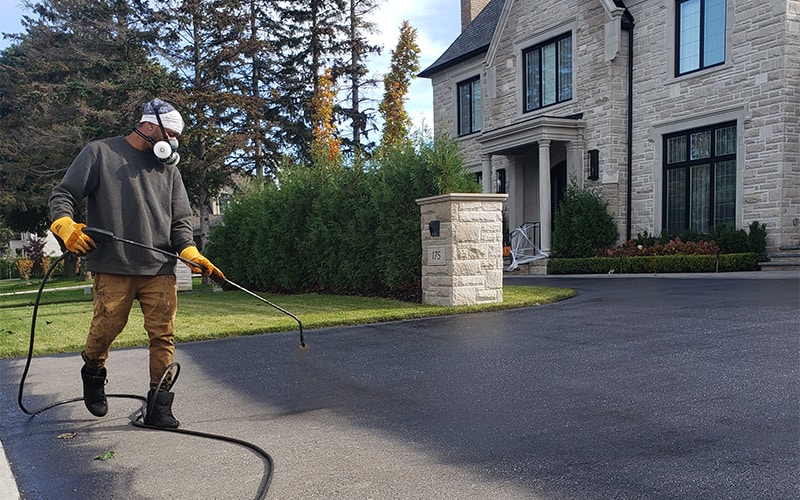
A properly applied sealcoat is the most effective oil stain prevention measure available for asphalt parking lots. The sealer creates a dense, closed surface layer that dramatically reduces the permeability of the asphalt to petroleum compounds. Oil that contacts a freshly sealed surface sits above the pavement rather than penetrating it, giving maintenance staff time to remove it before it causes damage. Asphalt sealcoating applied consistently across the maintenance cycle is the single most impactful oil stain prevention investment in a commercial parking lot program.
Commercial lots should be sealcoated on a three-to-five-year cycle based on surface condition at inspection. Each successive sealcoating application restores the protective barrier and re-closes any micro-permeability that has developed through surface oxidation and traffic wear.
For concrete surfaces, penetrating sealers and surface-applied densifiers reduce porosity and chemical penetration. These products require reapplication on a schedule determined by traffic intensity and weather exposure, typically every two to three years for commercial applications.
Strategy 2: Absorbent Pads and Drip Barriers
In parking areas where vehicles with known leak history are regularly parked, such as older delivery trucks, construction equipment staging areas, and fleet vehicle lots, absorbent drip pads placed beneath parking positions provide a practical physical oil stain prevention measure. Pads capture small drips and slow leaks before they contact the pavement surface.
Granular absorbent material, such as kitty litter or purpose-made oil-dry products, should be kept accessible at the property maintenance location. Spread granular absorbent immediately over any oil or fluid spill, allow it to absorb the liquid, and sweep it up before it is tracked across the lot by vehicle or foot traffic.
Strategy 3: Prompt Spill Response Protocol
Time is the critical variable in oil stain prevention after a spill occurs. Petroleum compounds penetrate asphalt and concrete progressively; the first thirty minutes after a spill determine most of the damage. A documented spill response protocol ensures the right materials and actions are taken before significant penetration has occurred.
The protocol should specify: who is responsible for responding to spills across the property, where absorbent materials and cleaning agents are stored, what cleaning agent is appropriate for the spill type, how contaminated absorbent material should be disposed of in compliance with Ontario environmental regulations, and when a spill is large enough to require professional environmental response. Environment and Climate Change Canada provides regulations and guidance on petroleum product spill response and disposal that commercial property managers in Ontario must comply with when managing spills above threshold volumes.
Strategy 4: Regular Sweeping and Pressure Washing
Regular cleaning removes not just oil stains but the debris, grit, and chemical residue that abrade the sealcoated surface and accelerate weathering. Sweeping at least weekly on high-traffic commercial lots removes the abrasive layer that mechanical surface wear acts through. Monthly pressure washing removes tire rubber deposits, oil residue, and chemical buildup that sweeping leaves behind.
For stubborn oil stains that have penetrated a sealcoated surface, appropriate degreasers formulated for asphalt compatibility should be used. Avoid high-alkaline cleaners and solvents that attack the asphalt binder or sealcoat chemistry. Test any new cleaning product on a small area before applying it broadly across the lot.
After cleaning stained areas, inspect whether the sealcoat has been compromised by the penetration or the cleaning process. Spot re-sealing of damaged areas can restore surface protection without requiring a full sealcoating cycle. Browse Seal Canada’s completed projects to see how we approach surface protection across Ontario commercial properties.
Preventing Surface Damage Beyond Oil Stains
Drainage Management
Water is the most damaging substance commercial pavement encounters over its service life, and surface damage from water exposure, pooling, and freeze-thaw infiltration dwarfs the damage from oil stains in total scope and cost. Proper drainage design, maintained catch basins, and slope correction keep water moving off the surface rather than accumulating. Seal Canada’s guide to parking lot winter preparation covers drainage clearing and freeze-thaw protection in full seasonal detail.
Inspect catch basins after every significant rain event and after fall leaf drop. Address any pooling areas with grade correction before winter freeze. The pavement around blocked or subsided catch basins deteriorates faster than any other area on the lot because it combines water accumulation with vehicle loading over compromised subbase material.
Crack Prevention Through Timely Treatment
Surface damage progresses through a predictable sequence: oxidation and minor surface cracking, water infiltration through cracks, subbase erosion and frost heave, pothole formation. Interrupting this sequence at the crack stage through prompt crack sealing prevents every subsequent stage. Crack sealing is therefore the most direct surface damage prevention measure available between sealcoating cycles.
Traffic Management and Load Control
Heavy vehicle overloading and repeated tight-turn stress from large vehicles accelerate surface wear in specific areas of commercial lots. Drive lane entry points, areas near loading docks, and tight corners near building perimeters show accelerated deterioration when commercial vehicle turning patterns concentrate stress in those locations.
Signage directing heavy vehicles to appropriate access routes, pavement section upgrades at loading dock aprons and heavy vehicle routes, and weight restriction enforcement where warranted are traffic management measures that reduce surface damage from mechanical stress.
Chemical Exposure from De-Icing Products
Sodium chloride de-icing salt is one of the most common sources of pavement surface damage on Ontario commercial lots. Repeated salt application softens asphalt binders, accelerates oxidation, and on concrete surfaces promotes reinforcement corrosion and surface scaling. The CSA Group and Transportation Association of Canada both address de-icing chemical selection in their pavement maintenance standards. Using calcium magnesium acetate, potassium acetate, or sand in place of sodium chloride reduces chemical surface damage substantially.
Keep Your Pavement Protected Before Problems Set In
Oil stain prevention and surface damage management are not reactive tasks. They are part of a proactive pavement maintenance program that protects the structural and aesthetic value of the lot over its full service life. The measures that keep oil stains off the surface are the same measures that extend pavement life and reduce total maintenance cost.
Frequently Asked Questions
1. How does sealcoating prevent oil stains on asphalt?
Sealcoating creates a dense, low-permeability surface layer that significantly reduces asphalt’s absorption of petroleum compounds. Oil that contacts a properly sealed surface sits above the pavement rather than penetrating it, allowing cleanup before structural damage occurs. The protective benefit is active only while the sealcoat is in good condition, reinforcing the importance of maintaining a regular three-to-five-year sealcoating cycle.
2. What is the fastest way to remove a fresh oil stain from asphalt?
Apply granular absorbent material immediately to absorb the liquid. Once absorbed, sweep up the material and treat the stained area with an asphalt-compatible degreaser. Rinse thoroughly. The sooner the response, the less petroleum compound penetrates the surface. Do not use solvent-based cleaners that can attack the asphalt binder.
3. Can oil-stained asphalt be repaired without replacing the pavement?
In most cases, yes. Localized oil-damaged areas where the binder has been softened can be addressed with infrared repair or cut-and-patch methods that remove the damaged material and replace it with fresh asphalt. Following repair, sealcoating the repaired area restores surface protection. Extensive oil saturation affecting a large area may require more significant rehabilitation.
4. How does regular sweeping prevent surface damage beyond cleaning?
Sweeping removes abrasive grit and debris that acts as a mechanical wear layer between vehicle tires and the sealcoated surface. Tire-on-grit contact abrades the sealcoat more rapidly than tire-on-sealed-surface contact. Removing this abrasive layer through regular sweeping measurably extends the effective service life of each sealcoating application.
5. What chemical de-icing products are safest for asphalt?
Calcium magnesium acetate and potassium acetate are the least damaging de-icing compounds for asphalt and concrete surfaces. Sand provides traction without chemical exposure. Sodium chloride (rock salt) is the most common product but causes the most cumulative surface and subgrade damage over multiple winter applications.
6. How often should oil-stained areas of a commercial lot be inspected?
Areas with regular vehicle leak exposure, such as near fleet vehicle parking or loading dock approaches, should be inspected monthly. Look for surface softening, staining spread, or aggregate loss in the stained area, which indicate that the pavement binder has been affected beyond the surface and corrective action is needed.
Protect Your Commercial Pavement with Preventive Maintenance
Preventing oil stains starts with a proactive pavement maintenance program. Seal Canada helps commercial property owners across Ontario protect asphalt and concrete surfaces through professional sealcoating, crack sealing, line striping, drainage assessments, and routine pavement inspections. Contact us to discuss a customized maintenance plan that reduces surface damage, extends pavement life, and minimizes long-term repair costs.
Key Takeaways
- Sealcoating is the primary oil stain prevention measure for asphalt. A dense, intact sealcoat surface reduces petroleum penetration and allows cleanup before structural damage occurs.
- Prompt spill response within the first 30 minutes prevents most petroleum compound penetration. A documented spill response protocol ensures the right action is taken immediately.
- Drainage management prevents the water-related surface damage that is more costly in total scope than oil stain damage. Blocked catch basins and pooling areas require correction before winter.
- Crack sealing interrupts the progressive surface damage sequence at the earliest stage. Prompt crack sealing prevents the water infiltration that causes all subsequent failure modes.
- De-icing product selection matters. Calcium magnesium acetate and sand cause significantly less cumulative pavement damage than sodium chloride over multiple winter seasons.