Ontario’s freeze-thaw cycle is the most destructive force commercial asphalt faces each year. Parking lot winter preparation completed in fall, covering crack repair, sealcoating, drainage clearing, and marking updates, dramatically reduces spring damage and avoids the emergency repair costs that follow a neglected winter season.
How Ontario Winters Damage Commercial Parking Lots
Water is the primary driver of pavement deterioration in Ontario’s climate, and winter amplifies its impact. When water enters unsealed cracks and the temperature drops below zero, that water expands by approximately nine percent as it freezes. The expansion applies pressure to the surrounding pavement, forcing crack edges apart. As temperatures rise and the ice melts, the enlarged crack accepts more water, and the next freeze cycle widens it further. Over a single Ontario winter season, this process can turn a 3mm hairline crack into a 25mm structural crack. Over two or three seasons without intervention, the same crack becomes a pothole requiring cut-and-patch repair at ten to fifty times the cost of the original crack sealing. Seal Canada’s guide to long-term parking lot maintenance covers the full lifecycle cost comparison of preventive versus reactive repair.
De-icing salts compound the damage. Sodium chloride penetrates concrete surfaces and causes reinforcement corrosion. On asphalt, repeated salt application softens the binder and accelerates oxidation at the surface boundary. The CSA Group publishes pavement material standards that include guidance on de-icing chemical compatibility with both asphalt and concrete surfaces used across Canadian commercial properties.
Step 1: Conduct a Fall Condition Inspection
Parking lot winter preparation begins with knowing what the lot currently looks like in detail. Walk the entire surface before the end of October and document every crack wider than 2mm, any pothole or depression, areas where drainage ponding occurs after rain, faded line markings that will be invisible under snow, and any lighting fixtures that need replacement before shorter days arrive.
Photograph each finding with a dated image. This inspection record serves three purposes: it drives your repair prioritization, it provides a baseline for comparing spring condition after winter, and it documents due diligence for liability purposes if a winter incident occurs on the property.
Seal Canada provides professional fall condition assessments for commercial lots across Ontario. A professional inspection catches subsurface issues, drainage problems, and early-stage deterioration that a visual walk-through may miss.
Step 2: Crack Sealing Is Central to Parking Lot Winter Preparation
Open cracks allow water to infiltrate the pavement structure. When that water freezes, the expansion damages the pavement from the inside. Sealing cracks before the first frost prevents this cycle from beginning.
Hot-pour rubberized crack sealant is the appropriate product for commercial parking lots in Ontario. It remains flexible through the temperature range the pavement will experience, adhering to crack edges and maintaining a waterproof seal through repeated freeze-thaw cycles. Cold-pour crack fillers are less durable in Ontario’s climate and are not appropriate for commercial lot applications where long service life is the goal. Seal Canada’s commercial crack sealing service covers the full technical process relevant to fall commercial lot preparation, including sealant selection and application sequencing.
Step 3: Apply Sealcoating If the Surface Is Due
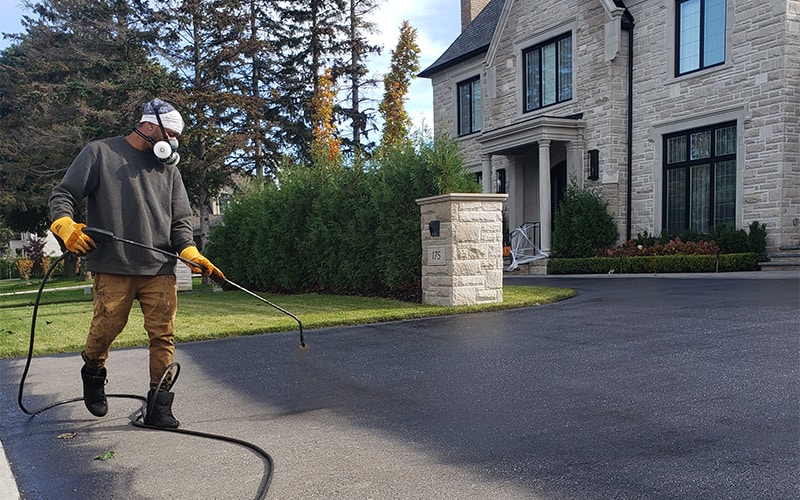
If your sealcoating cycle is due, fall is one of the best application windows in Ontario, with warm temperatures allowing proper cure before the first frost arrives. Asphalt sealcoating applied in September or October enters winter as a fully cured protective barrier rather than an exposed oxidized surface.
Sealcoating must be applied before crack sealing in the same maintenance cycle, with the crack sealing done after the sealcoat has cured, as sealcoating over open cracks does not seal them effectively. Alternatively, crack sealing can be completed first and sealcoating applied over the sealed cracks in the same mobilization.
The sealcoating benefits for winter protection include moisture repulsion that prevents surface saturation during freeze events, UV protection that prevents binder oxidation and brittleness that would otherwise accelerate crack formation, and a uniform surface that reduces debris accumulation that can trap moisture.
Step 4: Clear and Inspect the Drainage System
Standing water on or beneath a parking lot surface accelerates damage in every season, but the consequences in winter are most severe. Water that cannot drain pooled on the surface freezes into ice hazards. Water that has pooled in subbase voids from inadequate drainage freezes and expands, generating upward pressure that produces surface heaving.
Clear every catch basin of leaf debris, grit accumulation, and sediment before the first freeze. Inspect downpipe connections to confirm they are not blocked. Walk the lot after a significant rain event and document any areas where water is pooling rather than draining. Address grade corrections and drainage infrastructure before winter, not after.
Step 5: Update Line Markings Before Snowfall
Once snow covers a parking lot, line markings become invisible. Drivers navigating a lot covered in fresh snow rely entirely on their memory of where the lines were. Faded or missing markings that were borderline visible in fall create genuine confusion and vehicle conflict risk when the lot is covered.
Complete line striping updates before the first snowfall. Pay particular attention to accessible space markings, pedestrian crossing lines, directional arrows, and fire route clearance markings. These are not optional for compliance and safety reasons even under winter conditions.
Step 6: Plan Snow and Ice Removal Protocols
A winter-ready lot needs a documented snow removal plan before the first event, not during it. The plan should identify which contractor is responsible for removal, what the response time standard is for different snowfall accumulations, what de-icing products will be used and at what application rates, and where snow will be stockpiled to avoid blocking drainage catch basins or accessible parking routes.
De-icing product selection directly affects how much pavement damage accumulates over the winter. Calcium magnesium acetate and potassium acetate cause significantly less pavement and concrete damage than sodium chloride at equivalent melting performance. Sand provides traction without chemical pavement exposure and is appropriate for lower-traffic areas and accessible routes. Environment and Climate Change Canada provides guidance on de-icing product environmental impact relevant to commercial property managers.
Step 7: Check Lighting Before Days Get Short
Commercial parking lots operating after dark in October face dramatically reduced daylight compared to summer. Lighting fixtures that functioned adequately in summer may have masked performance gaps that become real safety issues when darkness arrives by 5:00 PM.
Test every light fixture in the lot before the end of October. Replace any burned-out or underperforming fixtures. Identify dark spots between rows, near entrances, at pedestrian access points, and along accessible routes to building doors. Natural Resources Canada provides commercial lighting efficiency guidance including LED retrofit programs available to Ontario commercial properties.
Post-Winter: Spring Assessment and Repair
No matter how thoroughly a lot is prepared for winter, freeze-thaw cycling will produce some surface distress. The spring inspection conducted in March or April documents the actual impact of the winter season against the fall baseline. Compare conditions, assess new cracking, pothole formation, and heaving, and prioritize repairs before peak spring traffic volumes arrive.
Spring is also the time to assess whether asphalt resurfacing has become the right next step for lots where accumulated distress has moved beyond the scope of preventive maintenance. Seal Canada’s guide to parking lot maintenance after sealcoating covers the decision framework for determining when resurfacing replaces continued surface treatment as the appropriate intervention.
Frequently Asked Questions
1. When is the last time I can apply sealcoating before winter in Ontario?
Sealcoating requires temperatures above 10 degrees Celsius during application and for at least 24 to 48 hours of curing afterward. In Ontario, the practical window typically closes by mid-October in most regions. Scheduling sealcoating in September provides the most reliable conditions and leaves time to complete crack sealing and line striping before freeze events.
2. Can cracks be sealed in cold weather?
Hot-pour rubberized crack sealant can be applied in temperatures above 4 degrees Celsius. Below that threshold, the sealant does not flow and bond properly into the crack. If freeze events are imminent, temporary crack filler can be used as an emergency measure, with permanent hot-pour sealing completed in spring.
3. What de-icing products are least damaging to asphalt?
Sand is the least damaging option, providing traction without chemical pavement exposure. Calcium magnesium acetate and potassium acetate cause significantly less pavement damage than sodium chloride. Sodium chloride is the most commonly used product but produces the most cumulative damage to both asphalt and concrete surfaces over multiple winter seasons.
4. How do I know if my parking lot needs sealcoating before winter?
Surface oxidation graying, visible aggregate texture loss, minor surface cracking that has not yet opened to 6mm width, and more than three years since the last application are all indicators that sealcoating is due. A professional condition inspection provides a confirmed assessment and specification recommendation.
5. What damage should I expect to find in spring after a typical Ontario winter?
New cracking at locations where winter water infiltration occurred, pothole formation in areas where subbase erosion from repeated freeze-thaw was significant, surface heaving from frost penetration in areas with inadequate subbase depth, and catch basin subsidence are the most common findings. Lots with fall crack sealing and sealcoating applied typically show significantly less spring damage than those without.
6. How does drainage maintenance prevent winter parking lot damage?
Proper drainage prevents water from pooling on the surface and accumulating in subbase voids. Water that drains away before temperatures drop has no opportunity to freeze and expand within the pavement structure. Blocked catch basins and low spots that accumulate water are the most predictable locations for pothole formation after each winter season.
Get Your Parking Lot Winter-Ready with Seal Canada
Fall preparation is the most cost-effective parking lot investment Ontario commercial property managers can make. The repairs avoided by addressing cracks, drainage, and surface protection in October consistently cost ten to fifty times less than the emergency repairs and liability exposure that follow a neglected winter season.
Seal Canada provides full fall preparation services for commercial parking lots across Ontario: condition assessments, crack sealing, sealcoating, line striping, and drainage inspections. Browse our completed projects to see the scope of commercial work we deliver, or contact our team to schedule your fall preparation before the window closes.
Key Takeaways
- Crack sealing before first frost is the single highest-value winter preparation step. It prevents freeze-thaw expansion from turning hairline cracks into structural failures.
- Fall sealcoating enters winter as a fully cured protective barrier if applied in September or October when temperatures are still consistently above 10 degrees Celsius.
- Catch basin clearing before leaf drop and freeze events prevents drainage blockage that allows water to pool and infiltrate beneath the pavement surface.
- Line marking updates before first snowfall are essential for lot safety when snow covers the surface and drivers rely on pavement markings for navigation.
- De-icing product selection affects cumulative winter pavement damage. Calcium magnesium acetate and sand cause significantly less damage than sodium chloride at equivalent performance.