Water infiltration is the primary cause of pavement failure across Ontario commercial properties. Effective water damage prevention combines proper drainage design, timely crack sealing, sealcoating on a consistent cycle, and seasonal maintenance calibrated to Ontario’s freeze-thaw climate, and each measure compounds the protection delivered by the others.
Why Water Damage Prevention Is the Foundation of Pavement Longevity
Of all the forces that degrade commercial asphalt and concrete, water is the most destructive and the most preventable. UV oxidation weakens the surface binder over time. Traffic loads create mechanical wear. But water infiltration drives every catastrophic failure mode: subbase erosion, frost heave, pothole formation, and structural cracking that requires full-depth reconstruction rather than surface treatment.
The sequence is predictable. A surface crack admits water. Water saturates the subbase. In winter, saturated material freezes and expands by approximately nine percent, forcing crack edges apart. In spring, the enlarged crack admits more water and the cycle accelerates. A 3mm crack left unsealed through one Ontario winter can become a 25mm structural failure by spring. The cost difference between sealing that crack and repairing the resulting pothole is typically a factor of ten to fifty.
Water damage prevention is not a single intervention. It is a system of treatments and practices that together prevent water from reaching the pavement structure in the first place.
Drainage Design Is the First Line of Water Damage Prevention
No sealcoating or crack treatment compensates for a pavement that pools water rather than draining it. Surface drainage is the foundation of water damage prevention on any commercial lot. Water that drains quickly after rainfall has no opportunity to infiltrate cracks, saturate the subbase, or create ice hazards in winter.
Commercial parking lots should maintain a minimum cross-slope of 1 to 2 percent toward catch basins or perimeter drains. Flatter grades allow water to pond, and even minor ponding over soft or cracked subgrade accelerates subbase deterioration. Any area on the lot that retains standing water after rainfall for more than 30 minutes indicates an inadequate grade or a blocked drainage outlet.
Catch basins must be cleared of leaf debris, grit, and sediment before fall to prevent freeze blockage through winter. Inspect drainage pipe connections after significant rain events. For lots with persistent ponding problems, grade correction or additional catch basin installation as part of a commercial paving scope eliminates the water accumulation before it damages the pavement structure. The National Research Council of Canada publishes drainage design standards applicable to commercial property development that provide the technical basis for drainage remediation decisions.
Sealcoating Closes the Surface to Water Infiltration
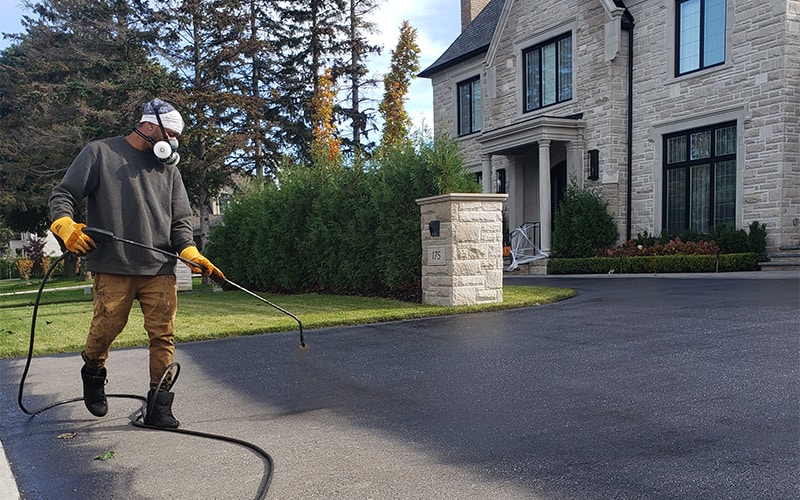
A freshly sealcoated asphalt surface is orders of magnitude less permeable than an oxidized, unprotected one. The sealcoat fills the micro-voids in the asphalt surface created by UV oxidation and traffic wear, creating a continuous barrier that water cannot penetrate. Asphalt sealcoating applied on a three-to-five-year cycle based on surface condition at inspection is the single highest-value water damage prevention treatment available for commercial asphalt.
The timing of sealcoating matters as much as the frequency. Sealcoating applied in fall enters winter as a fully cured protective barrier. Sealcoating applied over an already-oxidized or cracked surface without proper preparation provides limited protection. Surface preparation, including crack sealing and cleaning, must precede every sealcoating application.
For concrete surfaces, penetrating sealers and silane-siloxane waterproofing compounds reduce porosity and prevent water absorption. Commercial concrete requires sealer reapplication every two to three years under standard traffic conditions. Untreated concrete absorbs water, salts, and petroleum compounds that cause surface scaling, reinforcement corrosion, and interior deterioration.
Crack Sealing Stops Water at the Point of Entry
Every crack in a pavement surface is a direct route for water to reach the subbase. Crack sealing applied when cracks first reach 3 to 6mm width prevents the water infiltration that triggers every subsequent failure mode. It is the most cost-effective water damage prevention intervention available between sealcoating cycles.
Hot-pour rubberized crack sealant is the appropriate product for Ontario commercial applications. It remains flexible through the freeze-thaw temperature range, bonding to crack edges and maintaining a waterproof seal as the pavement expands and contracts seasonally. Cold-pour fillers are not durable enough for Ontario winters and are not appropriate for commercial lot applications.
Fall is the correct timing window for crack sealing. Cracks sealed before the first frost enter winter protection. Cracks left open through winter accept water with each rain and snowmelt event, freeze, widen, and require significantly more intervention by spring. A property following the guidance in Seal Canada’s guide to parking lot winter preparation understands that crack sealing is the non-negotiable first step before any other fall treatment.
Vegetation and Root Management Prevent Structural Water Entry
Tree roots that penetrate pavement structure do two things: they fracture the surface directly, creating entry points for water, and they displace subbase material that creates voids beneath the surface. Water that enters through root-fracture cracks reaches a compromised subbase faster than through a surface crack in stable pavement.
Root barriers installed between established trees and adjacent pavement redirect root growth downward rather than horizontally beneath the surface. Removing vegetation from within planting islands that directly abuts drive lanes or parking stalls reduces both root intrusion risk and the water retention that mulched or overgrown planting areas create at the pavement edge.
The Transportation Association of Canada includes vegetation management guidance in its commercial pavement preservation frameworks, covering root barrier specifications and planting setback standards that apply to Ontario commercial development.
De-Icing Product Selection Reduces Winter Surface Damage
Sodium chloride is the most widely used de-icing product on Ontario commercial lots and the one that causes the most cumulative pavement damage. On asphalt, repeated salt application softens the binder and accelerates surface oxidation. On concrete, chloride ion penetration promotes reinforcement corrosion that causes spalling from the inside out. The surface damage sodium chloride causes creates new water entry points that compound over successive winters.
Calcium magnesium acetate and potassium acetate deliver equivalent or superior de-icing performance with substantially less chemical damage to both asphalt and concrete surfaces. Sand provides traction without chemical exposure and is appropriate for accessible routes and lower-traffic areas where traction rather than melting is the primary need. Environment and Climate Change Canada provides guidance on de-icing product environmental and infrastructure impact relevant to commercial property managers across Ontario.
Inspection and Early Intervention Maintain the Prevention System
Water damage prevention is not a set-and-forget program. Each element of the prevention system, from drainage to sealcoating to crack sealing, degrades over time and requires monitoring to remain effective. A formal inspection twice per year, once in spring after freeze-thaw season and once in fall before first frost, identifies where the system has gaps before water exploits them.
Spring inspection documents the winter’s impact: new cracking, surface heaving, catch basin subsidence, and areas where frost damage has opened previously sealed cracks. Fall inspection identifies everything that needs to be addressed before winter arrives. Photographic documentation at each inspection creates a condition baseline that supports both maintenance planning and liability defence.
Seal Canada provides professional condition assessments for commercial lots across Ontario with documented findings and prioritized repair recommendations. For the full lifecycle cost context of maintaining a water damage prevention program, Seal Canada’s guide to long-term parking lot maintenance covers multi-year budget planning and treatment sequencing in detail.
Protecting Your Pavement from Water Damage Starts with a Plan
Water damage is one of the most preventable causes of pavement deterioration, but effective prevention requires a proactive, long-term maintenance strategy. Regular drainage inspections, timely crack sealing, asphalt sealcoating, and seasonal maintenance all work together to keep water from penetrating the pavement structure and accelerating deterioration. By addressing small issues before they become major repairs, commercial property owners can extend pavement service life, reduce maintenance costs, and preserve the safety and appearance of their parking lots and roadways year-round.
Frequently Asked Questions
1. What is the most common cause of water damage to commercial asphalt?
Unsealed surface cracks are the primary entry point for water infiltration in commercial asphalt. Once water reaches the subbase through an open crack, freeze-thaw cycling expands the crack from inside the pavement structure, erodes the granular base, and creates the conditions for pothole formation. Crack sealing applied at 3 to 6mm width prevents this cycle from starting.
2. How does sealcoating prevent water damage?
Sealcoating fills the micro-voids in the asphalt surface that UV oxidation and traffic wear create over time, restoring a continuous low-permeability barrier. Water that contacts a properly sealed surface cannot infiltrate the asphalt binder below. The protection is active while the sealcoat is in sound condition, which is why maintaining a three-to-five-year application cycle is the standard for Ontario commercial lots.
3. What slope is required for effective parking lot drainage?
A minimum cross-slope of 1 to 2 percent toward catch basins or perimeter drains is the standard for commercial parking lots in Ontario. Flatter grades allow ponding that accelerates subbase saturation and deterioration. Any area that retains standing water for more than 30 minutes after rainfall warrants grade correction or drainage infrastructure assessment.
4. How does winter affect water damage risk on commercial pavement?
Freeze-thaw cycling is the primary winter damage mechanism. Water that has infiltrated through cracks or an unsealed surface freezes and expands by approximately nine percent, forcing crack edges apart. Each cycle widens the crack and allows more water infiltration in the next event. Fall crack sealing and sealcoating applied before first frost dramatically reduce the severity of freeze-thaw damage through the winter season.
5. Are de-icing salts damaging to concrete as well as asphalt?
Yes, and the damage mechanisms are different. On concrete, chloride ions from sodium chloride penetrate to reinforcement steel and cause corrosion that spalls the surface from the inside. On asphalt, salts soften the binder and accelerate oxidation. Calcium magnesium acetate and potassium acetate cause significantly less damage to both materials at equivalent de-icing performance.
6. How often should a commercial pavement be inspected for water damage?
Twice per year is the minimum: once in spring after freeze-thaw season has revealed winter damage, and once in fall before first frost so identified issues can be addressed before cold weather sets in. High-traffic lots and lots with known drainage issues benefit from quarterly inspection with photographic documentation.
Protect Your Commercial Pavement from Water Damage
Seal Canada delivers the full scope of commercial pavement services that support water damage prevention across Ontario: drainage assessment and correction, asphalt sealcoating, crack sealing, pothole repair, and line striping. Browse our completed projects to see the range of commercial work we handle, or contact our team to discuss a maintenance program for your property.
Key Takeaways
- Water infiltration is the primary driver of every major pavement failure mode: subbase erosion, frost heave, pothole formation, and structural cracking. Preventing infiltration prevents all of these.
- Drainage grade and clear catch basins are the foundation of water damage prevention. Water that drains within 30 minutes of rainfall cannot infiltrate or accumulate beneath the pavement.
- Crack sealing at 3 to 6mm width is the highest-ROI intervention between sealcoating cycles. It stops the freeze-thaw water cycle before it causes structural damage.
- Sealcoating on a three-to-five-year cycle restores the surface barrier that prevents water, UV oxidation, and chemical penetration from degrading the asphalt binder.
- De-icing product selection affects cumulative winter surface damage. Calcium magnesium acetate and sand cause significantly less pavement deterioration than sodium chloride over multiple winter seasons.