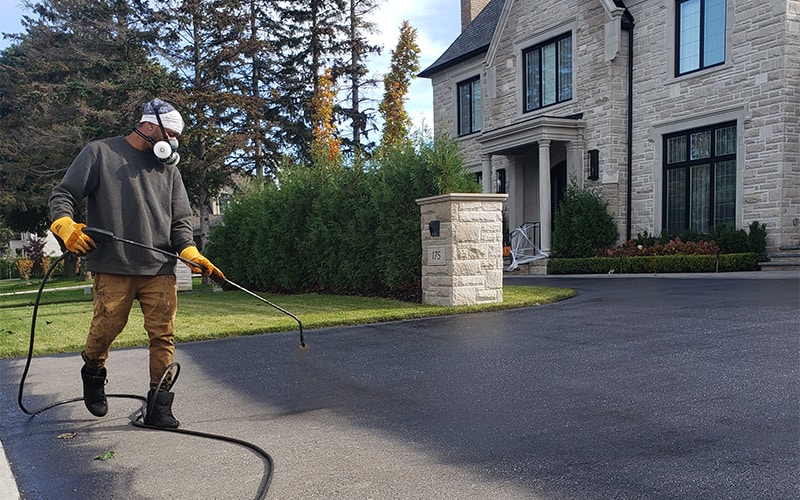
A parking lot emergency involving a sudden pothole, collapsed drain, or severe surface failure creates immediate safety liability and operational disruption for commercial property managers. The decisions made in the first hour determine how much damage compounds before a permanent fix is in place. This guide walks through the correct response sequence and explains when to call a professional contractor versus managing temporarily on your own.
When Your Parking Lot Becomes an Emergency: What to Do First
Commercial parking lots are high-traffic, high-liability assets. When a pothole opens up overnight, a catch basin frame collapses, or a surface failure creates a hazard for vehicles or pedestrians, property managers need a clear response plan. Emergency parking lot repairs are distinct from scheduled maintenance: they require rapid assessment, immediate temporary mitigation, and a prioritized permanent repair plan, often on the same day the problem is discovered.
Seal Canada provides rapid response for commercial parking lot emergencies across Vaughan, Toronto, Mississauga, Brampton, Markham, Scarborough, North York, Oakville, Oshawa, and surrounding areas. Understanding what constitutes a true emergency, how to contain the immediate risk, and what permanent repair involves helps property managers make faster and better decisions when a problem arises.
What Qualifies as a Parking Lot Emergency?
Not every pavement defect requires emergency intervention. The threshold for emergency action is whether the condition poses an immediate safety risk or creates material legal liability for the property owner. Conditions that meet this threshold include:
- Potholes deeper than 50 mm or wider than 300 mm in active traffic or pedestrian zones
- Catch basin frames that have collapsed or sunk below grade, creating a drop hazard for vehicles
- Sudden large-area pavement failures after heavy rainfall or snowmelt where sub-base saturation has caused surface collapse
- Drainage blockages causing flooding that is impeding vehicle access or creating slip-and-fall risk at entrances
- Severe edge cracking or drop-off at the lot perimeter that is damaging vehicles using the parking area
Smaller surface defects, new hairline cracks, and faded line markings are maintenance items, not emergencies. They should be documented and addressed in the next scheduled maintenance cycle rather than triggering emergency response costs.
Step 1: Assess and Document the Hazard
The first step in handling emergency parking lot repairs is a rapid but systematic assessment of the affected area. Before initiating any temporary repair, document the condition with dated photographs from multiple angles. This documentation creates a record that is valuable for both insurance purposes and contractor briefing.
Assess the following at the scene:
- The approximate size and depth of the defect
- Whether the sub-base appears to have failed or whether damage is limited to the surface layer
- Whether water is actively draining through or pooling in the affected area
- The volume of vehicle and pedestrian traffic that will pass the location in the next 24–48 hours
This information determines both the urgency of temporary mitigation and the likely scope of permanent repair, and it is the first question a professional contractor will ask.
Step 2: Contain the Hazard Immediately
Traffic Barricades and Signage
Any defect that poses an immediate vehicle or pedestrian hazard must be barricaded before anything else happens. Use water-filled traffic barriers, cone systems, or jersey barriers to create a clear exclusion zone around the defect. Signage should redirect traffic flow and alert pedestrians. Barricades should remain in place until either a temporary or permanent repair is complete.
Cold Patch for Potholes
Cold patch is a pre-mixed asphalt patching material that can be applied without heating equipment. It is a temporary solution, not a permanent one, but it stabilizes a pothole and eliminates the immediate hazard. For emergency parking lot repairs, cold patch should be packed into the cleaned pothole, compacted firmly, and overfilled slightly to allow for settlement. Most hardware and building supply stores in Ontario carry bagged cold patch for immediate procurement. A permanent hot-mix patch is the follow-up once a contractor is scheduled.
Drainage Management
If a drainage failure is contributing to the emergency, clearing any debris from catch basin grates immediately reduces water accumulation. For blocked subsurface lines, temporary diversion of surface water using sandbags or portable channels keeps the affected area from worsening until professional drainage restoration can be completed.
Step 3: Engage a Professional Contractor
Temporary measures buy time. Permanent repair requires a qualified contractor experienced in commercial asphalt repairs and familiar with the root-cause assessment needed to prevent the same failure from recurring. When contacting a contractor for emergency response, provide:
- Your dated photographs from the assessment
- Approximate dimensions of the affected area
- The pavement’s age and last maintenance action, if known
- Whether the pavement under or adjacent to the defect shows signs of base failure (soft spots, cracking radiating outward from the defect)
A contractor who requests this information before arriving is approaching the job correctly. One who quotes without it is likely providing a patch-only estimate that may not address the underlying cause.
Step 4: Execute a Permanent Repair That Addresses Root Cause
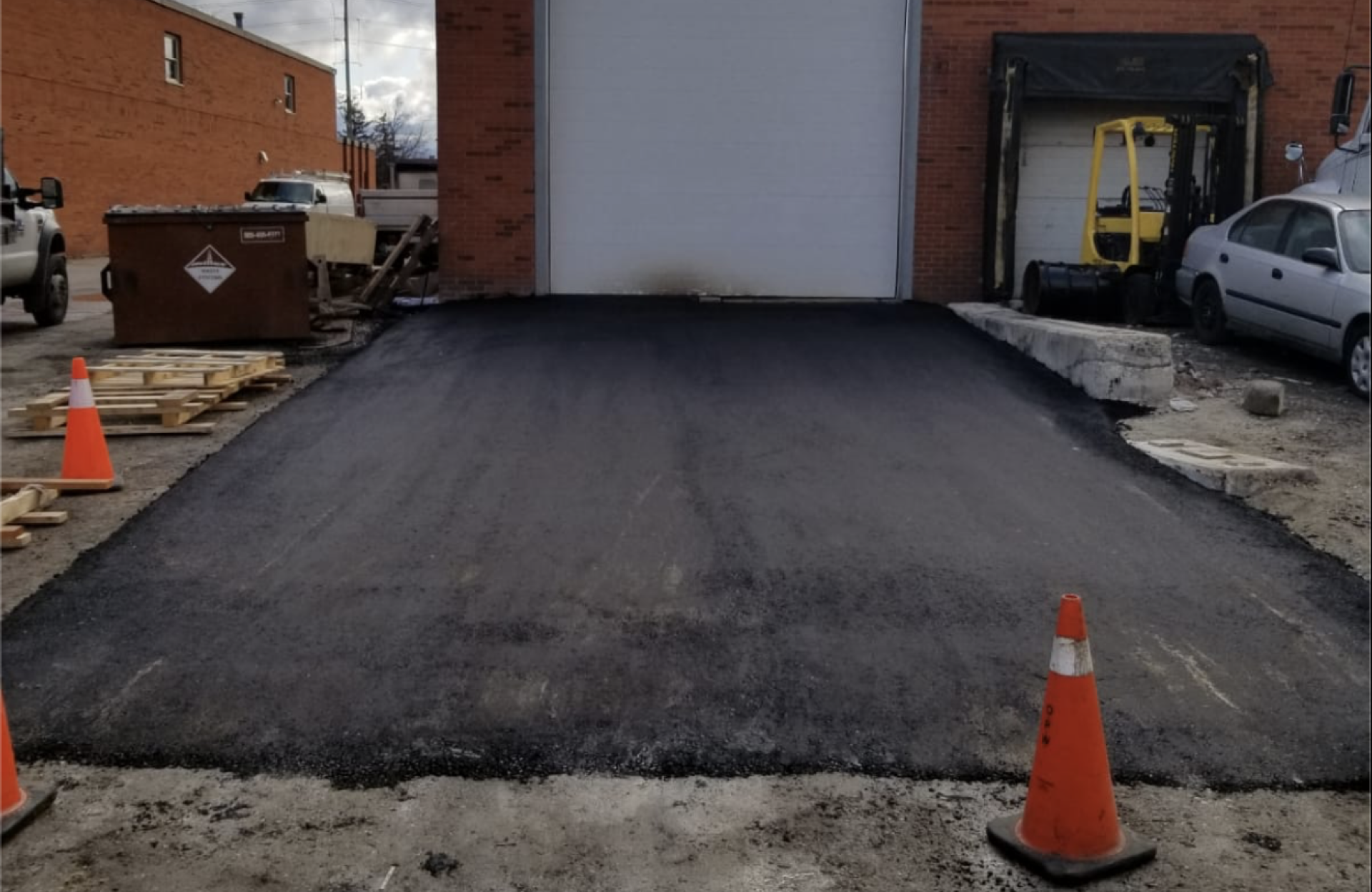
The permanent repair scope depends on what the assessment reveals. Surface-only failures, where the base is intact, are addressed with saw-cut patching: the damaged area is cut to straight edges, the base is inspected and stabilized if needed, tack coat is applied, and hot-mix asphalt is placed and compacted. Seal Canada’s commercial paving team carries the equipment for this process and can typically complete commercial-scale saw-cut patches within one to two days of engagement.
Where the base has failed, full-depth reclamation of the affected section is required. This involves removing the failed asphalt, addressing the sub-base condition, and repaving. It costs more than a surface patch but eliminates the cycle of recurring failure in the same location that surface-only repairs over a failed base always produce.
Step 5: Implement Preventive Measures After the Emergency
After the immediate repair is complete, a parking lot inspection of the full property is worthwhile. An emergency failure in one area often indicates that similar conditions exist elsewhere. Addressing developing problems before they reach emergency status is always less expensive than another crisis response.
Preventive actions with the highest return after an emergency repair include: annual post-winter inspection, prompt crack sealing of any new surface fractures, and a drainage system check to confirm that catch basins are clear and grades are functioning correctly.
Preventing the Next Emergency
Most emergency parking lot repairs are the end result of deferred maintenance decisions. Potholes do not appear without warning; they develop from small cracks and surface distress that were visible weeks or months before the failure. A commercial property manager who has never walked their lot and documented its condition after each winter is operating without the information needed to prevent emergencies.
Seal Canada works with property managers across Ontario to build annual inspection and maintenance programs that dramatically reduce emergency repair frequency. A site assessment from our expert team is the starting point. Contact us to schedule one.
Frequently Asked Questions
1. How quickly can Seal Canada respond to a parking lot emergency?
Response time depends on geographic location and the scope of the issue. For commercial properties in the Greater Toronto Area, Seal Canada targets same-day or next-business-day response for urgent surface failures. Initial assessment and temporary measures can often be mobilized within hours of contact. Permanent repair scheduling depends on material procurement and crew availability, which is typically within one to three business days for standard commercial patches.
2. Is cold patch a permanent solution for potholes?
No. Cold patch is a temporary stabilization material. It lacks the structural integrity and weather resistance of hot-mix asphalt and will typically require replacement within one to two seasons even under moderate traffic. It is the correct immediate response to eliminate a safety hazard, but it should always be followed by a permanent saw-cut hot-mix patch as soon as scheduling allows.
3. Who is liable if someone is injured in a parking lot pothole?
In Ontario, commercial property owners have a duty of care to maintain their property in a reasonably safe condition under the Occupiers Liability Act. A documented pothole that was known but not barricaded or repaired creates material liability exposure for the property owner or manager. Immediate barricading and documented response are the most important risk management actions when a hazard is discovered.
4. Can a surface patch last as long as the original pavement?
A properly executed saw-cut hot-mix patch in a location where the base is intact can last 8–15 years, comparable to the surrounding pavement. Patches that fail prematurely almost always have one of two causes: the base was not properly assessed and was soft or saturated at the time of patching, or the patch edges were not saw-cut to clean vertical faces, creating a weak bond at the perimeter.
5. What causes the same pothole to keep coming back in the same spot?
Recurring failures in the same location are almost always a sign of a sub-base problem that has not been addressed. Water infiltrating through the repaired surface, persistent drainage concentration in that area, or utility trench settlement beneath the pavement are the three most common causes. Each time the surface is patched without addressing the base condition, the repair lifespan shortens. Full-depth reclamation is the permanent solution.
Contact Seal Canada for Emergency Response
If you have an active pavement emergency on your commercial property, contact Seal Canada immediately. Our team assesses the situation, advises on immediate containment, and schedules permanent repair as quickly as the site conditions and materials allow.
Call us to get started.
Key Takeaways
- Emergency parking lot repairs are warranted when a defect poses immediate safety risk or material liability, not for every surface imperfection.
- Document the hazard with dated photographs immediately. This record is critical for insurance and contractor briefing.
- Barricade the area and apply cold patch to potholes as immediate measures. These stabilize the hazard but are not permanent repairs.
- Permanent repair requires root-cause assessment. Surface patches over failed sub-base produce recurring failures in the same location.
- Most parking lot emergencies are the result of deferred maintenance. An annual post-winter inspection significantly reduces emergency repair frequency. The National Asphalt Pavement Association and the Transportation Association of Canada both identify proactive pavement inspection as the most cost-effective approach to preventing emergency repair situations.
- Seal Canada provides emergency response for commercial parking lots across the Greater Toronto Area and surrounding Ontario communities.