Concrete plays two roles in modern parking lot design. Full concrete parking lots offer long service life, high load capacity and a bright surface, but they cost more up front and need air-entrained mixes, joint sealing and salt care to perform in Ontario winters. More often, commercial sites combine asphalt drive lanes with concrete curbs, sidewalks, loading docks, garbage pads and drive-thru lanes, where concrete handles the heaviest loads and sharpest wear. The right mix depends on traffic, budget and how the lot is used.
Concrete parking lots and concrete features have become a bigger part of commercial parking lot design across the GTA. Property owners want surfaces that last, handle heavy trucks and look sharp to tenants and customers, and concrete delivers on all three in the right places. At the same time, it is not the right answer for every square metre of a lot. This guide explains where concrete parking lots make sense, where asphalt is the better value, and what property managers, facility managers and commercial owners should consider during parking lot construction.
What Are the Benefits of Concrete Parking Lots?
Durability and Load Capacity
Properly designed and reinforced concrete handles heavy, concentrated loads well. It resists rutting under trucks that turn and stop, which is why concrete parking lots and concrete pads are common at distribution centres, loading areas and waste collection points. With good parking lot construction and maintenance, concrete pavement can last for decades. Load capacity is a key factor in parking lot design for these sites.
Lower Routine Surface Maintenance
Concrete does not need sealcoating, and it does not soften in summer heat. Its routine maintenance is different from commercial asphalt paving: instead of sealcoating cycles, concrete needs joint sealing, crack repair and protection from salt damage. Over the life of the surface, that can mean fewer maintenance visits, though each repair is usually more involved, a trade-off worth weighing early in parking lot design.
Appearance and Curb Appeal
Concrete parking lots give a clean, bright, uniform look that suits office campuses, medical buildings, hotels and dealerships. Finishes, borders and decorative details can highlight entrances and walkways and set them apart from drive lanes, adding polish to the overall parking lot design.
Heat Reflection and Visibility
The lighter colour of concrete parking lots reflects more sunlight than asphalt, which keeps the surface cooler in summer and can improve night-time visibility under parking lot lighting. That brightness also helps pedestrians and drivers see each other in busy areas, a safety benefit worth noting in parking lot design.
Recyclability
At the end of their life, concrete parking lots can be crushed and reused as aggregate, reducing waste from future parking lot construction and reconstruction.
What Are the Drawbacks of Concrete Parking Lots?
Concrete has real trade-offs, and a good contractor should explain them before you commit.
• Higher upfront cost: concrete parking lots generally cost more to install than asphalt, which is why many owners use it selectively.
• Longer cure time: new concrete needs days of curing before it can carry full traffic, which affects parking lot construction phasing and tenant access.
• Salt and freeze-thaw sensitivity: without an air-entrained mix and proper curing, Ontario road salt and freeze-thaw cycles can cause scaling and spalling on concrete parking lots.
• More complex repairs: damaged slabs often need saw cutting and full-depth replacement rather than a quick patch, so repair access should be planned during parking lot construction.
These drawbacks do not rule concrete out. They simply mean that full concrete parking lots are usually chosen for specific uses, while most commercial sites use concrete where it adds the most value in their parking lot design.
Where Does Concrete Fit Best in Parking Lot Design?
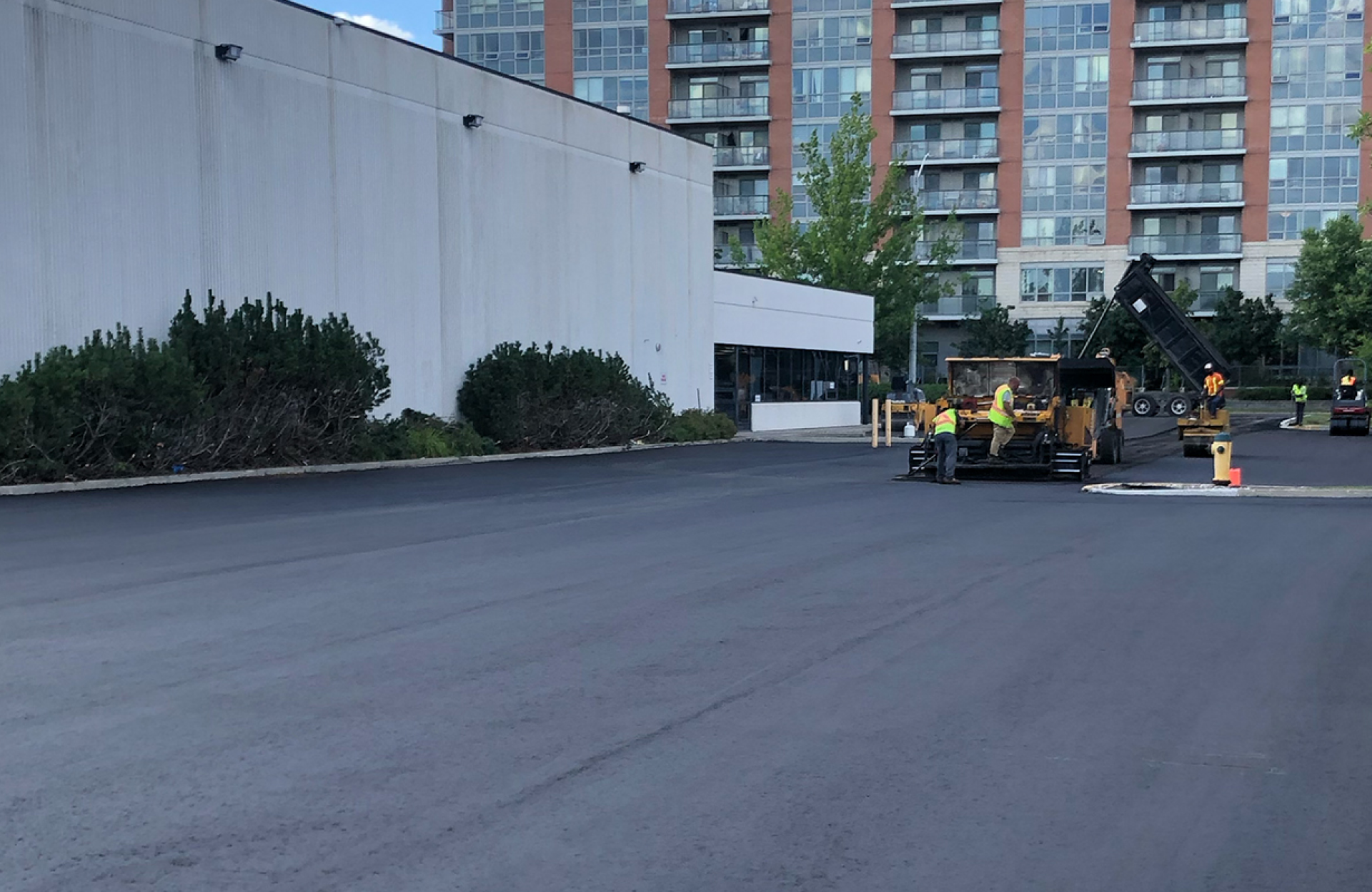
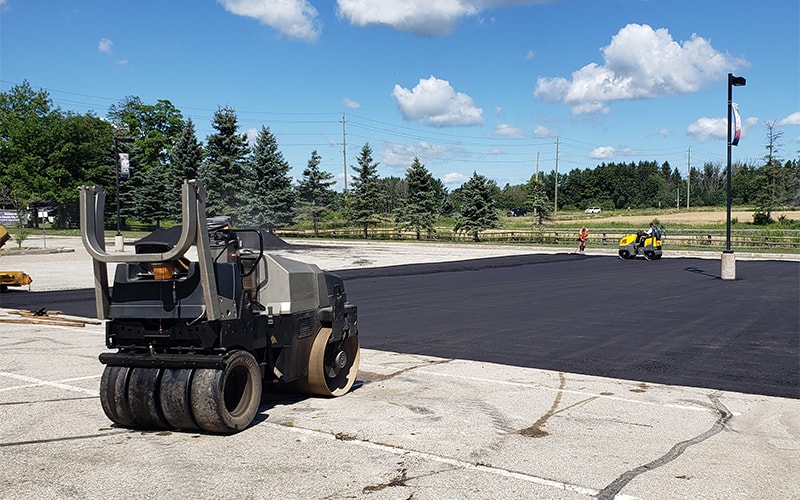
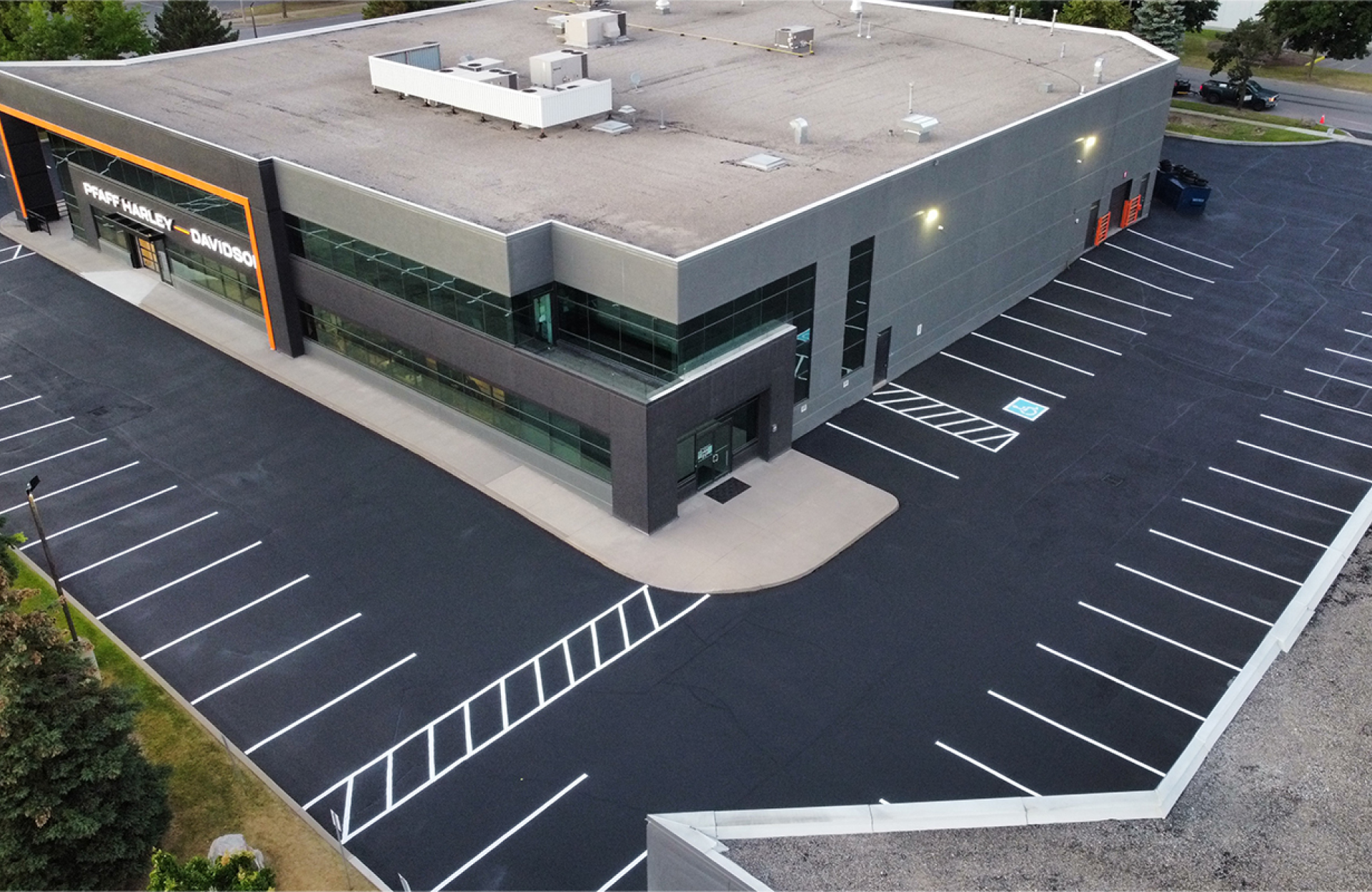
In modern parking lot design, the most cost-effective approach is often a hybrid: asphalt for general parking and drive lanes, and concrete for the areas that take the most abuse or need the cleanest finish. This hybrid approach gives many of the benefits of concrete parking lots at a lower total cost.
• Curbs and sidewalks: well-placed concrete curbs and sidewalks define traffic lanes, channel water to drains and give pedestrians a safe, level route to the building.
• Loading docks and truck aprons: concrete resists the rutting and shoving that heavy trucks cause on asphalt.
• Garbage and recycling pads: front-load waste trucks break down asphalt quickly; reinforced concrete pads hold up.
• Drive-thru lanes and entrances: concrete handles idling, turning and fuel drips better than asphalt.
• Accessible routes: smooth concrete walkways and curb ramps support AODA-compliant access.
What Should You Consider in Parking Lot Construction?
Site Assessment and Planning
Every parking lot design should start with a review of the site’s soils, grades, drainage and traffic patterns. Planning should cover entrances, exits, pedestrian routes and accessible parking that meets Ontario’s AODA Design of Public Spaces Standards and local bylaws. A clear plan at this stage prevents costly changes once parking lot construction begins.
Drainage and Layout
Good parking lot design moves water off the surface and away from the base. Correct slopes, catch basins and curbs keep water from pooling, while stall sizes and aisle widths should match the vehicles that actually use the lot. Getting grades right during parking lot construction is far cheaper than fixing ponding later.
Mix Design and Reinforcement
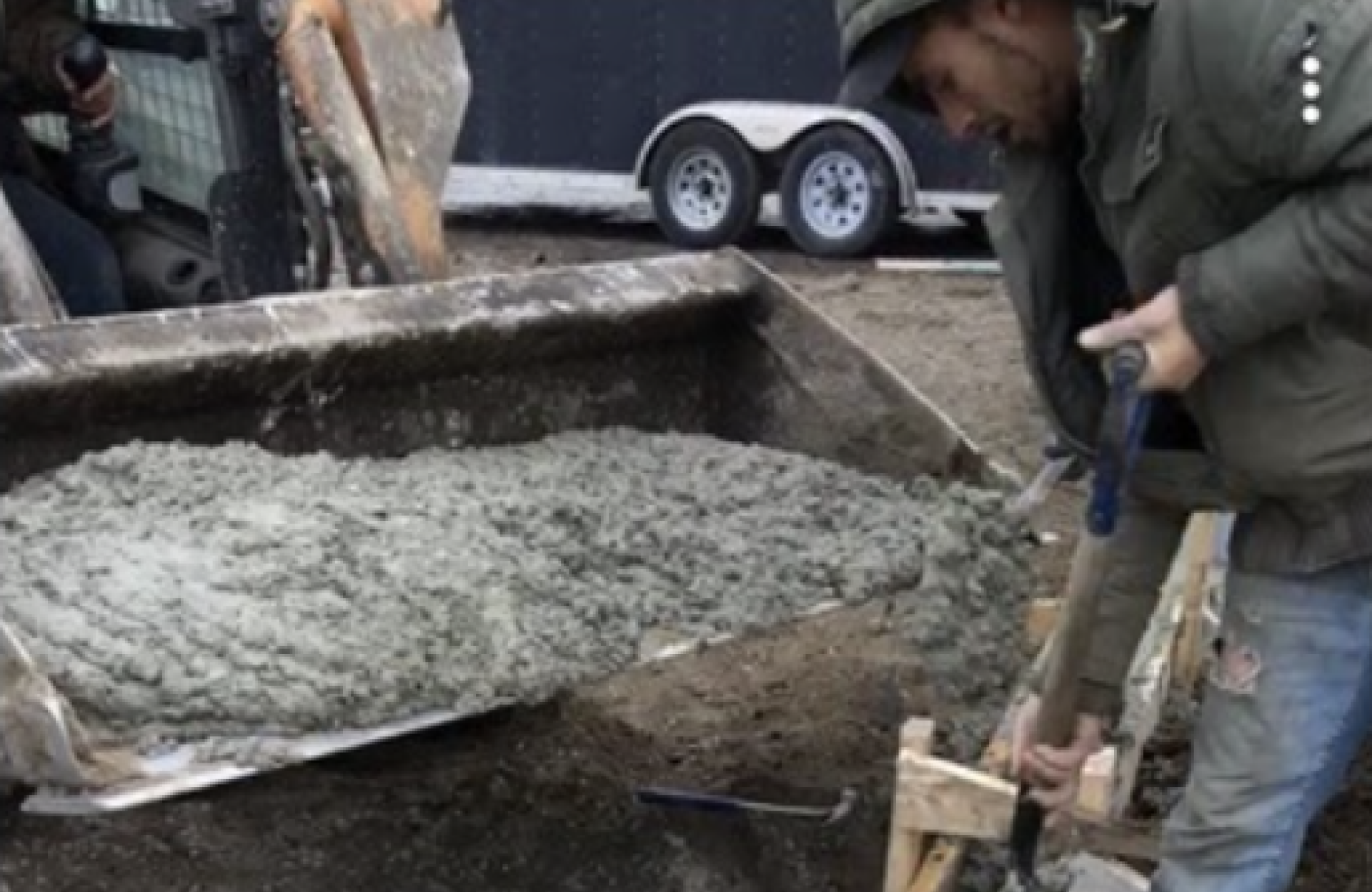
For Ontario conditions, concrete parking lots and other exterior concrete should use an air-entrained mix designed for freeze-thaw exposure. Reinforcement such as steel rebar or mesh, correct slab thickness and properly spaced control joints help the concrete handle traffic loads and seasonal movement. These details should be confirmed before parking lot construction starts.
Curing and Timing
Curing is one of the most overlooked steps in parking lot construction. Concrete gains strength as it cures, so it needs moisture and temperature protection in the first days after placement. Cold-weather pours need extra measures, and in many cases spring through fall is the best window for parking lot construction involving concrete.
How Do You Maintain Concrete Parking Lots?
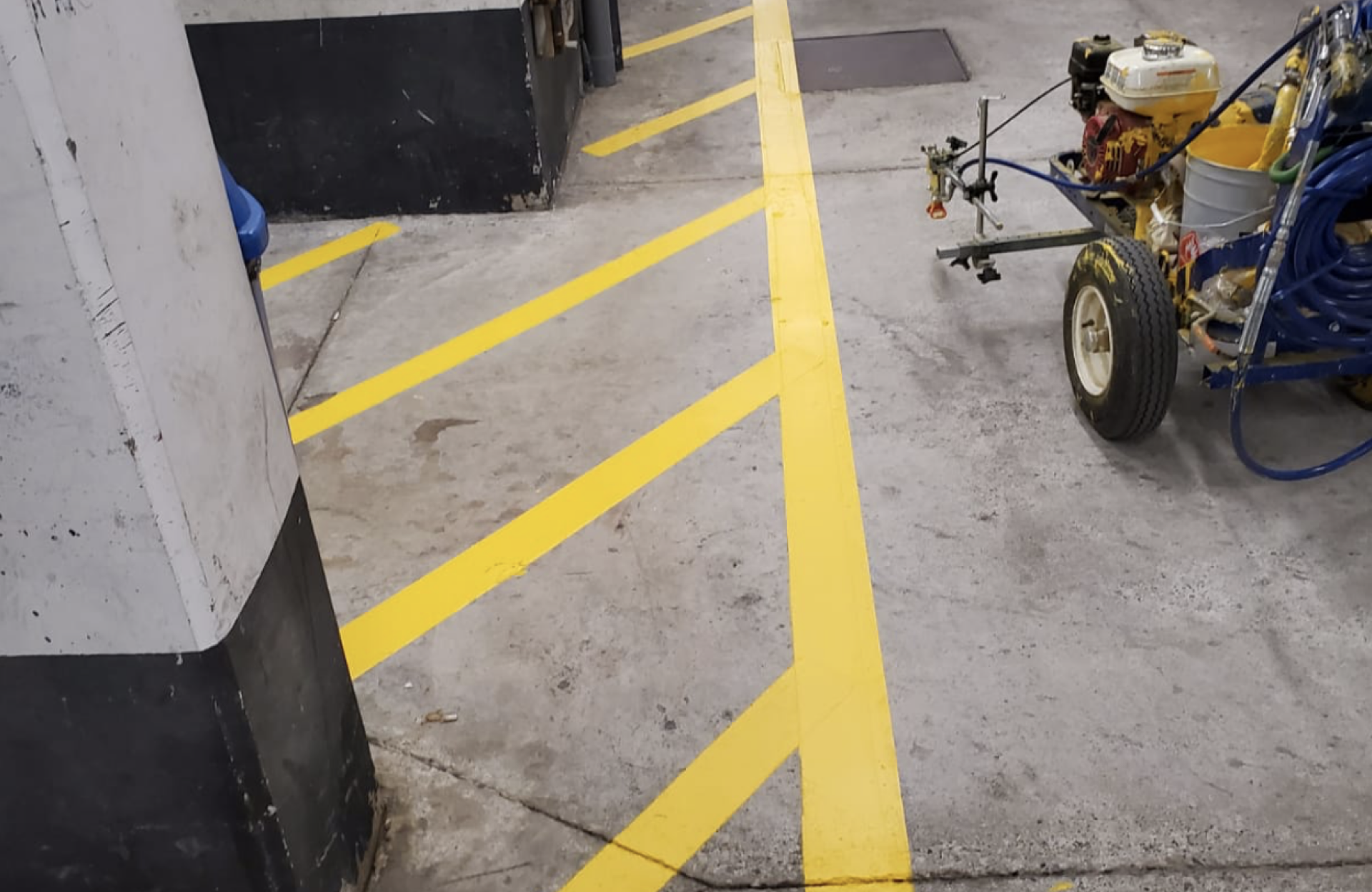
Concrete parking lots last longest when they get simple, consistent care. Seal joints and cracks to keep water out of the base. Clean the surface regularly to remove debris, oil and salt residue. Avoid harsh de-icing chemicals on young concrete, and consider a penetrating sealer to reduce salt damage. Inspect the lot each spring and fall for spalling, settling slabs and trip hazards, and repair problem areas before they spread. Repainting lines as they fade also keeps traffic organized and the lot looking well managed, protecting the investment made in the original parking lot design.
How Seal Canada Supports Concrete Parking Lot Design and Construction
Seal Canada works with property managers, facility managers, condo corporations and commercial owners across Toronto, Vaughan, Mississauga, Markham, Richmond Hill, Barrie and the wider GTA. Our concrete work includes curbs, sidewalks, pads, stairs, loading docks, floors and walls, alongside asphalt paving, repairs, crack sealing, sealcoating and line painting. That means one team can help with practical parking lot design decisions, such as where concrete belongs on your lot and where asphalt is the better value.
Every project starts with a free site assessment and a detailed written report covering condition, recommended materials and scope for your parking lot construction or repair project. Learn more about our commercial paving and concrete services. We schedule around tenants and operations, respond promptly and offer 24/7 emergency service, with work completed well above industry standards, on time and on budget.
Frequently Asked Questions
1. Are concrete parking lots better than asphalt?
Neither is better everywhere. Concrete lasts longer under heavy loads and needs no sealcoating, while asphalt costs less up front and is faster to install and repair. Many commercial lots use both in the same parking lot construction project.
2. How long do concrete parking lots last?
With proper mix design, construction and maintenance, concrete pavement can last for decades. Salt exposure, traffic and joint care all affect the actual lifespan.
3. Does road salt damage concrete?
It can. Salt and freeze-thaw cycles cause scaling on concrete parking lots that are not air-entrained or properly cured. Using the right mix and limiting harsh de-icers on new concrete reduce the risk.
4. Where should concrete be used on an asphalt lot?
Common spots in commercial parking lot design include curbs, sidewalks, loading docks, garbage pads, drive-thru lanes and entrances, where heavy loads or pedestrians need a stronger, cleaner surface.
5. How long before new concrete can be driven on?
Light traffic is often allowed after several days, with full loads after the concrete reaches design strength. Timing depends on the mix, temperature and slab thickness, so it should be built into the parking lot construction schedule.
Planning a concrete project or wondering where concrete belongs on your lot? Contact Seal Canada to book a free site assessment and a pavement specialist will give you a detailed written report with clear, practical recommendations.
Key Takeaways
• Concrete parking lots offer durability, load capacity and a bright, clean finish.
• It costs more up front and needs air-entrained mixes and salt care in Ontario.
• In parking lot design, most commercial lots get the best value from asphalt drive lanes plus concrete in high-wear areas.
• Drainage, reinforcement, joints and curing during parking lot construction decide long-term performance.
• Joint sealing, cleaning and seasonal inspections keep concrete in good shape.