The parking lot lifecycle has five phases: design and planning, construction, maintenance, rehabilitation and replacement. Good design and quality commercial paving set the foundation, but the maintenance phase decides how long the lot actually lasts. With regular asphalt maintenance such as crack sealing, sealcoating, prompt repairs and line painting, a well-built commercial lot can delay costly resurfacing or replacement by years.
A parking lot is one of the largest assets on a commercial property, and one of the most exposed. Understanding the parking lot lifecycle helps property managers, facility managers and commercial owners plan budgets, time their work and avoid paying for full replacement sooner than necessary. This guide walks through each phase, shares asphalt maintenance priorities for every stage and explains how Seal Canada’s commercial paving and maintenance services support your lot from first layout to final rebuild.
What Is the Parking Lot Lifecycle?
The parking lot lifecycle is the full lifespan of a paved lot, from the day it is designed to the day it is rebuilt. Most commercial lots follow the same parking lot lifecycle path: a strong start after construction, a long middle period where maintenance controls the rate of wear, a rehabilitation stage when the surface ages, and eventually replacement when the base can no longer support traffic.
How long each phase lasts depends on design, construction quality, traffic, drainage and climate. The biggest variable in any parking lot lifecycle, though, is maintenance. Two lots built the same year can reach replacement a decade apart depending on how well they were cared for.
Phase 1: How Should a Commercial Lot Be Designed?
Design and planning set the limits for every commercial paving decision that follows. Decisions made here affect drainage, traffic safety and how hard the pavement has to work for the rest of the parking lot lifecycle.
Site Assessment
Every commercial paving project should start with a review of the available space, topography, soil conditions and existing drainage patterns.
Traffic Flow and Layout
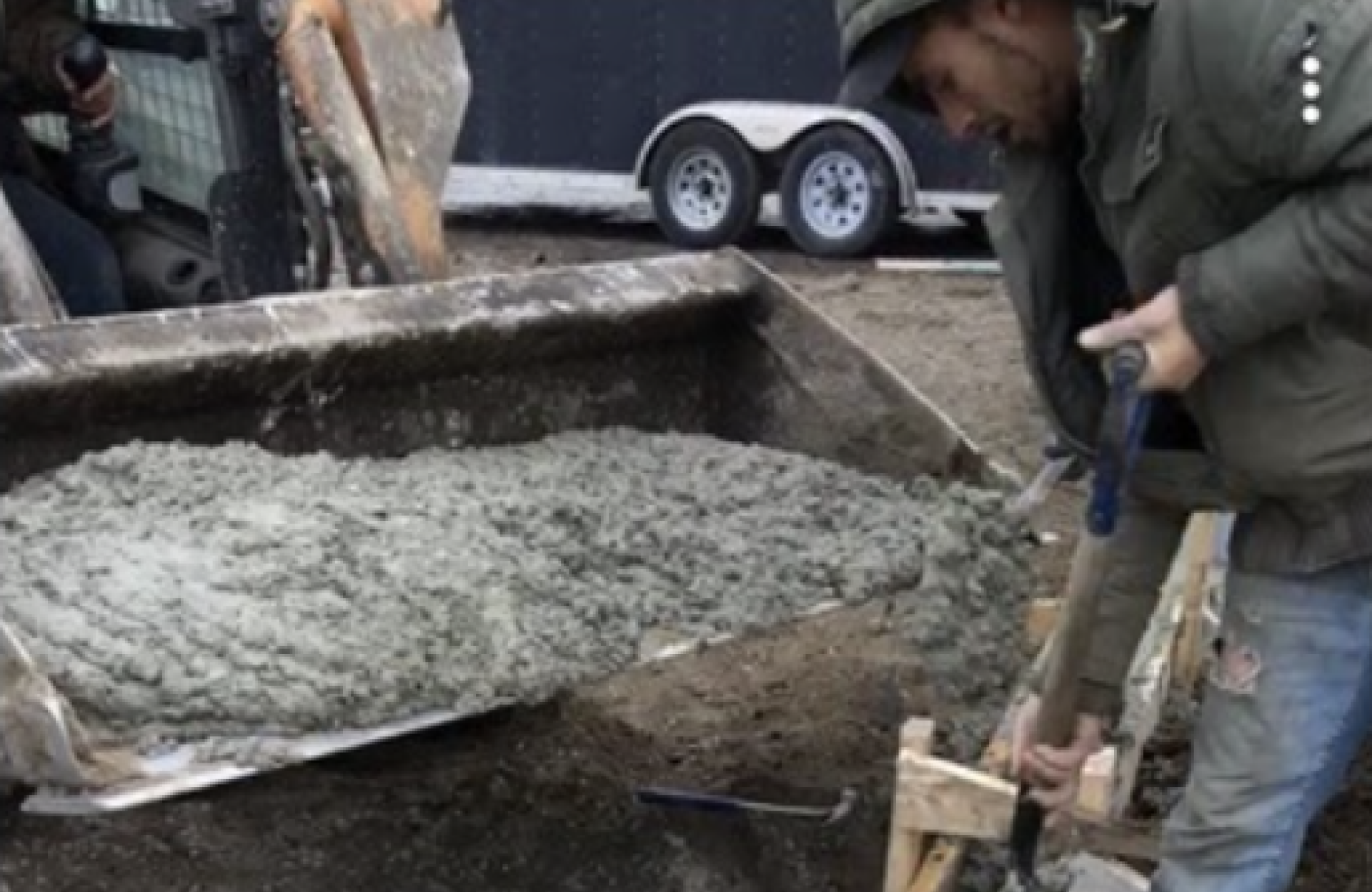
Entrances, exits, drive aisles and pedestrian walkways should be planned to reduce congestion and conflict between cars and people. Areas where trucks turn or stop, such as loading zones and garbage pads, may need a thicker commercial paving section or concrete instead of asphalt.
Parking Configuration and Accessibility
Stall counts and sizes should match expected demand and meet municipal zoning rules. In Ontario, accessible parking must follow the AODA Design of Public Spaces Standards.
Drainage Design
Inadequate drainage is one of the leading causes of pavement failure. Correct slope, well-placed catch basins and intact curbs keep water moving off the lot and away from the base.
Phase 2: What Happens During Commercial Paving Construction?
Construction turns the design into a working lot. The quality of this phase sets the ceiling for the whole parking lot lifecycle, so it is worth understanding each step of commercial paving before work begins.
Site Preparation and Grading
Commercial paving starts with site preparation: the site is cleared, excavated as needed and graded so water will drain correctly once the surface is in place.
Granular Base Installation
A compacted granular base supports the asphalt. A weak or under-compacted base is the most common hidden cause of early failure, because problems underneath eventually show up on top later in the parking lot lifecycle.
Paving and Compaction
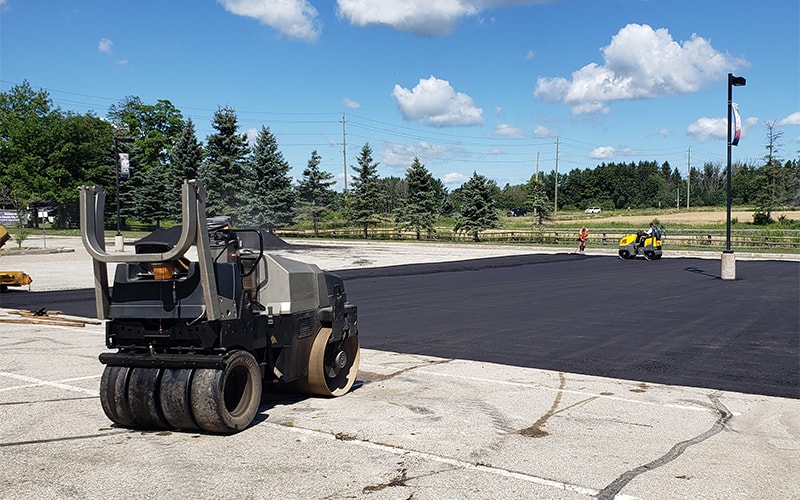
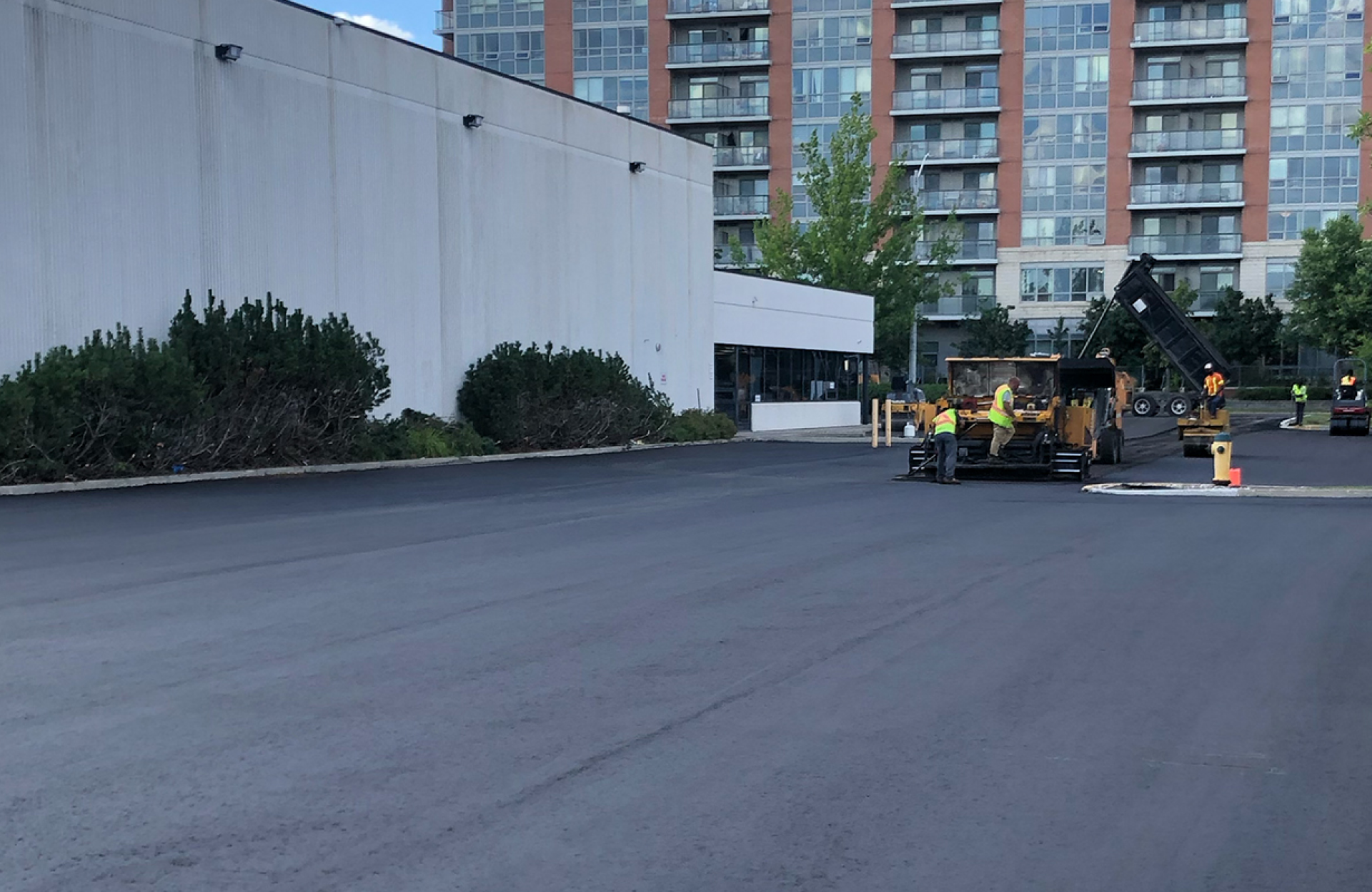
During commercial paving, asphalt is placed in one or more layers and compacted to the right density. Proper commercial asphalt paving uses mixes suited to the expected traffic and careful compaction so water cannot work its way in.
Line Painting and Finishing
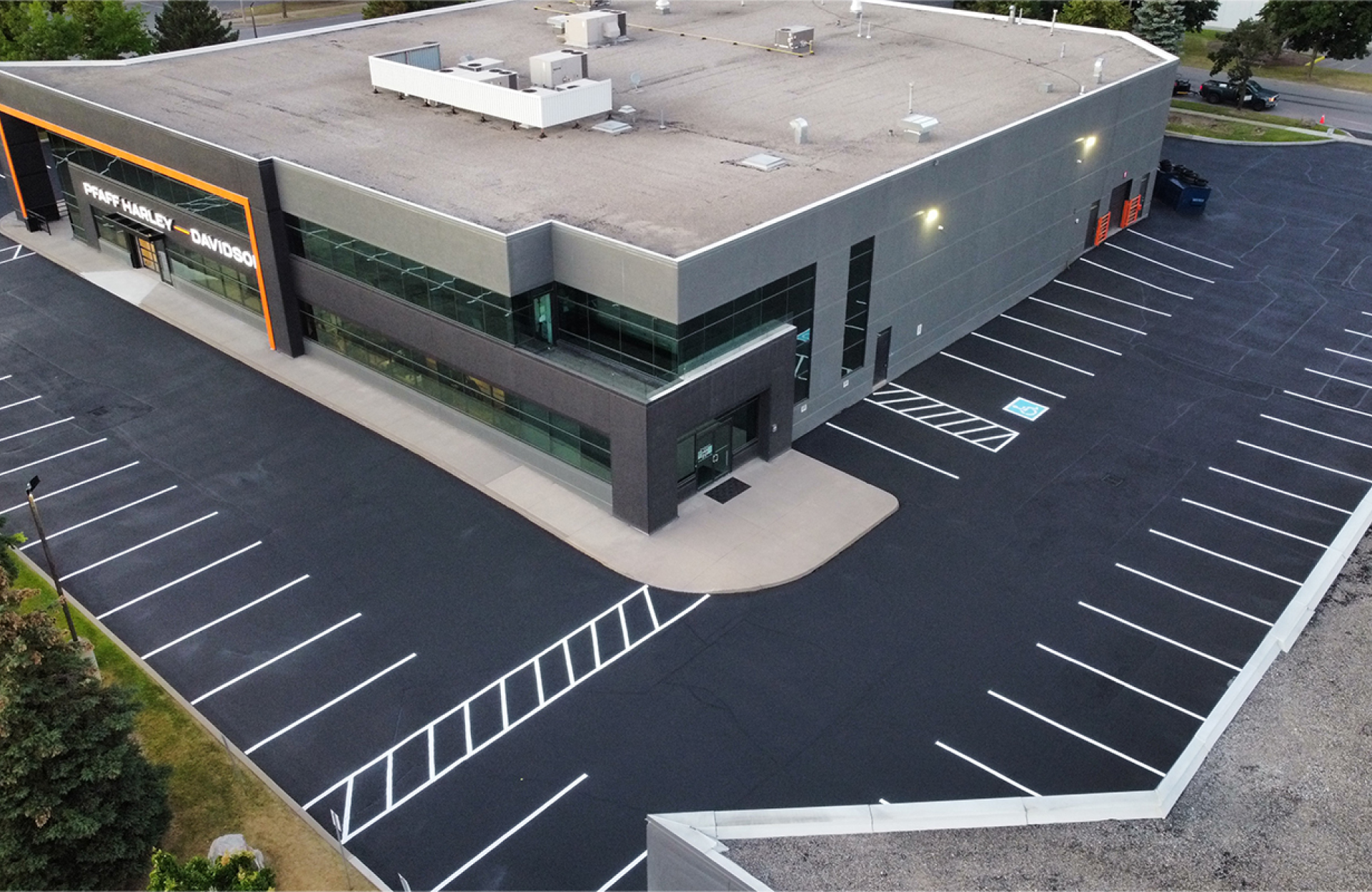
Once new commercial paving has cured enough, stall lines, arrows, fire routes and accessible markings are painted to complete the lot.
Phase 3: Why Is Asphalt Maintenance the Longest Phase?
Maintenance is where most of the parking lot lifecycle is spent, and where owners have the most control. The goal of asphalt maintenance is to keep water out, protect the surface and fix small problems before they spread.
Routine Inspections
Good asphalt maintenance starts with a walk of the lot at least twice a year, ideally in spring and fall. Look for cracks, potholes, ponding, faded lines, raveling and damaged curbs.
Crack Sealing
Sealing cracks while they are small keeps water out of the base and is one of the lowest-cost forms of asphalt maintenance. Professional crack sealing for commercial lots is best done in spring or fall, before winter widens every opening.
Sealcoating
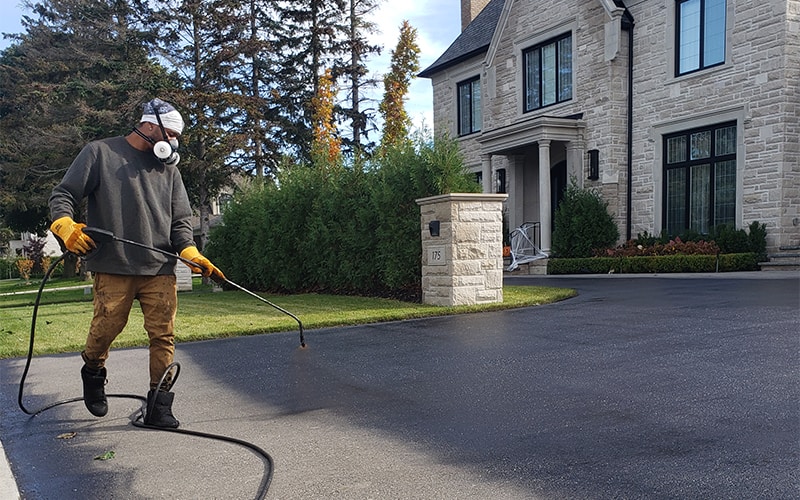
Sealcoating every two to three years is core asphalt maintenance that protects the surface from UV rays, water, salt and fuel.
Pothole and Asphalt Repairs
Potholes and failed areas should be repaired promptly with permanent hot-mix patches rather than temporary cold patch. Fast repairs reduce liability and stop damage from spreading, which makes them a priority in any asphalt maintenance budget.
Line Painting
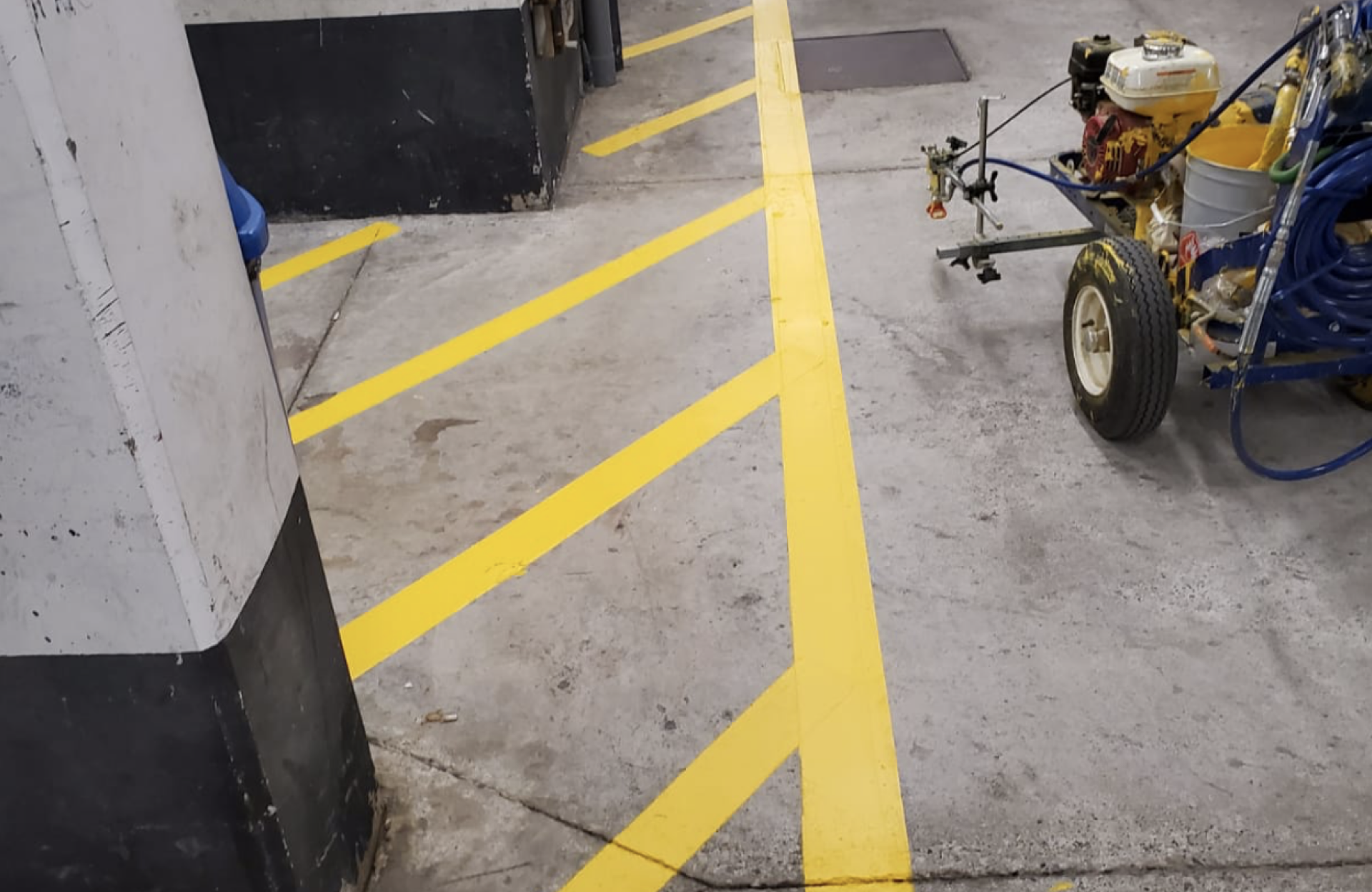
As part of routine asphalt maintenance, faded lines and markings should be repainted to keep traffic organized and safe, typically after each sealcoat or whenever markings wear.
Phase 4: When Does a Lot Need Rehabilitation or Resurfacing?
Even well-maintained lots eventually show widespread surface aging. When cracking, raveling or oxidation cover large areas but the base is still sound, rehabilitation can restore the surface at a fraction of the cost of replacement and reset the parking lot lifecycle.
Overlay
An overlay adds a new layer of asphalt over the existing surface. It works well when the existing pavement is structurally sound after years of good asphalt maintenance, and it can add many years to the parking lot lifecycle.
Milling and Resurfacing
Milling removes the worn top layer before new asphalt is placed. This keeps finished grades level with curbs, catch basins and entrances, which matters on most commercial paving projects.
Base Repairs Before Resurfacing
Soft or failed base areas should be dug out and rebuilt before any resurfacing.
Phase 5: When Is Full Replacement the Right Call?
Replacement is the final phase of the parking lot lifecycle. It becomes the right choice when the base has failed across large areas, when alligator cracking and potholes are widespread, or when drainage or layout problems cannot be fixed with resurfacing or asphalt maintenance alone.
A replacement project is also an opportunity to fix what did not work the first time. Re-evaluate drainage, traffic flow, accessible parking and heavy-load areas, then rebuild with a properly compacted base and new commercial paving designed for current use.
How Do Ontario Winters Shorten the Parking Lot Lifecycle?
Water that enters cracks freezes, expands and forces them wider. In the GTA, a crack left open in October can be a pothole by April. That is why the fall season is so important for asphalt maintenance. Sealing cracks and repairing weak areas before the first freeze protects the base through the hardest months of the year.
What Maintenance Schedule Extends a Commercial Lot’s Life?
A simple, consistent asphalt maintenance plan does more than any single repair. For most commercial lots in the GTA, a practical schedule looks like this:
• Twice a year: inspect the lot in spring and fall, and check catch basins and curbs.
• Every year as needed: seal new cracks and repair potholes or failed patches.
• Every two to three years: sealcoat the surface and repaint lines.
• When surface wear is widespread: plan an overlay or mill and resurface while the base is still sound.
Bundling parking lot repairs and sealcoating into one planned visit reduces disruption and mobilization costs, and it keeps the lot in the low-cost part of the parking lot lifecycle for longer.
How Seal Canada Supports Every Phase of Your Lot
Seal Canada works with property managers, facility managers, condo corporations and commercial owners across Toronto, Vaughan, Mississauga, Markham, Richmond Hill, Barrie and the wider GTA. Our services cover commercial paving, site servicing and grading, asphalt repairs, crack sealing, sealcoating, line painting and concrete work, so one contractor can manage your lot through every phase.
Every project starts with a free site assessment and a detailed written report showing where your lot sits in the parking lot lifecycle, what needs attention now and what can be planned for later. We schedule around tenants and operations, respond promptly and offer 24/7 emergency service, with work completed well above industry standards, on time and on budget.
Frequently Asked Questions
1. How long does a commercial asphalt parking lot last?
A well-built commercial paving project that is well maintained commonly lasts 15 to 20 years or more before major reconstruction. Traffic, drainage, climate and maintenance all affect the actual lifespan.
2. What is the most important phase of the parking lot lifecycle?
Construction sets the foundation, but maintenance decides how long the lot lasts. Consistent asphalt maintenance is the biggest factor owners can control.
3. What is the difference between resurfacing and replacement?
Resurfacing replaces the top layer of asphalt over a sound base. Replacement removes the pavement and rebuilds the base with new commercial paving, which is needed when the foundation has failed.
4. How often should a commercial lot be sealcoated?
Most commercial lots benefit from sealcoating every two to three years, after cracks are sealed and repairs are completed as part of a regular asphalt maintenance plan.
5. How do I know which phase my parking lot is in?
A professional site assessment reviews cracking, base condition, drainage and surface wear to show whether the lot needs maintenance, rehabilitation or replacement.
Want to know where your lot sits in the parking lot lifecycle and how to add years to it? Contact Seal Canada to book a free site assessment and a pavement specialist will give you a detailed written report with clear, prioritized recommendations.
Key Takeaways
• The parking lot lifecycle runs through design, construction, maintenance, rehabilitation and replacement.
• Good design and properly compacted commercial paving set the ceiling for how long pavement can last.
• Asphalt maintenance is the longest phase and the one owners control most.
• Resurfacing works while the base is sound; replacement is needed once it fails.
• Fall crack sealing and repairs protect the lot through Ontario winters.