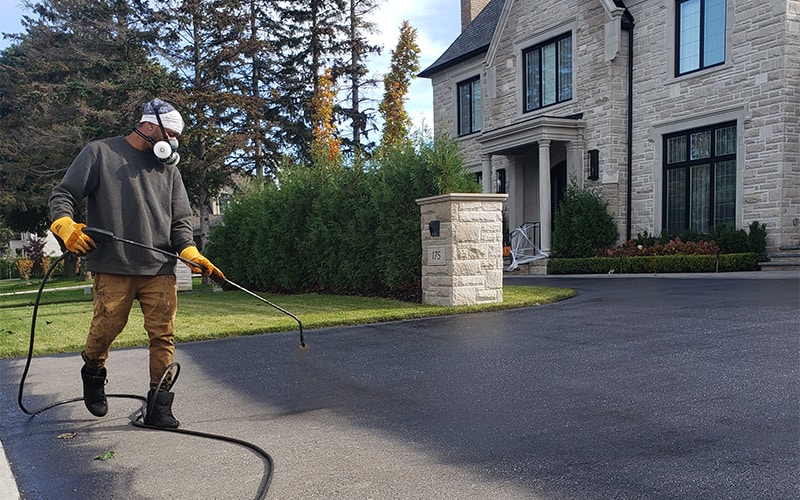
Sealcoating is the most cost-effective scheduled maintenance activity available for commercial asphalt. Applied every two to three years, it blocks UV oxidation, repels water infiltration, and protects against fuel and chemical spills that degrade the asphalt binder. This guide explains how sealcoating works, what it protects against, and how to time applications for maximum effectiveness in Ontario’s climate.
What Sealcoating Is and How It Works
Sealcoating is the application of a protective liquid coating to the surface of an existing asphalt pavement. The coating, typically a water-based emulsion containing asphalt or coal tar derivatives, aggregate fillers, and polymer additives, forms a protective film once cured. That film limits the exposure of the underlying asphalt binder to the environmental forces that cause it to deteriorate. It does not add structural strength to the pavement, but it significantly extends the window during which the pavement retains the structural integrity it already has. For property managers overseeing commercial parking lots, that distinction is important: sealcoating is a preservation tool, not a repair.
Protection Against UV Oxidation
The most significant long-term threat to asphalt pavement in climates with high UV exposure is oxidation. Asphalt’s bituminous binder contains oils that keep the material pliable and allow it to flex under load without fracturing. UV radiation causes those oils to evaporate, leaving the binder dry, brittle, and prone to surface cracking.
Sealcoating provides a UV-reflective barrier that slows this process by limiting direct exposure of the binder to solar radiation. A properly applied sealcoat on a two to three year cycle can extend the service life of an asphalt surface by five or more years compared to an unsealed surface with equivalent traffic and base conditions.
Water and Freeze-Thaw Protection
Water infiltration is the primary mechanism through which asphalt surfaces deteriorate in Canadian climates. Water that enters the pavement through surface cracks or an oxidized, porous binder reaches the base layer, weakens it, and creates the conditions for pothole formation and structural failure. Freeze-thaw cycling amplifies this damage dramatically: every litre of water that freezes in a crack expands the crack opening and deepens the water’s penetration with each cycle.
A sealcoated surface reduces the permeability of the pavement to water, limiting the volume that can infiltrate under normal rainfall and snowmelt conditions. Combined with prompt crack sealing when cracks do appear, sealcoating is the primary tool for keeping water out of the base layer between major rehabilitation events.
Resistance to Fuel and Chemical Spills
Parking lots accumulate fuel and oil drips from vehicles over time. These petroleum products are chemically similar to the bitumen in asphalt, but in liquid form they act as solvents, softening and displacing the binder and weakening the surface. Unsealed asphalt exposed to chronic fuel spills develops soft spots, surface ravelling, and accelerated deterioration in affected areas.
Sealcoating creates a chemical barrier between spilled fuels and the underlying asphalt binder. For commercial lots with high vehicle turnover, including retail centres, industrial facilities, and commercial properties with fleet vehicle parking, this protection is meaningful and reduces both surface deterioration and the frequency of spot repair interventions.
The Right Timing for Sealcoating in Ontario
Sealcoating must be applied when air and surface temperatures are above 10 degrees Celsius and rising, and when no rain is forecast for a minimum of 24 to 48 hours after application. In Ontario, this window runs from late spring through early fall, with mid-summer applications often providing optimal curing conditions. New asphalt should cure for a minimum of 90 days before sealcoat is applied. Applying too early prevents proper adhesion. Existing surfaces should be free of active cracking, which means crack sealing must precede sealcoating on any lot with visible surface cracking.
What to Expect from the Sealcoating Process
A professional sealcoating application begins with surface preparation: cleaning the pavement of debris, loose aggregate, and oil stains. Oil spots require pre-treatment with a primer to ensure adhesion. Active cracks are cleaned and sealed before the coating is applied.
The sealcoat is applied by squeegee, brush, or spray, depending on the surface condition and project specification. Two coats are standard for commercial applications, with sufficient drying time between coats. The lot should remain closed to vehicle traffic for a minimum of 24 hours after the final coat, and ideally 48 hours in cooler conditions.
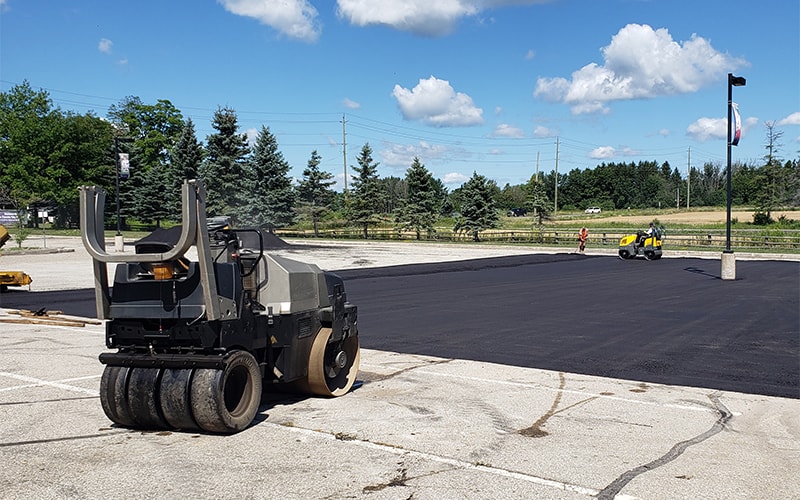
A freshly sealcoated surface restores the rich, dark black appearance of new asphalt and improves the visibility of line markings, which should be re-applied after sealcoating since the coating covers existing paint.
Frequently Asked Questions
1. How often should I sealcoat my commercial parking lot?
Every two to three years is the standard recommendation for most commercial parking lots. High-traffic sites or lots with significant fuel and oil exposure may benefit from more frequent applications. The surface should be inspected before each application: if the existing sealcoat is still visually intact and not significantly worn through to the asphalt beneath, extending the interval by a season is reasonable.
2. Can sealcoating be applied over existing cracks?
Active cracks should be cleaned and sealed with a dedicated crack filler before sealcoating. Sealcoat applied over open cracks will bridge the gap initially but will crack in the same location as the underlying opening moves with temperature changes. The correct sequence is always crack repair first, then sealcoating.
3. How long does a sealcoated parking lot need to be closed?
A minimum of 24 hours of closure to vehicle traffic is standard after the final coat, with 48 hours recommended in cooler temperatures or when high humidity slows curing. Foot traffic can typically be permitted after 6 to 8 hours. Scheduling sealcoating over a weekend minimizes operational disruption for most commercial properties.
4. Does sealcoating eliminate the need for other asphalt maintenance?
No. Sealcoating is one component of a complete asphalt maintenance program, not a substitute for other activities. Crack sealing, pothole repair, drainage maintenance, and periodic structural assessment are all necessary alongside a regular sealcoating schedule. Sealcoating a deteriorated surface without addressing structural deficiencies does not extend pavement life in a meaningful way.
5. What is the environmental impact of sealcoating products?
Water-based asphalt emulsion sealcoats are the more widely specified product in Canada due to lower VOC content compared to coal tar formulations. Several jurisdictions have restricted or banned coal tar-based products due to polycyclic aromatic hydrocarbon (PAH) concerns. When specifying sealcoating, confirm the product formulation with your contractor and select a water-based emulsion product where regulatory concerns apply.
Protect What You’ve Already Invested In
Seal Canada provides professional sealcoating services for commercial parking lots across Ontario, coordinated with crack sealing and line re-painting to deliver a complete surface refresh in a single mobilization. Contact our team to schedule a free assessment and find out when your lot is due for its next sealcoat.
Key Takeaways
- Sealcoating is a preservation tool, not a structural repair. It extends the life of asphalt that is structurally sound; it does not restore asphalt that is structurally compromised.
- UV oxidation dries out the asphalt binder over time. A two to three year sealcoating cycle directly limits this process and extends surface flexibility.
- Water infiltration through porous or cracked asphalt is the primary deterioration mechanism in Canadian climates. Sealcoating reduces pavement permeability and limits base layer exposure.
- Crack sealing must precede sealcoating. Applying sealcoat over active cracks produces a temporary bridge that fails at the same location.
- Line painting must follow sealcoating, as the coating covers existing markings. Coordinate both activities in a single mobilization to reduce cost and disruption.
- Water-based asphalt emulsion sealcoats are preferred in Canada for their lower environmental impact compared to coal tar-based alternatives.