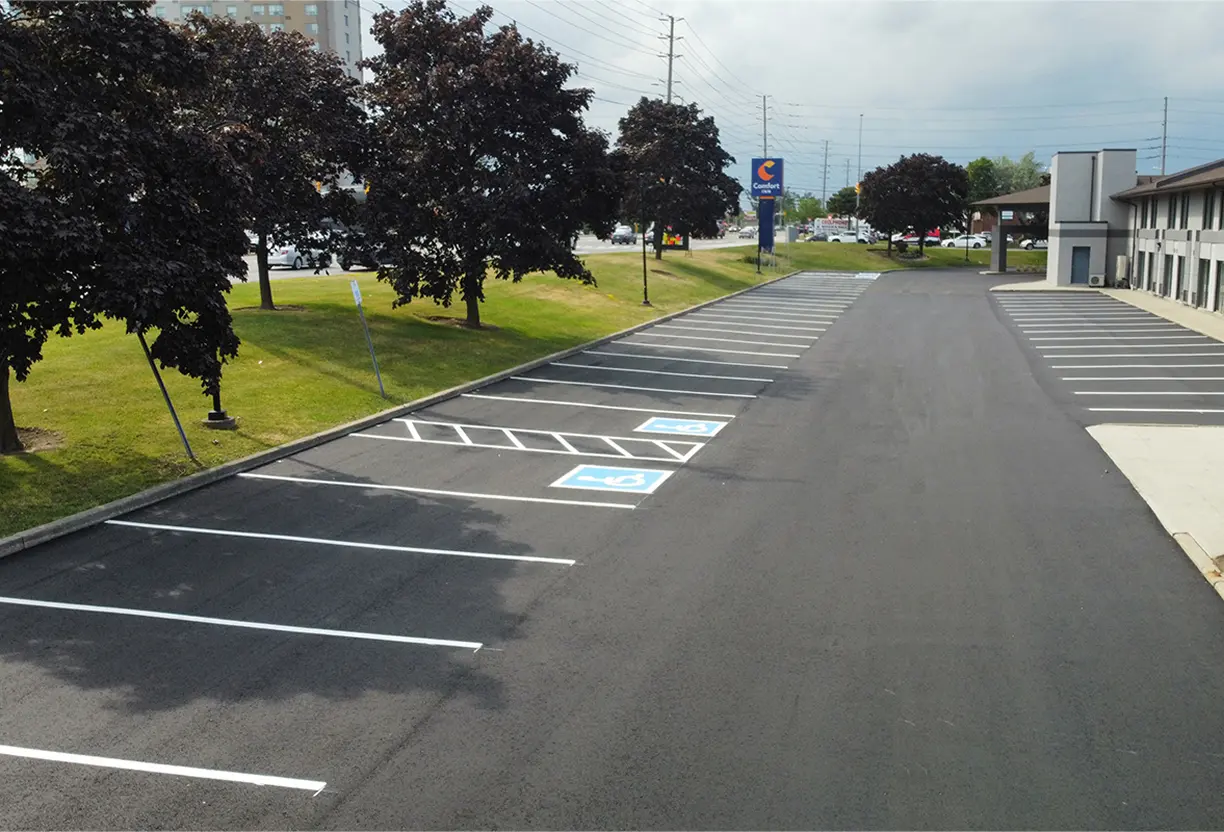
Reactive repairs cost more and deliver less than a structured long-term parking lot maintenance plan. A plan built on regular inspections, preventive treatments, seasonal preparation, and realistic budgeting protects your pavement asset for its full design life while keeping annual maintenance costs predictable.
Why Long-Term Parking Lot Maintenance Outperforms Reactive Repair
Most commercial property managers encounter parking lot issues the same way: a tenant or customer reports a pothole, a crack appears after winter, or a liability concern surfaces after an incident. Reactive repair addresses the symptom. A long-term parking lot maintenance plan addresses the system.
The economics are clear. A ton of asphalt used for crack sealing costs a fraction of the same material used for pothole patching, which costs a fraction of full-depth reconstruction. Each step up the repair severity scale multiplies cost by a factor of three to ten. Properties with documented maintenance programs consistently extend pavement service life by five to eight years compared to those managed reactively. The Transportation Association of Canada publishes pavement asset management frameworks used by municipalities and commercial property managers that quantify the financial case for preventive maintenance over reactive repair.
Component 1: Regular Inspections on a Defined Schedule
A maintenance plan without inspection data is guesswork. Inspections are the feedback loop that keeps every other component of the plan calibrated to actual pavement condition rather than assumed condition.
Commercial parking lots should receive a formal inspection at minimum twice per year: once in spring after freeze-thaw season has revealed winter damage, and once in fall before the first frost so that any issues can be addressed before cold weather sets in. High-traffic lots, lots with known drainage problems, and lots serving heavy vehicles benefit from quarterly inspections.
Each inspection should document surface condition, crack location and width, drainage performance, line marking visibility, lighting function, and accessible space compliance. A photographic record attached to each inspection report creates the audit trail that supports both maintenance planning and liability defence if an incident occurs.
Seal Canada provides professional condition assessments for commercial lots across Ontario, with documented findings and prioritized repair recommendations you can take directly into your maintenance budget.
Component 2: Preventive Maintenance That Protects the Surface
Sealcoating on a Three-to-Five-Year Cycle
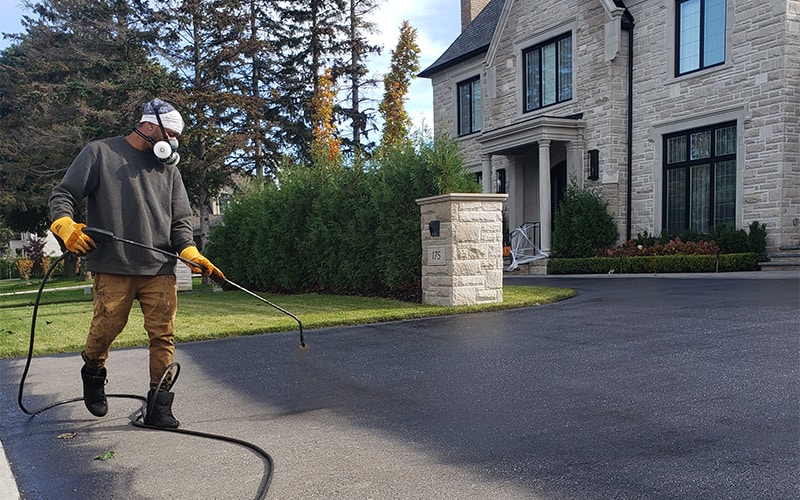
Sealcoating is the highest-value preventive treatment in a commercial parking lot maintenance program. Applied to a properly prepared surface every three to five years, it slows UV oxidation of the asphalt binder, repels moisture, and resists petroleum chemical penetration. Each sealcoating cycle adds measurable years to the pavement’s service life. The benefits of asphalt sealcoating are well-documented for Ontario commercial properties. The decision of when to apply is based on surface condition at the time of inspection, not a fixed calendar. Heavily
oxidized surfaces may need resealcoating at three years; well-protected surfaces may remain sound at five.
Crack Sealing Before Problems Escalate
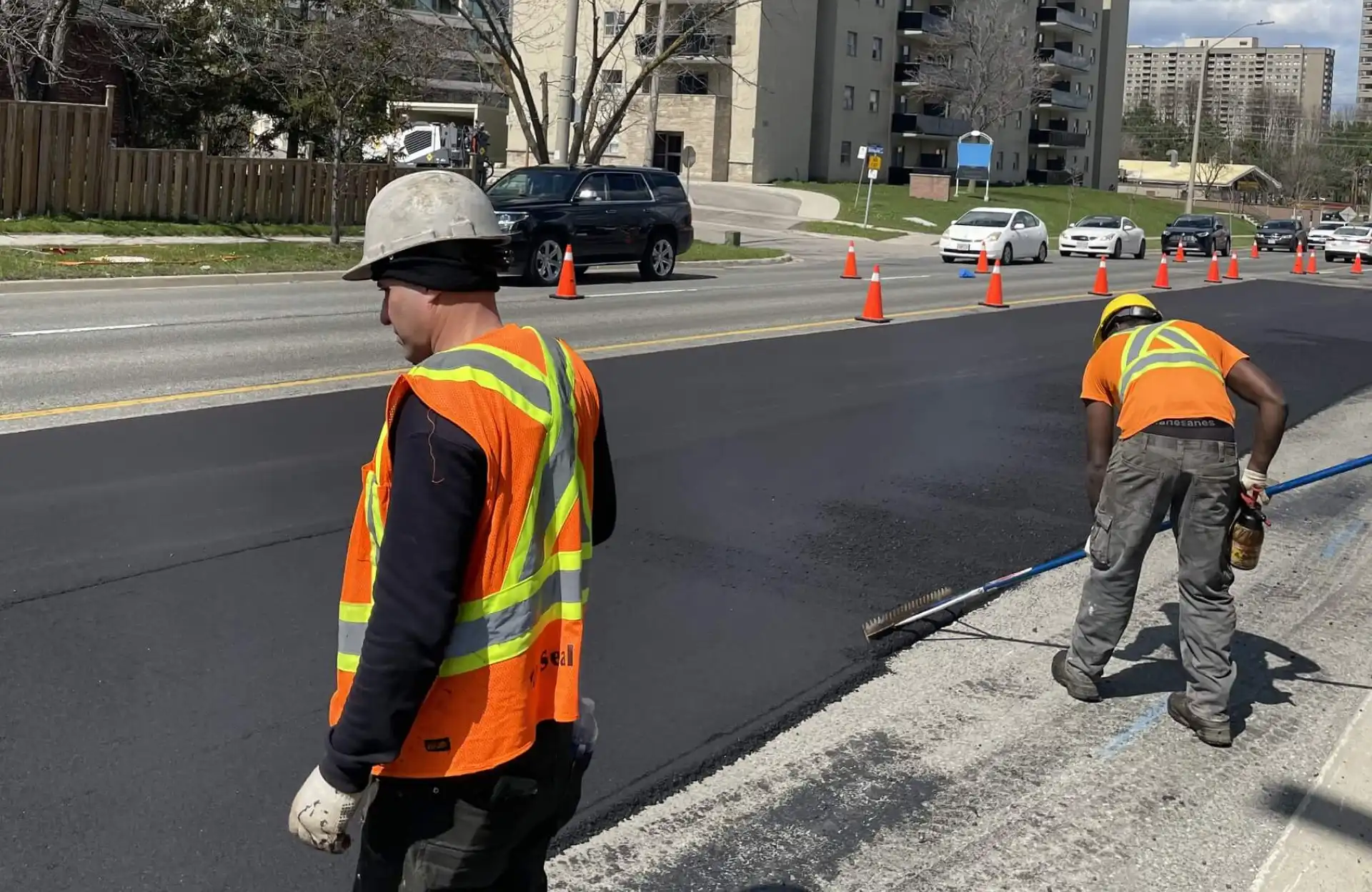
Cracks are the entry point for every major pavement failure: water infiltration, subbase erosion, frost heave, and pothole formation all begin with an unsealed crack. Crack sealing applied when cracks first appear, typically at 3 to 6mm width, prevents the water cycle that turns hairline cracks into structural failures.
Crack sealing should be completed in fall before the first frost so that sealed cracks enter winter in a protected state rather than open to water infiltration during freeze events. It should also follow any sealcoating application where new cracking has developed since the previous treatment.
Drainage System Maintenance
Drainage system performance determines how quickly water leaves the pavement surface and whether it accumulates above or below the pavement structure. Blocked catch basins, subsided grades, and debris-filled drainage channels allow water to pool and infiltrate, accelerating deterioration regardless of how well the surface treatments have been applied.
Clear catch basins before fall leaf drop each year. Inspect drainage grades after heavy rainfall events to identify any areas where ponding occurs. Address low spots and grade corrections as part of the annual corrective maintenance budget before they erode subbase material through repeated saturation.
Component 3: Corrective Maintenance That Restores Function
Pothole and Surface Patching
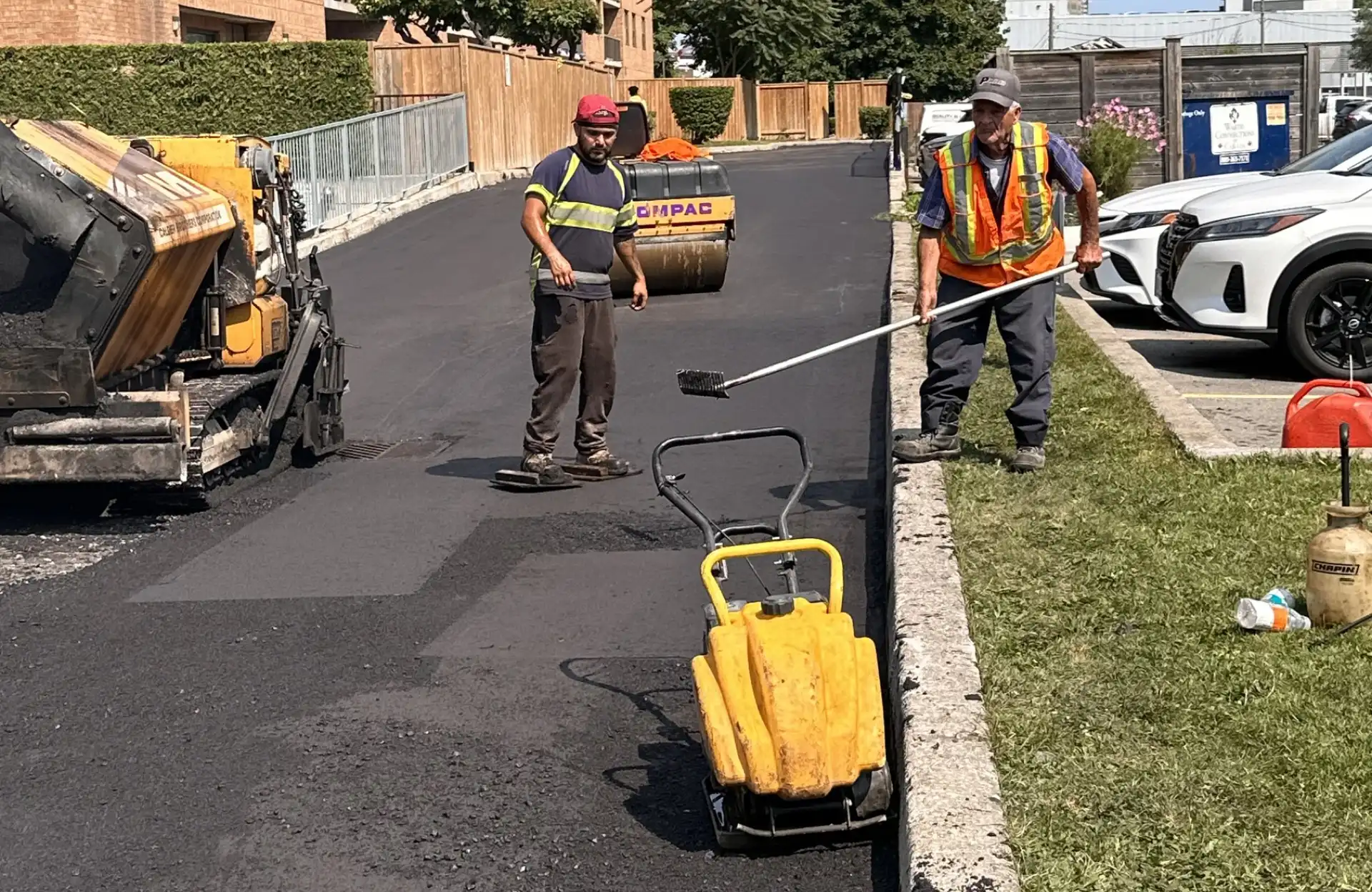
Potholes that develop despite preventive treatment require prompt corrective action. An unrepaired pothole grows in both surface area and depth with each rain event and each vehicle passing over it. Infrared repair and cut-and-patch methods both produce durable results when the correct repair technique is matched to the failure type and surrounding pavement condition.
Surface patching addresses localized areas of raveling, delamination, or shallow cracking where the subbase remains sound. It is a corrective measure, not a substitute for the preventive treatments that would have avoided the surface damage.
Line Striping and Marking Renewal
Faded line markings create safety and liability risk independent of surface condition. Drivers cannot self-organise in an unmarked or poorly marked lot, and pedestrian crossing locations become ambiguous when markings are no longer clearly visible. Line striping renewal should be tied to the sealcoating cycle, as sealcoating covers existing markings, and to annual condition inspections that assess marking visibility. The Ontario AODA sets specific legal requirements for accessible space markings that must be maintained to the required standard regardless of the overall marking renewal cycle.
Component 4: Seasonal Maintenance Calibrated to Ontario’s Climate
Fall Preparation
Fall is the highest-value maintenance window for Ontario commercial lots. Completing crack sealing, surface patching, and drainage clearing before the first frost puts the pavement in the strongest possible condition to withstand winter. Work completed in fall also has time to cure and set before cold weather arrives, producing better adhesion and performance than spring emergency repairs.
Winter Management
Winter maintenance focuses on access and safety rather than pavement treatment. Snow clearing equipment should use rubber or polyurethane blade edges where possible to avoid scoring the sealcoated surface. De-icing chemical selection matters: calcium magnesium acetate and sand cause significantly less pavement and concrete damage than sodium chloride at equivalent application rates.
Spring Assessment and Repair
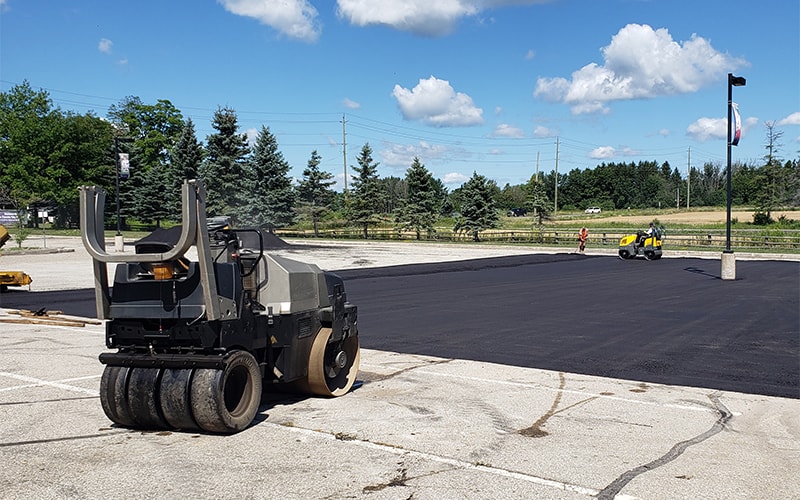
Spring reveals the cumulative impact of freeze-thaw cycling on the pavement surface. New cracking, heaved sections, and pothole development from winter water infiltration all require assessment and prioritization before warm-weather traffic volumes increase. Spring repairs scheduled in May and June take advantage of optimal paving temperatures and contractor availability. For lots that have reached the end of their preventive maintenance window, asphalt resurfacing in spring resets the maintenance clock and restores a uniform surface condition across the full lot.
Component 5: Budgeting and Multi-Year Resource Planning
A long-term parking lot maintenance plan is only as useful as the budget that funds it. Budget planning should work backward from a ten-to-fifteen-year pavement lifecycle view, identifying when each major treatment is expected and estimating costs at current rates with a modest escalation factor for future years.
Structure the budget in three tiers: an annual operating budget for routine inspections, crack sealing, and minor patching; a three-to-five-year capital budget for sealcoating cycles and major corrective work; and a replacement reserve that anticipates resurfacing or reconstruction at end of service life.
Include a 10 to 15 percent contingency at each tier. Subgrade surprises, weather-related scope adjustments, and material price variation are predictable over a long planning horizon even if the specific events are not. The National Research Council of Canada provides infrastructure asset management frameworks that support multi-year capital planning for commercial property maintenance programs.
For the technical and economic case for sealcoating timing within a lifecycle plan, Seal Canada’s guide to parking lot maintenance after sealcoating covers how post-application care decisions affect the return on each treatment cycle.
Building a Parking Lot Maintenance Program That Pays for Itself
A structured long-term parking lot maintenance plan is not an overhead cost. It is an asset protection strategy that extends pavement service life, reduces total repair expenditure, and keeps the property safe and functional through the full maintenance cycle. The annual investment in preventive maintenance consistently delivers a return measured in deferred reconstruction costs and avoided liability incidents.
A plan delivers its full value when it is executed consistently by a contractor who knows the property, understands its condition history, and maintains continuity across treatment cycles. Switching contractors between sealcoating applications, crack sealing programs, and line marking cycles creates specification gaps and documentation breaks that undermine the plan.
Frequently Asked Questions
1. How often should a commercial parking lot be formally inspected?
A minimum of twice per year: once in spring after freeze-thaw season and once in fall before the first frost. High-traffic lots, lots with known drainage issues, and lots serving heavy vehicles benefit from quarterly formal inspections with photographic documentation.
2. What is the right sealcoating interval for a commercial parking lot?
Three to five years is the standard commercial interval, based on actual surface condition at inspection rather than a fixed calendar. Heavily oxidized or chemically exposed surfaces may warrant a three-year cycle. Surfaces in strong condition with adequate protection may remain sound at five years.
3. How does crack sealing fit into a long-term maintenance plan?
Crack sealing is applied whenever cracks reach 3 to 6mm width, which typically occurs between sealcoating cycles. It is the highest-value intervention in the maintenance plan because it prevents the water infiltration that causes subbase erosion, frost heave, and pothole formation.
4. What should a commercial pavement maintenance budget include?
An annual operating budget for inspections, crack sealing, and minor patching; a three-to-five-year capital budget for sealcoating cycles and major corrective work; and a ten-to-fifteen-year replacement reserve that anticipates resurfacing or reconstruction. Each tier should carry a 10 to 15 percent contingency.
5. When is asphalt resurfacing the right choice versus continued maintenance?
Resurfacing is appropriate when the surface has deteriorated beyond the point where preventive treatments are effective, typically when widespread alligator cracking, significant rutting, or delamination are present but the subbase remains structurally sound. When the subbase has failed, full-depth reconstruction is required.
6. How does winter affect a commercial parking lot in Ontario?
Freeze-thaw cycling is the primary winter damage mechanism. Water infiltrates through unsealed cracks, freezes and expands, forces cracks wider, and creates the conditions for pothole formation in spring. Fall crack sealing and proper drainage maintenance before winter dramatically reduce the severity of spring damage.
Start Planning Your Parking Lot Maintenance Today
Seal Canada works with commercial property managers and asset managers across Ontario to build and execute multi-year parking lot maintenance programs. Our services cover the full maintenance scope: condition inspections, asphalt sealcoating, crack sealing, pothole repair, drainage assessment, and line striping. Browse our completed projects to see the range of commercial maintenance work we deliver, or contact our team to discuss a maintenance program for your property.
Key Takeaways
- Preventive maintenance costs a fraction of reactive repair at each stage. A structured plan captures that savings compounded over the full pavement lifecycle.
- Inspections twice per year, spring and fall, provide the condition data that keeps every other maintenance decision calibrated to reality rather than assumption.
- Crack sealing applied at 3 to 6mm width is the highest-ROI maintenance activity in any commercial lot program. It prevents the water cycle that causes all major pavement failures.
- Sealcoating every three to five years slows UV oxidation and moisture infiltration that shorten asphalt service life regardless of how well it was originally constructed.
- Fall is the highest-value maintenance window for Ontario commercial lots. Work completed before the first frost enters winter in a cured, protected state.