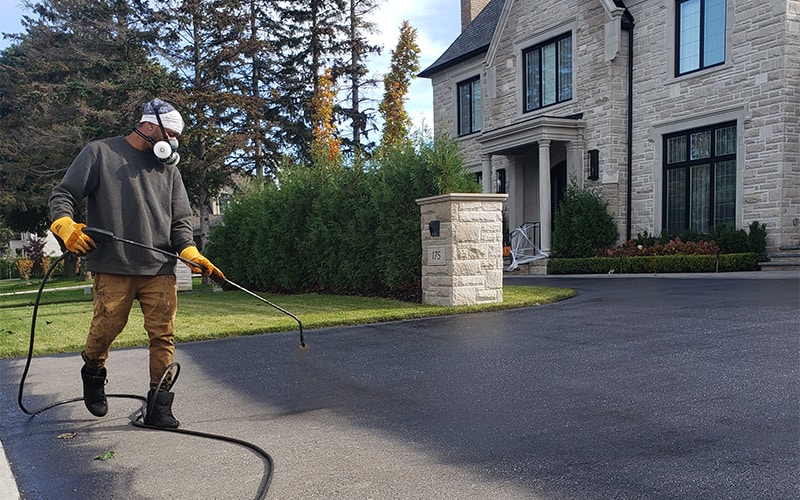
Zero-waste practices in commercial paving reduce material sent to landfill, lower project costs, and improve environmental compliance for property owners and developers. This guide covers the practical steps, material strategies, and pavement maintenance commitments that make zero-waste practices achievable on commercial pavement projects across Ontario.
Why Zero-Waste Practices Matter in Commercial Paving
Commercial paving generates substantial material waste through excavation, demolition of existing surfaces, packaging, and offcuts. Without deliberate zero-waste practices, much of this material ends up in landfill, creating disposal costs and contributing to the environmental footprint of the project.
For commercial property owners and managers, zero-waste practices are increasingly a practical business consideration. Disposal costs are rising across Ontario. Municipal requirements for construction waste diversion are tightening. And corporate ESG reporting now routinely includes construction waste metrics. Zero-waste practices address all three pressures simultaneously. According to the Recycling Council of Ontario, construction and demolition materials account for a significant share of Ontario’s total landfill waste stream, making sustainable paving decisions a meaningful contribution to provincial diversion targets.
Seal Canada’s commercial paving services incorporate zero-waste practices at every phase, from material selection through construction and into long-term pavement maintenance planning.
Understanding Zero-Waste Practices in the Paving Context
Zero-waste practices follow four principles that apply directly to commercial paving:
- Reduce: minimize the volume of material consumed by optimizing design and specification
- Reuse: extend material life through overlays, cold in-place recycling, and surface restoration rather than full demolition
- Recycle: process removed pavement into reclaimed asphalt (RAP content) or recycled concrete aggregate (RCA) for reuse
- Recover: capture energy and value from materials that cannot be directly recycled
Zero-waste practices do not require every gram of material to be reused. They require that every material decision be evaluated through a waste-reduction lens, and that the highest-value use of each material be pursued.
Material Selection as a Foundation for Zero-Waste Practices
Reclaimed Asphalt (RAP Content)
Reclaimed asphalt is the most widely used recycled material in sustainable paving. Zero-waste practices that incorporate RAP content at 20 to 40 percent of new asphalt mix reduce demand for virgin aggregate and bitumen, lower material costs, and divert removed pavement from landfill. The National Asphalt Pavement Association reports that asphalt is among the most recycled materials in North America, with RAP content reuse rates exceeding 90 percent in some markets.
Seal Canada’s asphalt resurfacing projects incorporate RAP content where mix performance specifications permit, supporting zero-waste practices without compromising surface durability.
Concrete Recycling (RCA)
Concrete demolition generates high volumes of material that can be processed into recycled concrete aggregate (RCA) for subbase stabilization. Zero-waste practices that direct concrete demolition waste to concrete recycling processors rather than landfill reduce both disposal costs and the volume of new aggregate required.
Local Material Sourcing
Zero-waste practices also encompass transportation impact. Specifying locally sourced aggregate, recycled content materials, and regional suppliers reduces the carbon footprint associated with material transport, a component of overall project waste that is often overlooked in sustainable paving planning.
Design Strategies That Support Zero-Waste Practices
Zero-waste practices embedded in design decisions can eliminate waste before it is generated. Key design strategies include:
- Resurfacing over demolition where subbase condition permits, preserving existing reclaimed asphalt material in productive use
- Modular design approaches that allow phased construction and reduce overrun material
- Accurate quantity surveying to reduce material over-ordering
- Drainage design that reduces erosion and surface deterioration, extending the interval between major interventions
Lifecycle analysis at the design stage helps quantify the environmental benefit of zero-waste practices and supports the business case for sustainable paving specification decisions. The Canada Green Building Council provides guidance on incorporating waste diversion targets into commercial construction specifications, including zero-waste practices for pavement projects.
Construction Phase Zero-Waste Practices
On-Site Material Management
Zero-waste practices during construction require deliberate site management. On-site sorting of demolition waste by material type allows reclaimed asphalt, concrete recycling material, and aggregate to be directed to appropriate recycling or reuse streams. Designating staging areas for each material type and training crews on sorting protocols are foundational zero-waste practices for the construction phase.
Waste Tracking and Reporting
Zero-waste practices produce documentation value alongside environmental value. Tracking the volume of material diverted from landfill, the RAP content incorporated into new mix, and the waste diversion rate achieved creates records that support ESG reporting and municipal compliance requirements.
Equipment and Process Efficiency
Zero-waste practices extend to construction process efficiency. Minimizing equipment idle time, optimizing asphalt temperature to reduce material waste from premature cooling, and planning haul routes to reduce transportation waste are all zero-waste practices that improve project economics as well as sustainable paving performance. Seal Canada’s eco-friendly paving approach covers how our team integrates environmental responsibility into every commercial project.
Pavement Maintenance as a Zero-Waste Practice
Preventive pavement maintenance is among the most impactful zero-waste practices available to commercial property owners. Every dollar invested in timely asphalt crack sealing, asphalt sealcoating, and surface repairs extends the life of the existing pavement, deferring the full demolition and replacement cycle that generates the highest volumes of waste.
Properties that implement regular pavement maintenance through proactive parking lot maintenance programs typically achieve significantly longer pavement service lives than those that defer maintenance, substantially reducing lifecycle waste generation.
Zero-waste practices in pavement maintenance also include responsible disposal of removed sealant, line paint, and crack filler materials, which should be managed as part of the site waste stream rather than discarded as general refuse.
Zero-Waste Practices for Concrete Work
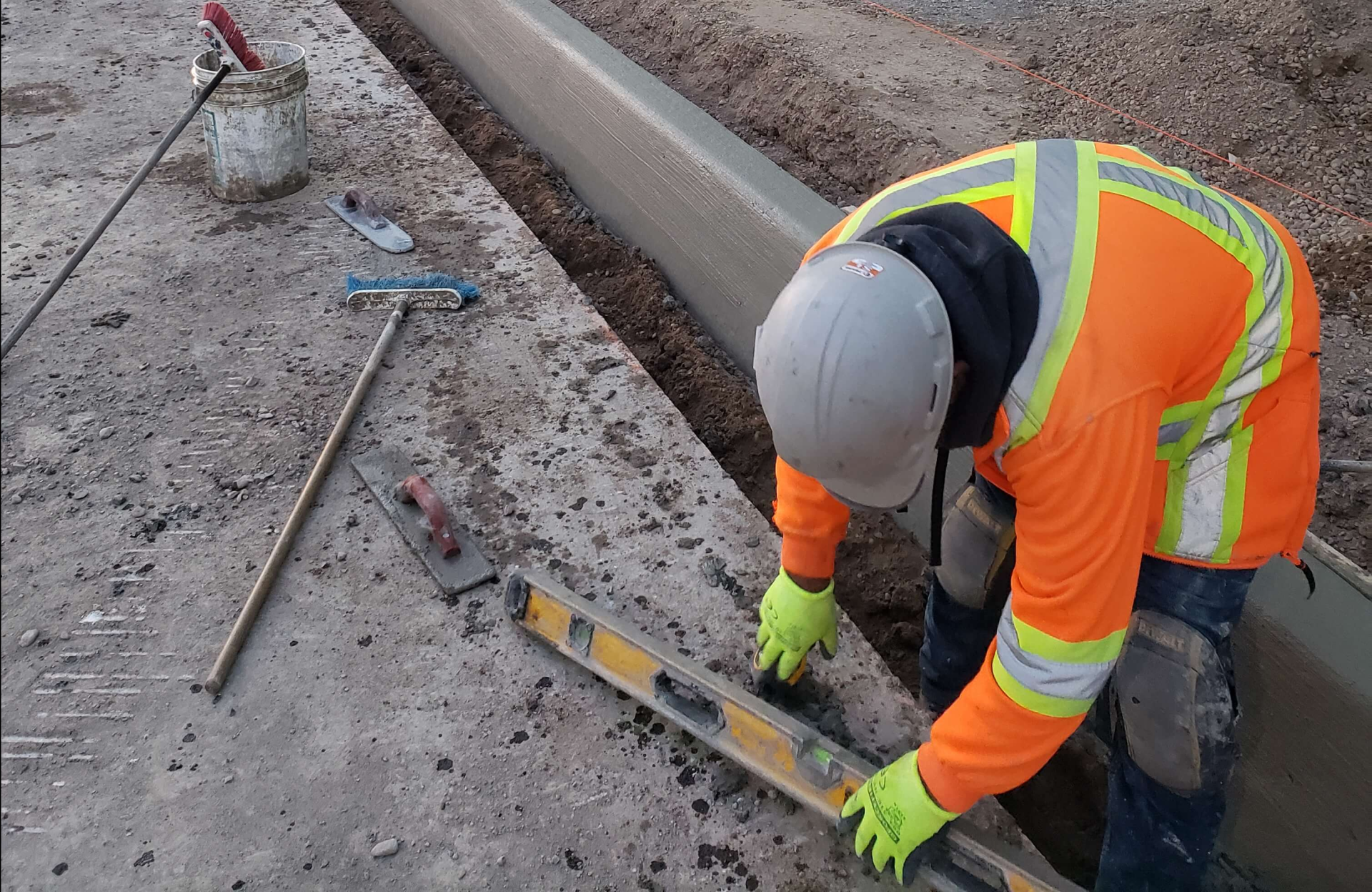
Concrete demolition is one of the highest-volume waste streams in commercial property renovation. Zero-waste practices for concrete work include crushing demolition material for concrete recycling use in subbase applications, recovering formwork materials for reuse, and minimizing over-pour through accurate forming and volume calculation.
Seal Canada’s asphalt and concrete services include curb, sidewalk, and pad work designed to minimize demolition waste and maximize material efficiency. Learn more about our approach to sustainable paving for commercial properties and how material decisions at the specification stage deliver long-term cost and environmental benefits.
Case Studies in Zero-Waste Paving Practices
Commercial Parking Lot Restoration Using Zero-Waste Practices
A commercial property in Vaughan undertook a full parking lot restoration using zero-waste practices throughout. Existing asphalt was milled and processed into reclaimed asphalt for incorporation into the new surface course as RAP content. Concrete curb demolition waste was directed to a regional concrete recycling processor. The project achieved a material diversion rate that reduced landfill disposal costs substantially and was documented for the property’s annual sustainability report.
Industrial Site Repaving with Zero-Waste Focus
An industrial property operator applied zero-waste practices to a 15,000 square metre sustainable paving project. By specifying 30 percent RAP content in the new mix and establishing on-site concrete recycling protocols, the project reduced total virgin material demand and eliminated the need for off-site asphalt disposal. Crack sealing and sealcoating were scheduled at two-year intervals to protect the new surface investment and maintain the zero-waste practices approach across the asset’s lifecycle.
Building a Zero-Waste Paving Program for Your Property
Implementing zero-waste practices on a single project is valuable. Building a zero-waste practices program across a property or portfolio compounds that value over time.
A property-level zero-waste practices program for pavement includes:
- Baseline inventory of current surface condition and estimated remaining pavement service life
- Pavement maintenance schedule aligned with zero-waste practices principles, prioritizing prevention over reactive repair
- Material specifications that incorporate reclaimed asphalt and favour resurfacing over demolition
- Waste tracking documentation for compliance and ESG reporting purposes
- Regular review and updating of zero-waste practices targets as technology and supply chain options evolve
Seal Canada supports property managers in developing these programs through free site assessments, detailed condition reports, and pavement maintenance planning recommendations.
A Sustainable Paving Partner for Commercial Properties in Ontario
Zero-waste practices in commercial paving deliver measurable returns across project costs, ESG compliance, and long-term sustainable paving performance. Seal Canada provides commercial paving services grounded in quality, reliability, and responsible material practices. Our team works with property managers and developers across Ontario to deliver results that meet performance requirements, support sustainability commitments, and reduce total lifecycle costs through zero-waste practices at every stage.
Contact Seal Canada for a free site assessment and learn how zero-waste practices can be built into your property’s paving program.
Frequently Asked Questions
- What percentage of asphalt pavement can realistically be recycled using zero-waste practices?
Asphalt is one of the most recycled materials in North America. Zero-waste practices that incorporate RAP content at 20 to 40 percent of new mix are standard practice for commercial projects in Canada, with some markets achieving reclaimed asphalt reuse rates exceeding 90 percent.
- Are zero-waste practices more expensive than conventional commercial paving?
Zero-waste practices that incorporate recycled content and prioritize preventive pavement maintenance frequently reduce total project and lifecycle costs. RAP content incorporation lowers virgin material demand. Preventive maintenance defers expensive reconstruction. Documentation of zero-waste practices can also reduce compliance costs and support ESG reporting that has independent financial value.
- How do zero-waste practices apply to routine pavement maintenance rather than large projects?
Routine pavement maintenance is where zero-waste practices deliver the most consistent value. Timely crack sealing prevents water infiltration that destroys subbase material. Regular sealcoating extends surface life. These zero-waste practices reduce the frequency and volume of major material interventions over a pavement’s lifecycle, making them the most accessible entry point for sustainable paving management.
- What documentation is needed to report on zero-waste practices compliance?
Municipal and corporate sustainability reporting typically requires weight tickets from licensed processors, material diversion certificates, and project-level waste tracking reports. Zero-waste practices programs that include these documentation requirements from the outset avoid the need to reconstruct records after the fact.
- Can concrete work also follow zero-waste practices principles?
Yes. Concrete demolition waste can be directed to concrete recycling for RCA processing. Concrete sealing extends pavement service life and delays the demolition cycle. Accurate forming and volume calculation reduce over-pour waste. Zero-waste practices apply across both reclaimed asphalt and concrete work throughout the pavement maintenance program.
Start Building Your Zero-Waste Paving Program Today
Whether you are planning a new commercial paving project or looking to bring zero-waste practices into your existing pavement maintenance routine, Seal Canada has the expertise and field experience to help you do it right across Ontario.
Contact Seal Canada for a free site assessment and build a sustainable paving program that delivers on both performance and environmental goals.
Key Takeaways
- Zero-waste practices in commercial paving reduce landfill waste, lower disposal costs, and support ESG reporting requirements
- Reclaimed asphalt (RAP content) and concrete recycling (RCA) are the most impactful zero-waste material options in sustainable paving
- Preventive pavement maintenance is the highest-value zero-waste practice for extending pavement service life and reducing lifecycle waste
- Design decisions, including specifying resurfacing over demolition and incorporating reclaimed asphalt, embed zero-waste practices before work begins
- On-site material sorting, waste tracking, and process efficiency are construction-phase zero-waste practices with both environmental and economic value
- Building a zero-waste practices program across a property portfolio compounds environmental and cost benefits over time