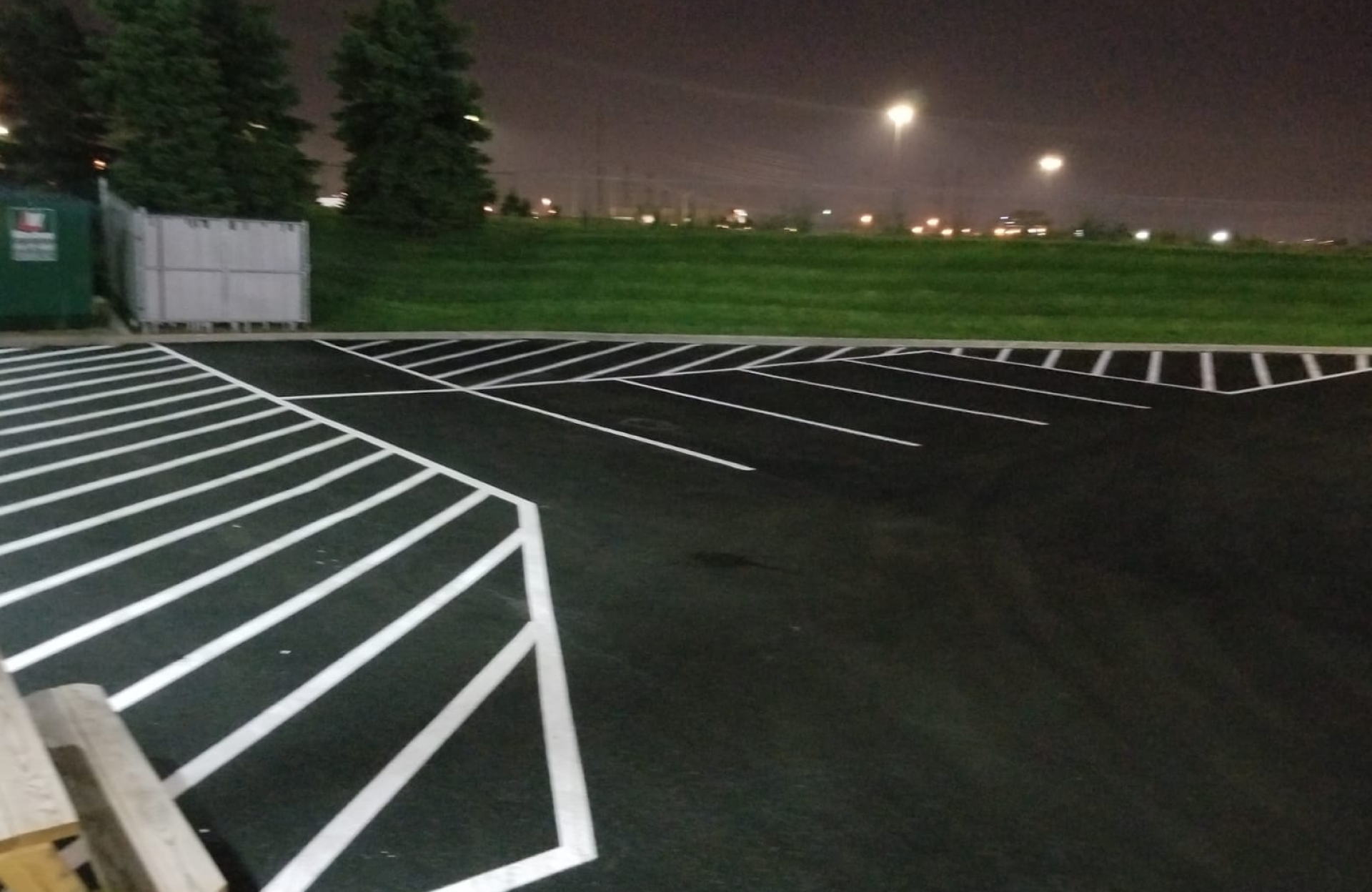
Pedestrian safety in commercial parking lots depends on the quality of the physical surface as much as it does on layout, signage, and technology. This guide covers the design decisions, surface standards, and maintenance commitments that directly improve pedestrian safety outcomes for property owners and managers across Ontario.
Why Pedestrian Safety Is a Commercial Property Priority
Parking lots are among the most pedestrian safety-critical environments on any commercial property. They combine high vehicle volumes, limited separation between vehicle and pedestrian zones, variable lighting conditions, and surfaces that deteriorate under seasonal stress. Incidents that compromise pedestrian safety in parking lots generate liability exposure, insurance claims, and slip and fall liability that affect property value and tenant relationships.
For commercial property managers in Ontario, pedestrian safety is both a legal obligation under AODA compliance standards and a practical business requirement. Seal Canada’s commercial paving services deliver the surface quality and marking standards that form the physical foundation of pedestrian safety in any commercial parking environment.
The Surface Connection: How Pavement Quality Drives Pedestrian Safety
Pedestrian safety conversations in parking lot management often focus on cameras, signage, and lighting. The condition of the pavement surface itself receives less attention, yet it is one of the most direct determinants of pedestrian safety outcomes.
Surface defects that compromise pedestrian safety include:
- Potholes and depressions that create tripping hazards and ankle injury risks
- Raised cracks and surface heaving caused by freeze-thaw cycling
- Faded or missing crosswalk markings that leave pedestrians navigating vehicle zones without guidance
- Water pooling caused by inadequate drainage that creates ice hazards in winter
- Edge deterioration at curbs and pathway transitions that creates uneven surfaces
Each of these surface defects is preventable with timely maintenance. The Canadian Centre for Occupational Health and Safety identifies slip, trip, and fall hazards as among the leading causes of workplace and public space injuries, with wet or uneven surfaces being the primary contributing factor. Asphalt crack sealing applied before surface deterioration progresses eliminates the raised edges and open voids that cause pedestrian falls. Regular asphalt sealcoating preserves surface integrity and maintains the smooth, clearly marked surfaces that pedestrian safety requires.
Parking Lot Design for Pedestrian Safety
Designated Pedestrian Pathways
Pedestrian safety in commercial parking lots begins with a parking lot design that gives pedestrians a defined, protected route from their vehicle to the building entrance. Pedestrian safety pathways should be direct, clearly marked with high-visibility paint or distinctive surface material, and designed to minimize vehicle crossing points.
Where pedestrian safety pathways must cross vehicle traffic aisles, raised crosswalk markings or surface-level marking changes signal to drivers that a pedestrian safety zone is active. Raised crosswalks are most effective because they force speed reduction through the physical surface rather than relying on driver compliance with signage alone.
Traffic Flow and Pedestrian Safety Zone Separation
One-way traffic flow patterns reduce vehicle speed and conflict within the parking lot, improving pedestrian safety by reducing the number of unpredictable vehicle movements pedestrians must navigate. Angled parking configurations further support pedestrian safety by allowing vehicles to exit spaces in a controlled direction, reducing the risk of backing conflicts.
Seal Canada’s commercial parking lot line painting and parking lot striping services produce the clear, durable crosswalk markings that pedestrian safety zone management depends on in any commercial lot layout.
Accessible Design and AODA Compliance
Pedestrian safety for all users, including individuals with mobility devices, visual impairments, and age-related limitations, requires accessible parking lot design that meets AODA compliance requirements. Accessible pedestrian safety features include:
- Accessible parking spaces positioned to minimize pedestrian travel distance to building entrances
- Level, smooth transitions at curb cuts and ramp edges that do not create tripping hazards
- Tactile guiding indicators at crosswalk markings and pathway transitions
- Adequate aisle width at accessible spaces to accommodate transfer and mobility device deployment
The AODA Alliance outlines specific requirements for accessible parking and pathway design that commercial property owners in Ontario are legally required to meet. Non-compliance creates pedestrian safety liability alongside regulatory exposure.
Lighting Standards That Strengthen Pedestrian Safety
Poor lighting is the most commonly identified contributing factor in parking lot pedestrian safety incidents. Inadequate illumination reduces the visibility of pedestrians to drivers, the visibility of surface defects to pedestrians, and the deterrent effect that good lighting has on criminal activity.
- Consistent LED illumination across all vehicle and pedestrian zones, eliminating dark spots
- Higher illumination levels at crosswalk markings, pathway transitions, and building entries
- Motion-activated supplemental lighting in low-traffic zones
- Lighting placement that avoids creating glare for drivers
Commercial properties that upgrade to LED lighting systems report measurable reductions in pedestrian safety incidents and insurance claims related to slip and fall liability.
Signage and Markings for Pedestrian Safety
Signage and surface markings are the communication system of pedestrian safety in commercial parking lots. They guide pedestrians to safe routes, signal to drivers where pedestrian safety zones begin and end, and establish right-of-way expectations that reduce conflict.
- High-visibility crosswalk markings at every vehicle-pedestrian conflict point, repainted on schedule – see Seal Canada’s guide on the best paint for parking lot line striping
- Pedestrian safety directional arrows on pathway surfaces that guide users toward building entries
- Speed control signage at crosswalk locations to reinforce pedestrian right-of-way
- Clear accessible parking signage meeting AODA compliance specifications
Crosswalk marking quality deteriorates with vehicle traffic, UV exposure, and Canadian winter maintenance activity. Pedestrian safety marking programs that schedule repainting every two to three years maintain the visibility that slip and fall liability prevention depends on.
Technology That Supports Pedestrian Safety Programs
Surveillance Systems
Surveillance cameras positioned to cover pedestrian safety pathways, crosswalk zones, and building entries serve a dual function: deterring criminal activity and providing documentation when pedestrian safety incidents occur. Camera placement should account for lighting conditions and eliminate blind spots at pedestrian safety-critical locations.
Speed Control Technology
Speed bumps, rumble strips, and speed feedback signs are proven pedestrian safety tools for commercial parking lots with high vehicle volumes. Their benefit is highest when placed immediately before crosswalk markings and pathway crossing zones, where the risk of vehicle-pedestrian conflict is greatest.
Emergency Response Infrastructure
Emergency call stations at strategic pedestrian safety locations, particularly in larger lots and at remote building entries, allow users to summon assistance quickly. Their presence contributes to perceived pedestrian safety and affects visitor comfort and the overall user experience of the commercial property.
Sustainable Design Practices That Support Pedestrian Safety
Sustainable parking lot design and pedestrian safety share common elements. Permeable paving reduces water pooling that creates ice hazards and slip and fall liability in winter. Tree canopy and landscaping improve sightlines and reduce glare that compromises driver visibility.
Integrating drainage improvements into commercial paving services is one of the most impactful investments a property manager can make for long-term pedestrian safety outcomes. The Ontario Ministry of Transportation provides accessible pedestrian design standards that inform best practice for commercial parking lot design across the province.
Case Studies in Pedestrian Safety Design
Shopping Centre: Surface Upgrade Drives Pedestrian Safety
A community shopping centre in the Greater Toronto Area addressed declining pedestrian safety scores by combining a parking lot resurfacing program with new crosswalk markings and a pathway marking installation. Crack sealing and sealcoating were completed first to eliminate surface defects, followed by high-visibility crosswalk markings and LED lighting upgrades. Insurance incident reports related to pedestrian falls dropped by more than half in the 18 months following completion.
Urban Office Complex: Layout Redesign for Pedestrian Safety
An urban office campus redesigned its parking lot design to improve pedestrian safety by adding protected pedestrian corridors separated from vehicle aisles by continuous curbing. One-way traffic flow was implemented to reduce backing conflicts, and accessible pathway surfaces were levelled to eliminate tripping hazards. The redesign was paired with full line repainting and a biennial sealcoating program to maintain pedestrian safety surface standards over time.
Protect Your Property and the People Who Use It
Pedestrian safety in commercial parking lots is a maintenance commitment as much as a parking lot design decision. Seal Canada helps property managers across Ontario maintain the surface quality, crosswalk markings, and drainage performance that pedestrian safety requires. From asphalt resurfacing and crack sealing to curb installation and line painting, our team delivers work that reduces slip and fall liability and keeps your property compliant with AODA compliance standards. A consistent parking lot maintenance program is the most reliable long-term investment in pedestrian safety your property can make.
Frequently Asked Questions
- What surface defects pose the greatest risk to pedestrian safety in parking lots?
Potholes, raised crack edges, heaved pavement from freeze-thaw damage, and water pooling that creates ice are the surface defects most commonly associated with pedestrian safety incidents and slip and fall liability. Regular crack sealing, sealcoating, and drainage maintenance address all of these risks.
- How often should crosswalk markings be repainted to maintain pedestrian safety?
High-traffic commercial lots typically require line repainting every two to three years to maintain the visibility that pedestrian safety depends on. Crosswalk markings in pedestrian safety zones should be inspected annually and repainted whenever visibility has degraded to the point where driver recognition cannot be reliably expected.
- What are the AODA compliance requirements for pedestrian safety in Ontario parking lots?
AODA compliance regulations require accessible parking spaces in proportions based on total lot size, level surfaces and dropped curbs at pedestrian safety pathway transitions, tactile guiding indicators at crosswalk markings, and adequate aisle widths for mobility device users. Non-compliance creates both pedestrian safety liability and potential regulatory enforcement.
- How does drainage design affect pedestrian safety in Canadian parking lots?
Poor drainage allows water to pool in pedestrian zones. In Canadian winter conditions, pooled water freezes into ice that creates a high-severity pedestrian safety hazard and significant slip and fall liability exposure. Drainage design that grades the surface away from pedestrian pathways and channels runoff to catch basins reduces this risk significantly.
- Can sealcoating improve pedestrian safety outcomes?
Yes. Sealcoating restores a consistent, smooth surface texture that reduces surface defects, minimizes tripping hazard severity, and maintains the surface clarity that crosswalk markings require to remain visible. A well-silocated surface also reduces water penetration that causes freeze-thaw damage, preventing the surface deterioration that generates pedestrian safety risks over time.
Schedule a Free Site Assessment with Seal Canada
Pedestrian safety on your commercial property starts with a surface that is structurally sound, clearly marked, and properly drained. Whether you are managing a single lot or a multi-site portfolio across Ontario, Seal Canada brings the surface expertise to help you meet your pedestrian safety obligations.
Contact Seal Canada for a free site assessment and build a pavement maintenance program that takes pedestrian safety seriously.
Key Takeaways
- Pedestrian safety in commercial parking lots depends on surface quality, parking lot design, lighting, and crosswalk markings working together
- Surface defects including potholes, raised cracks, and ice-prone drainage are the leading physical causes of pedestrian safety incidents and slip and fall liability
- Designated pedestrian pathways, one-way traffic flow, and raised crosswalks are the most effective layout interventions for pedestrian safety
- AODA compliance requirements are a legal baseline for pedestrian safety on Ontario commercial properties
- Regular crack sealing, sealcoating, and line repainting are the maintenance activities most directly linked to pedestrian safety outcomes
- Documented maintenance programs that demonstrate timely repair of known surface defects are the strongest defence against pedestrian safety liability claims