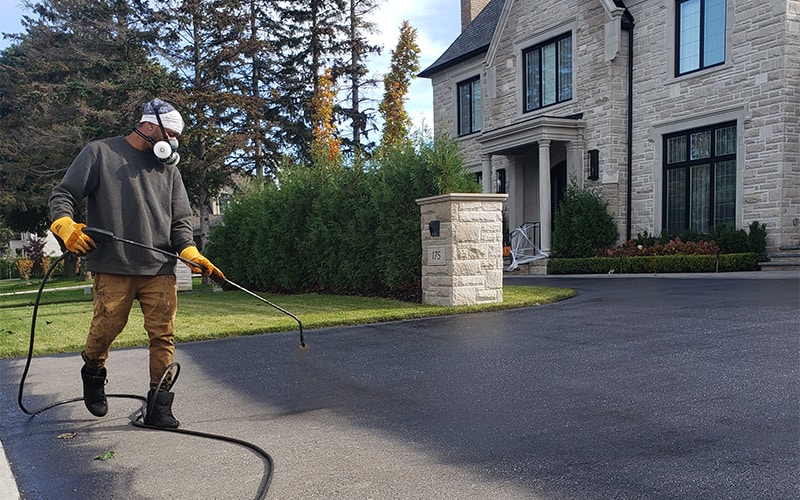
Sealcoating adds years to your asphalt surface, but only if the pavement is managed correctly after application. Proper cure time, restricted early traffic, regular cleaning, timely crack sealing, and drainage maintenance are the practices that determine whether the sealcoat performs as intended or deteriorates prematurely.
What Sealcoating Actually Does for Your Asphalt
Sealcoating applies a protective barrier over the asphalt binder that slows UV oxidation, repels water, and resists petroleum chemical penetration. Each of these functions extends the pavement’s service life by preventing the deterioration mechanisms that, left unchecked, turn a sound asphalt surface into a cracked and potholed lot. The benefits of asphalt sealcoating are well-documented for commercial properties across Ontario, but they depend on two things: applying the right product correctly and maintaining the pavement appropriately after application. The second factor is what most property managers overlook.
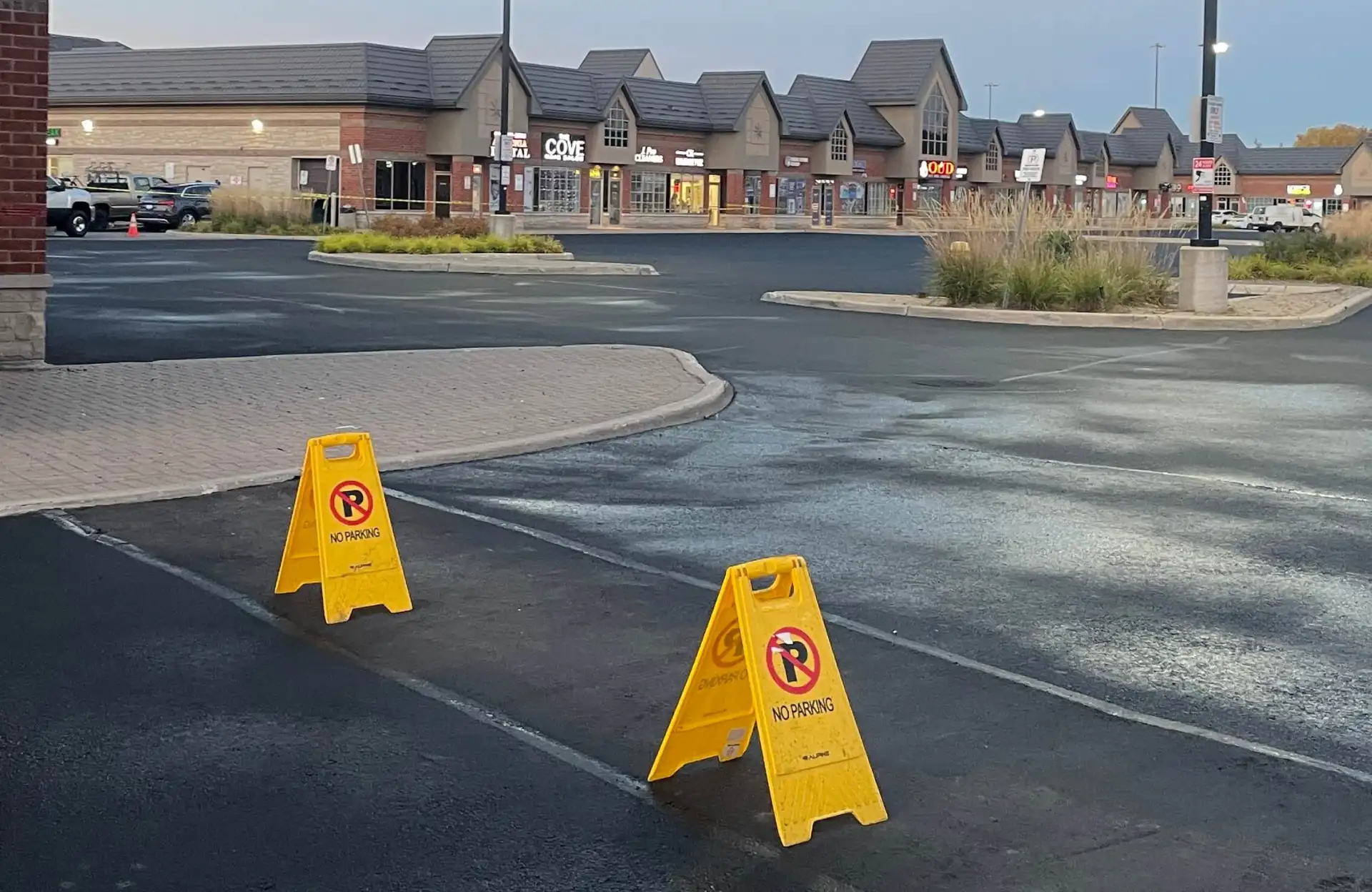
Allow Full Curing Before Returning Traffic
The most common mistake after sealcoating is returning vehicles to the surface before the product has fully cured. Standard commercial sealcoating formulations require a minimum of 24 to 48 hours of cure time in warm, dry conditions before vehicle traffic. During this window, the sealcoat is chemically setting and bonding to the asphalt surface.
Traffic introduced too early scuffs the soft surface, creates tire marks that persist permanently, and in severe cases physically removes the sealcoat from the substrate. If weather conditions are marginal, with temperatures below 10 degrees Celsius or humidity above 90 percent, extend the cure window accordingly.
For large commercial lots where partial reopening is necessary, phase access carefully. Heavy vehicles and turning movements create the most shear stress on a fresh surface, so restrict truck access and avoid areas near drive lane turns until cure is confirmed complete.
Restrict Sharp Turns and Heavy Loads in the First Week
Even after the initial cure window has passed, the sealcoat continues to harden for several days. Avoid sharp steering maneuvers, power turns, and jackknife turns from delivery vehicles during the first week after application. These movements apply concentrated shear force to the surface that can scuff or delaminate a fully cured but still-hardening sealcoat.
If your lot services regular delivery vehicles, advise contractors and their drivers of the restriction period. Temporary signage at entrances reduces the risk of uninformed drivers causing damage before the surface has reached full hardness.
Regular Cleaning Protects the Surface Investment
Accumulated debris, including sand, organic matter, and standing grit, abrades the sealcoat surface under foot and vehicle traffic. Regular sweeping removes this abrasive layer before it causes wear. Commercial properties should sweep high-traffic lots at least weekly and perform a thorough clean-down monthly.
Pressure washing removes oil spotting and tire rubber deposits that standard sweeping leaves behind. Use appropriate cleaning agents for oil and fuel stains. These chemicals, if left on the sealcoated surface, soften the binder and accelerate localized deterioration.
Avoid abrasive cleaning equipment and high-pressure concentrated jets that can erode the sealcoat surface. A wide fan nozzle at standard commercial pressure cleans effectively without mechanical surface damage.
Address Spills Immediately
Petroleum products, including motor oil, hydraulic fluid, and diesel fuel, are the primary chemical threats to sealcoated asphalt. They soften both the sealcoat and the underlying asphalt binder, causing localized softening that eventually deforms under vehicle loads. Spills that are not cleaned up within hours can cause damage that requires spot repair.
Keep absorbent material and appropriate cleaning agents accessible at your property maintenance location. Clean spills as soon as they are identified. For larger fuel spills near vehicle loading areas or fuel dispensing equipment, inspect the affected surface monthly and flag any softening or distortion for repair before it expands.
Crack Sealing Remains Essential After Sealcoating
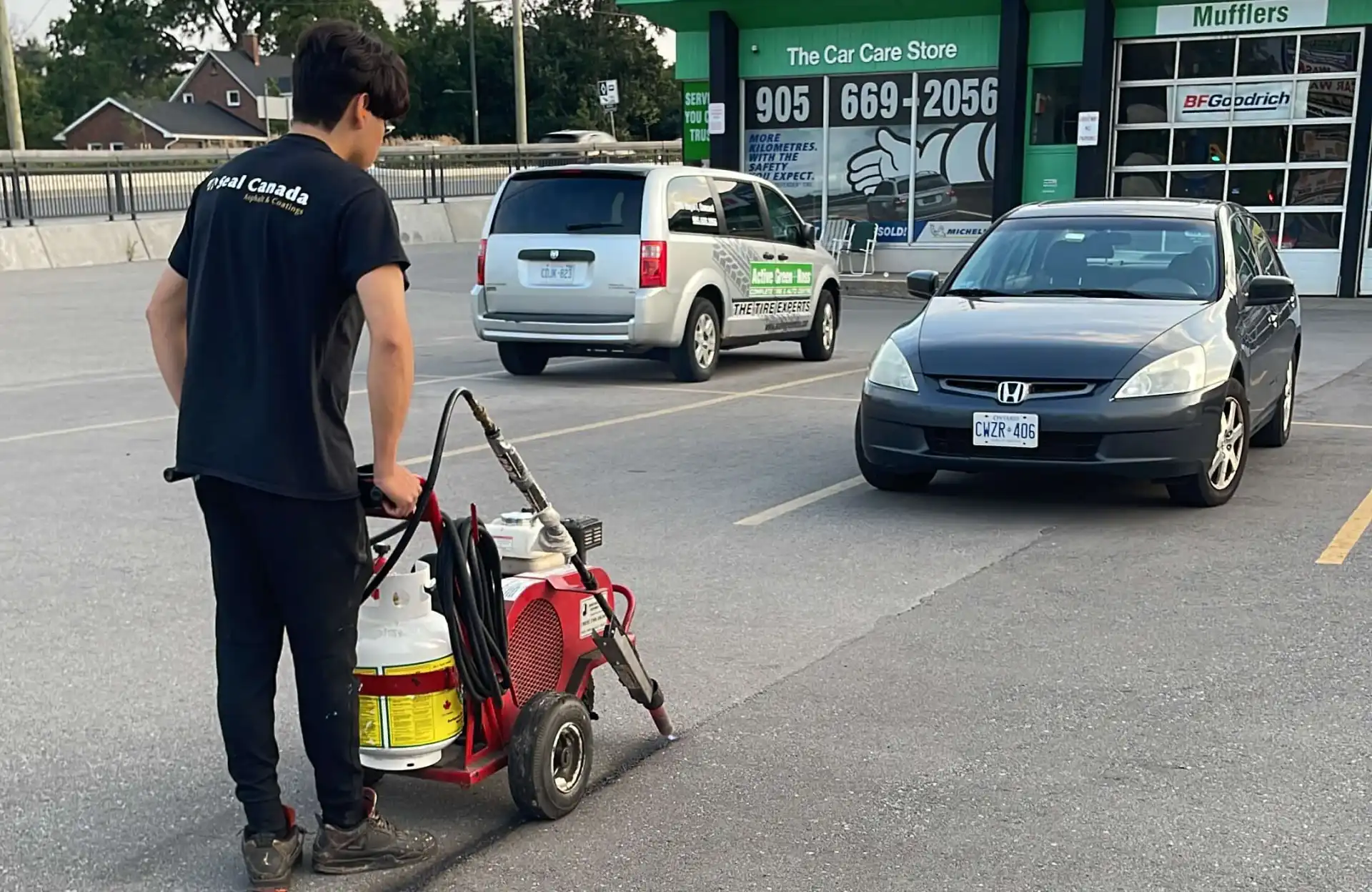
Sealcoating does not seal cracks. It protects the intact surface, but any crack that was present before sealcoating, or any new crack that develops after application, still allows water infiltration. Water reaching the subbase through an unsealed crack causes the same subbase erosion and frost heave damage that sealcoating was applied to prevent at the surface. Crack sealing and sealcoating are complementary treatments, not substitutes for each other.
Inspect the sealcoated surface for any new cracking approximately three months after application and at each subsequent seasonal inspection. Any crack wider than 3mm warrants prompt crack sealing with hot-pour rubberized sealant. Timely intervention at this scale costs a small fraction of what subbase repair and patching costs once water damage has accumulated. Review Seal Canada’s commercial pavement services for a full picture of how crack sealing fits into a structured maintenance program.
Proper Drainage Prevents Premature Failure
Water pooling on a sealcoated surface causes two problems. Standing water softens the sealcoat under prolonged exposure and allows slow infiltration through minor surface imperfections. It also creates a freeze-thaw stress point in winter, as water trapped above the sealcoat freezes and exerts pressure at the surface boundary.
Inspect catch basins for blockage after each heavy rain event and after fall leaf drop. Ensure surface grades are directing runoff toward collection points rather than toward building foundations or low spots in the drive lanes. Any depression that pools water after rain should be flagged for patching to restore proper grade. The National Research Council of Canada publishes drainage design standards for commercial properties that provide the technical baseline for drainage assessment and remediation.
For lots with persistent ponding problems, Seal Canada’s commercial paving team can assess drainage patterns and recommend grade corrections or catch basin additions as part of a surface maintenance scope.
Line Striping After Sealcoating
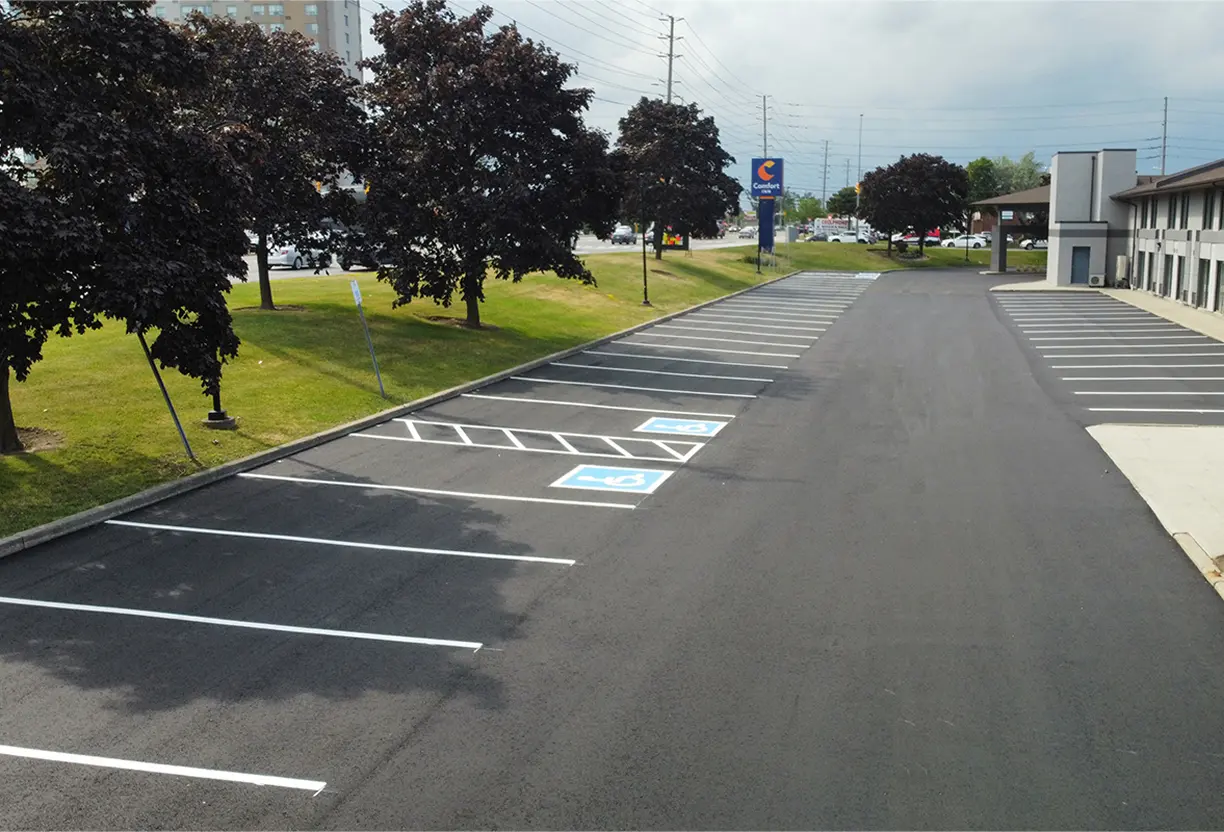
Sealcoating covers existing line markings. After the sealcoat has fully cured, line painting must be redone before the lot is returned to full operation. Returning vehicles to an unstriped lot creates confusion about space boundaries, traffic direction, and pedestrian crossing locations that leads directly to vehicle conflicts and near-misses.
Plan the line striping application as part of the sealcoating project, not as an afterthought. Professional line striping applied immediately after sealcoat cure restores the full traffic management system of the lot and keeps accessible space markings compliant with Ontario AODA requirements.
Seasonal Parking Lot Maintenance After Sealcoating
A sealcoated lot requires a structured seasonal approach to perform through Ontario’s climate range:
- Spring: Inspect the full surface after freeze-thaw season. Identify any new cracking, heave, or pothole development. Clean winter sand and salt residue from the surface. Repair any damage before warm-weather traffic loads increase.
- Summer: Sweep regularly. Address oil spills immediately. Monitor high-use drive lanes and entry points for accelerated wear. Schedule line striping touch-up if markings have faded since the last application.
- Fall: Complete crack sealing before the first frost. Clear catch basins before leaf drop clogs them. Assess whether sealcoating is due for the next application cycle based on current surface condition.
- Winter: Avoid abrasive sand and sharp-edged snowplough blades that score the sealcoat surface. Use rubber-edged snowplow attachments where possible. Inspect monthly for new surface damage from freeze-thaw cycles.
The Transportation Association of Canada provides seasonal pavement management guidance applicable to commercial lot maintenance programs. The Ontario Ministry of Transportation also publishes pavement preservation standards relevant to commercial property owners.
When to Reseal and When to Resurface
Sealcoating has a service life of three to five years on commercial lots under normal traffic conditions. When the surface shows significant oxidation graying, loss of aggregate texture, or widespread thin cracking that cannot be addressed by crack sealing alone, resealcoating is appropriate.
When the pavement itself has deteriorated beyond the point where surface treatments are effective, meaning structural cracking, significant rutting, or subbase failure, asphalt resurfacing is the correct intervention. Applying sealcoat over a structurally compromised surface delays recognition of the underlying problem without solving it.
Protecting Your Sealcoating Investment Long-Term
Sealcoating is one of the most cost-effective investments available in commercial pavement maintenance, but it only performs as intended when the pavement is managed correctly after application. The practices in this guide, from proper cure time and traffic restriction through to seasonal crack sealing and drainage management, determine whether you get three years of protection or eight.
Frequently Asked Questions
1. How long should I wait before allowing traffic on a freshly sealcoated parking lot?
Allow a minimum of 24 to 48 hours in warm, dry conditions before vehicle traffic. Temperatures below 10 degrees Celsius or high humidity extend the required cure window. Introduce only light passenger vehicle traffic initially, and restrict heavy vehicles and sharp turning movements for the first full week after application.
2. Will sealcoating seal existing cracks in my parking lot?
No. Sealcoating protects the intact surface but does not fill or seal cracks. Any crack wider than 3mm requires hot-pour rubberized crack sealant treatment before or after sealcoating. Applying sealcoat over open cracks does not stop water infiltration through them.
3. How often should a sealcoated commercial parking lot be swept?
High-traffic commercial lots should be swept at least weekly to remove abrasive debris that wears the sealcoat surface under vehicle traffic. A thorough pressure wash monthly removes oil deposits and tire rubber that sweeping leaves behind.
4. What causes sealcoating to fail prematurely?
The most common causes are returning heavy traffic too soon after application, fuel and oil spills left uncleaned, poor drainage allowing standing water to soften the surface, and crack development that allows water to undermine the pavement from below. Avoiding these factors significantly extends the effective service life of any sealcoating application.
5. When does sealcoating need to be reapplied on a commercial lot?
Typical commercial sealcoating cycles are every three to five years, depending on traffic volume, sun exposure, and chemical exposure. The surface should be reinspected annually. Significant oxidation graying, visible aggregate loss, or widespread minor cracking signals that the next application cycle is approaching.
6. Does sealcoating affect line markings?
Yes. Sealcoating covers existing line markings and they must be reapplied after the sealcoat has cured. Plan line striping as part of the sealcoating project scope to minimize the period when the lot operates without clear traffic markings.
Keep Your Parking Lot Performing at Its Best
Seal Canada provides full post-sealcoating maintenance services for commercial lots across Ontario, including crack sealing, line striping, drainage assessments, and scheduled condition inspections. Browse our completed projects to see the scope of commercial work we handle, or contact our team to discuss a maintenance program that protects your pavement between sealcoating applications.
Key Takeaways
- The cure window of 24 to 48 hours is not a suggestion. Returning traffic too early is the most common cause of fresh sealcoat damage and scuffing.
- Sealcoating does not seal cracks. Any crack wider than 3mm requires hot-pour rubberized sealant treatment separate from the sealcoating application.
- Petroleum spills soften both sealcoat and asphalt binder if left uncleaned. Immediate response to fuel and oil spills is a direct investment in surface longevity.
- Drainage maintenance, including clear catch basins and proper surface grade, prevents standing water from softening the sealcoat and creating freeze-thaw stress points.
- Annual condition inspections identify whether the next sealcoating cycle or a more significant intervention is the right next step for the pavement.