Ontario’s Design of Public Spaces Standards under the AODA set the size, number and marking of accessible stalls when off-street parking is newly built or redeveloped. Type A van-accessible stalls are at least 3,400 mm wide, Type B stalls at least 2,400 mm, and access aisles at least 1,500 mm with high-contrast diagonal lines. Line painting Mississauga property managers schedule should lay out accessible parking lines AODA rules require before the rest of the parking lot lines go down.
Line Painting Mississauga: What AODA Means for Your Lot
Accessible parking is one of the most visible signs that a property takes accessibility seriously, and one of the easiest places to get wrong. Many existing posts online still quote the US ADA, but Ontario follows its own rules: the Design of Public Spaces Standards within the Integrated Accessibility Standards Regulation under the Accessibility for Ontarians with Disabilities Act (AODA). Line painting Mississauga commercial lots receive should follow those Ontario requirements.
The standards apply when off-street parking is newly constructed or redeveloped. Existing lots are generally not required to be retrofitted until they are redeveloped, but any time you repave, reconfigure or restripe is a good moment to bring accessible parking lines AODA standards describe up to date. Doing it right once avoids complaints, enforcement issues and the cost of grinding out and repainting parking lot lines later.
Seal Canada, a commercial pavement contractor serving the GTA, lays out accessible stalls, aisles and markings as part of every restriping project and flags where an existing layout falls short.
What Are Type A and Type B Accessible Stalls?
The AODA recognizes two types of accessible parking space, and accessible parking lines AODA standards describe differ for each. Both need an access aisle beside them, separated from regular parking lot lines, and both must be marked so drivers can identify them easily.
| Element | Minimum requirement | Marking notes |
| Type A stall (van accessible) | 3,400 mm wide | Signage identifies it as van accessible |
| Type B stall | 2,400 mm wide | Standard accessible signage |
| Access aisle | 1,500 mm wide, full length of the stall | High tonal contrast diagonal lines; may be shared by two stalls |
| Stall surface | Firm, stable and level as practical | Keep markings clear of cracks and patches |
Width is measured to the centre of the parking lot lines in most layouts, so confirm the measuring convention before painting. Accessible parking lines AODA inspectors look for must also be easy to see, which is why high-contrast paint and regular repainting matter.
How Many Accessible Spaces Does Ontario Require?
The number of accessible stalls, and so the accessible parking lines AODA rules call for, depends on the total number of spaces in the parking area:
| Total spaces in lot | Accessible spaces required |
| 1 to 12 | One Type A space |
| 13 to 100 | Four percent of total spaces |
| 101 to 200 | One space plus three percent of total |
| 201 to 1,000 | Two spaces plus two percent of total |
| More than 1,000 | Eleven spaces plus one percent of total |
Results are rounded up. When the requirement is an even number, half should be Type A and half Type B. When it is odd, the extra space can be Type B. Municipal by-laws and site plan conditions can add requirements, so line painting Mississauga crews should work from your approved site plan, and accessible parking lines AODA requirements should be checked against it, where one exists.
Where Should Accessible Parking Lines AODA Rules Cover Go?
Location matters as much as count for line painting Mississauga crews. Accessible stalls belong on the shortest practical route to an accessible entrance, on the flattest part of the lot and away from drive-aisle crossings where possible. In multi-tenant plazas, spread accessible parking lines AODA standards cover so each main entrance has nearby accessible parking.
• Connect each access aisle to a curb ramp or depressed curb on the accessible route.
• Avoid slopes, catch basins and ponding areas within accessible stalls.
• Keep wheel stops and bollards clear of the access aisle.
• Install accessible parking signage at the head of each stall.
• Plan snow storage away from accessible stalls and aisles.
Our parking lot striping services include a layout check that measures existing stalls, aisles and slopes before any paint is applied.
How Should Line Painting Mississauga Projects Be Planned?
1. Count total stalls and parking lot lines, then calculate the accessible spaces required.
2. Mark Type A and Type B stalls and access aisles on a site plan.
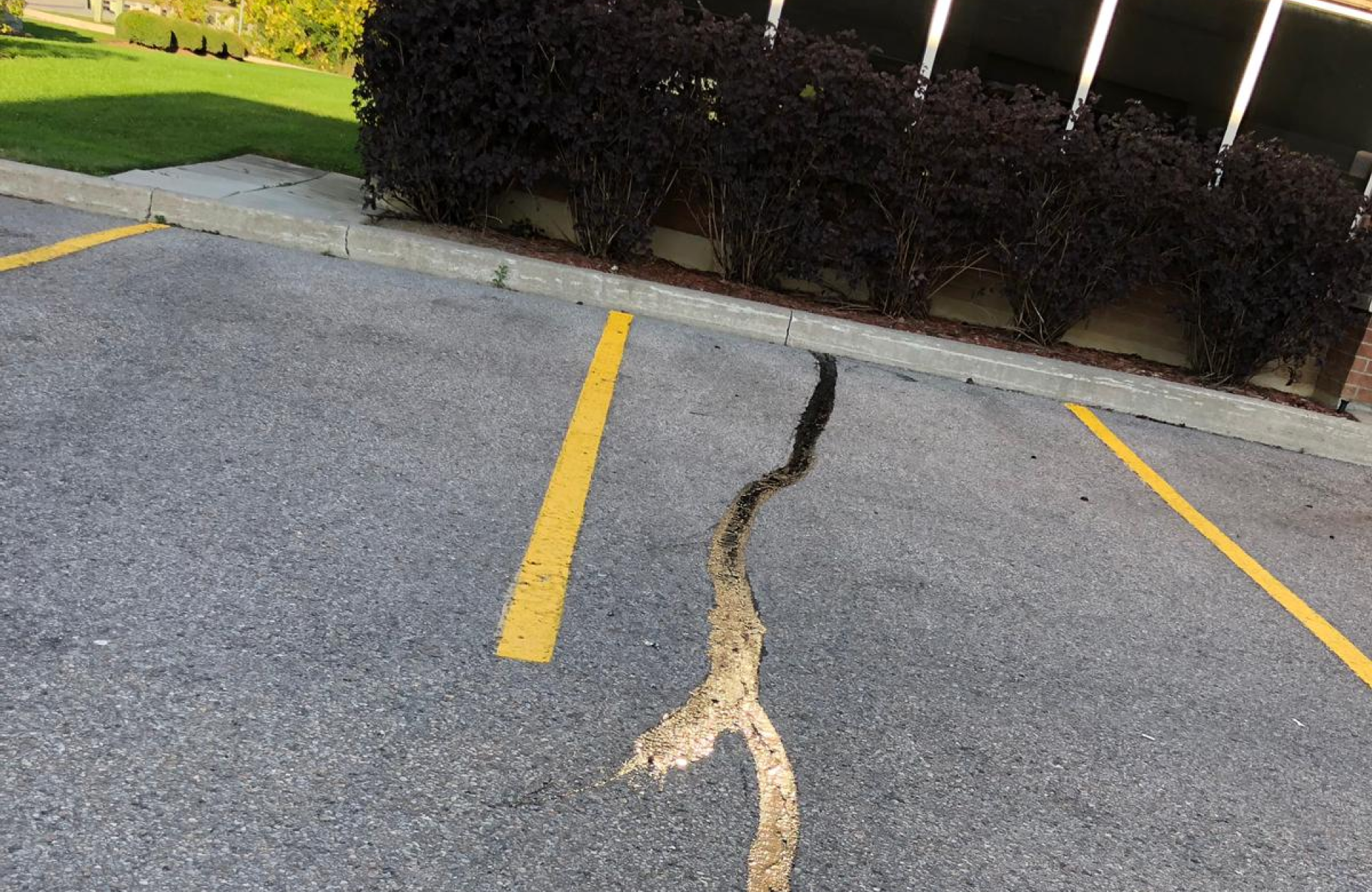
3. Repair cracks, potholes and failed patches in the stall areas.
4. Remove or black out conflicting old parking lot lines.
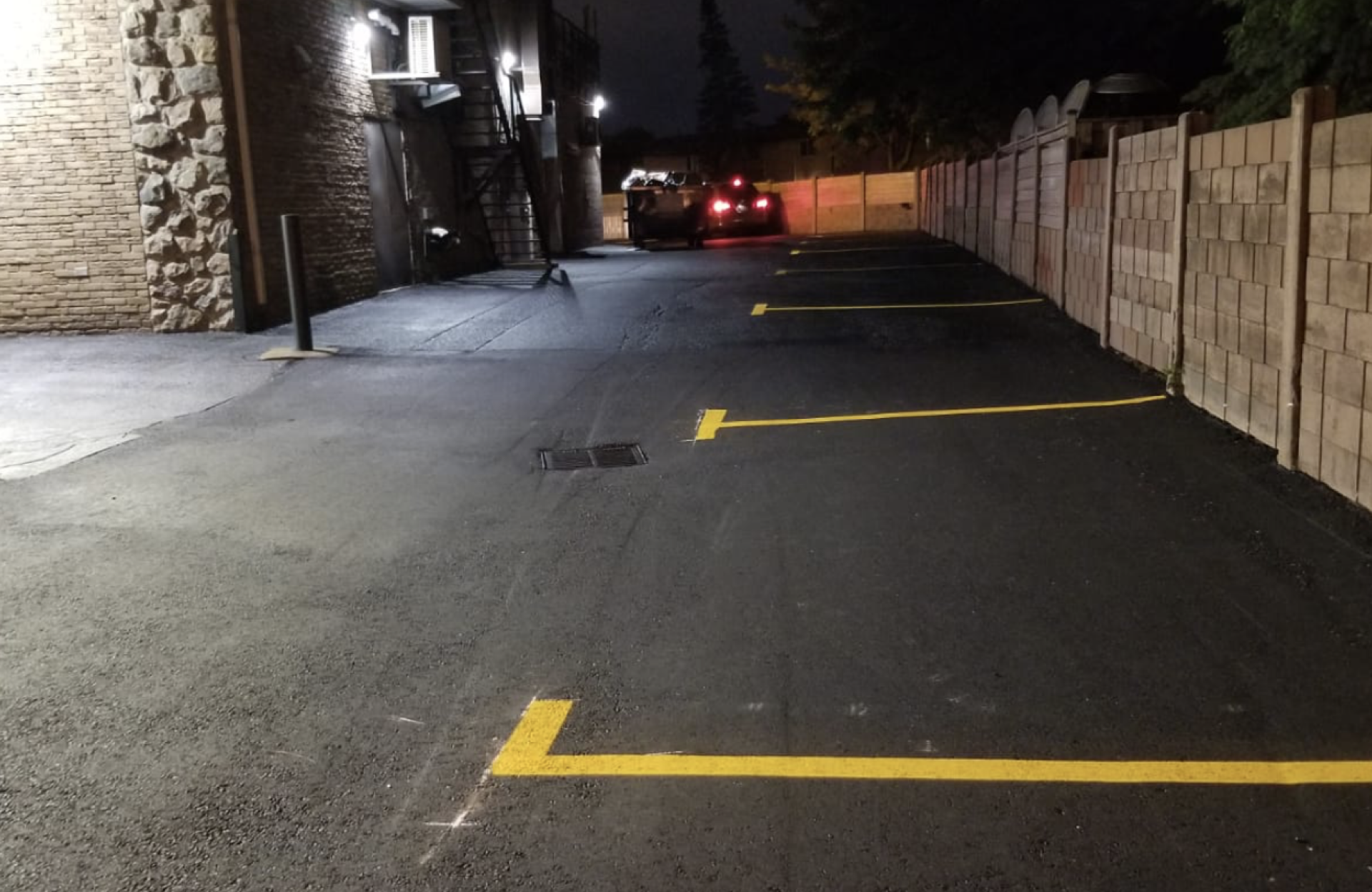
5. Paint accessible stalls, aisles and symbols first, then the remaining layout.
6. Install or replace signage and photograph the finished layout for your records.
Sequencing matters for line painting Mississauga sealcoated lots too. Sealcoat must cure fully before line painting Mississauga crews return, or the paint will not bond. Fresh asphalt also needs time before permanent markings go down.
How Often Should Parking Lot Lines Be Repainted?
Most commercial lots need parking lot lines repainted every one to two years, and busy plazas, drive-thrus and plowed lots may need it yearly. Faded accessible parking lines AODA standards expect to be clearly visible can create disputes over who parked where, and make enforcement harder for property managers.
Waterborne traffic paint is the common choice for repainting parking lot lines, while longer-lasting products can be used in high-wear areas. Our commercial pavement services can schedule repainting each spring after winter plowing, when wear is most obvious.
What Mistakes Show Up in Accessible Parking Layouts?
Most problems with accessible parking lines AODA reviews flag come from restriping by memory instead of by measurement. Common issues on line painting Mississauga projects include:
• Access aisles painted narrower than 1,500 mm, or missing between stalls.
• Accessible stalls repainted at standard width after a sealcoat, losing the required size.
• Diagonal aisle markings are left out, so drivers park in the aisle.
• Old accessible parking lines AODA layouts left visible beside new ones.
• Accessible stalls placed on a slope or over a catch basin.
• Signs missing, faded or blocked by parked vehicles.
Each of these is easy to avoid with a measured layout. Ask your line painting Mississauga contractor for a marked site plan showing every accessible stall and aisle before work, and photos after. Keep that record in your compliance file so you can show the parking lot lines were renewed on schedule. It also speeds up the next restriping, since crews can repaint parking lot lines from the plan instead of guessing from faded markings.
Book Line Painting Mississauga Properties Can Trust
An accessible layout with parking lot lines that meet Ontario’s standards protects visitors, tenants and your reputation. Line painting Mississauga properties schedule with the AODA in mind puts accessible stalls in the right place, at the right size, with markings that last.
Seal Canada provides line painting Mississauga plazas, offices, condo corporations and industrial sites rely on, with detailed layout reports and flexible after-hours scheduling. Contact Seal Canada to book a free site assessment and get a stall count and layout plan for your next restriping.
Frequently Asked Questions About Accessible Parking
1. How many accessible parking spaces are required in Ontario?
Under the AODA Design of Public Spaces Standards, lots with 1 to 12 spaces need one Type A space, 13 to 100 need four percent, and larger lots follow a sliding scale. These rules apply to newly built or redeveloped parking.
2. Does the ADA apply in Mississauga?
No. The ADA is a US law. Line painting Mississauga properties should follow the AODA and any city requirements.
3. Do existing lots have to be updated?
Generally only when the parking is redeveloped, but restriping is a practical time to improve accessible parking lines AODA standards describe.
4. What colour are accessible parking lines?
The AODA calls for high tonal contrast markings on access aisles. Blue and white or yellow are common choices; confirm any municipal or site plan requirements.
5. Can we restripe while the lot stays open?
Yes. Line painting Mississauga crews can paint parking lot lines in sections, evenings or weekends so customers and tenants keep parking.
Key Takeaways
• Ontario uses the AODA Design of Public Spaces Standards, not the US ADA.
• Type A stalls are at least 3,400 mm wide, Type B at least 2,400 mm, with 1,500 mm access aisles.
• The number of accessible stalls follows a sliding scale based on total spaces.
• Paint accessible parking lines AODA rules cover first, then the rest of the parking lot lines.
• Line painting Mississauga lots need is usually repeated every one to two years.