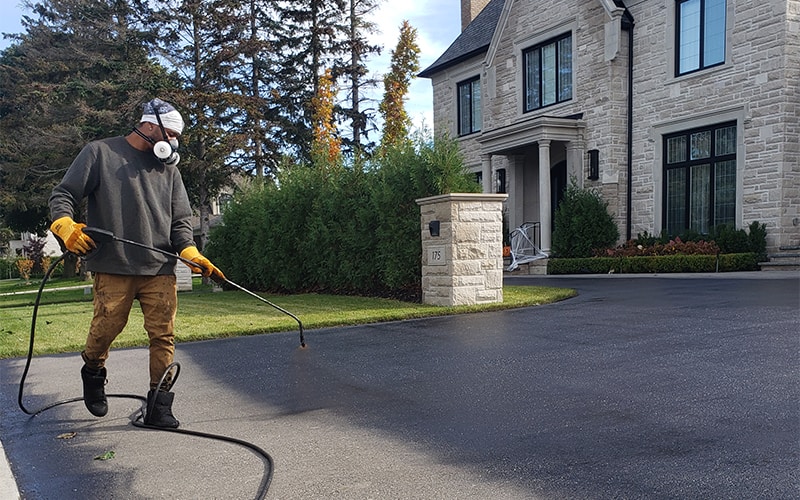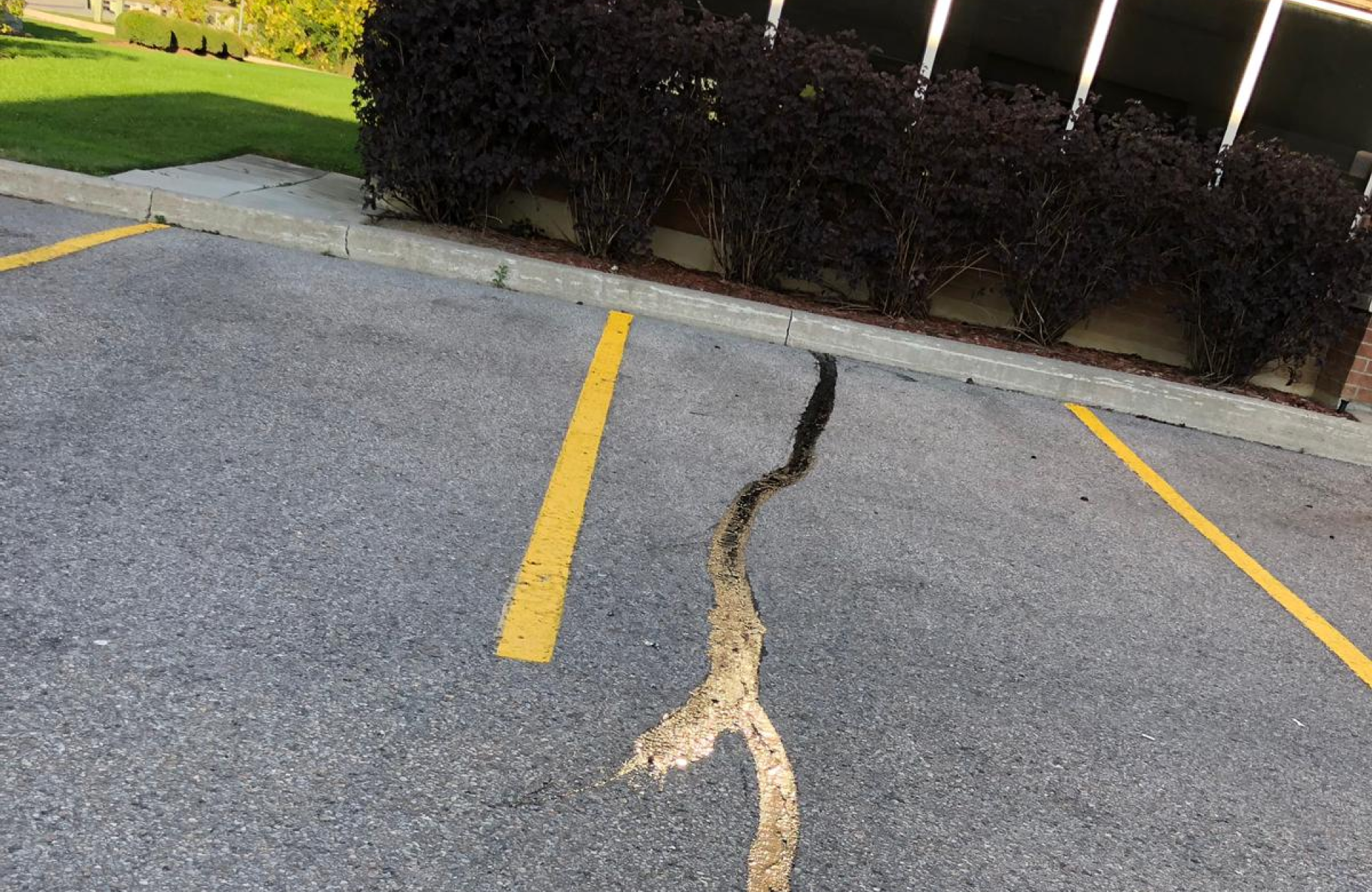
Routing cuts a clean reservoir into the crack before hot rubberized sealant goes in, so the seal can stretch as the pavement moves. Blow-and-go cleans the crack with compressed air and fills it as is. For pavement crack sealing Markham commercial lots need on moving thermal cracks, routing usually lasts longer and costs more per metre. A good crack sealing contractor matches the method to each crack, and parking lot crack sealing works best in spring or fall.
Pavement Crack Sealing Markham: Two Methods Compared
Every asphalt lot cracks, which is why pavement crack sealing Markham properties schedule is a yearly task. Cold winters shrink the pavement, summer heat expands it, and those movements open long transverse and longitudinal cracks. Water gets in, softens the base and turns cracks into potholes. Pavement crack sealing Markham property managers schedule stops that water, and the method used decides how long the seal holds.
The two main methods are routing and blow-and-go. Both use hot-applied rubberized sealant on commercial lots, but the preparation is different, and preparation is what controls lifespan. Choosing between them is one of the most important decisions in any parking lot crack sealing quote.
Seal Canada, a GTA commercial pavement contractor, uses both methods and recommends the right one crack by crack during a free site assessment, rather than applying one approach across the whole lot.
What Is Routed Crack Sealing?
Routing uses a machine with a cutting head to grind a uniform channel, or reservoir, centred on the crack. The reservoir gives the sealant a clean, sound surface to bond to and enough depth and width to stretch when the crack opens in winter. After routing, the crack is blown clean and often heated with a hot-air lance before sealant is placed.
Routed pavement crack sealing Markham crews perform is best for working cracks: the transverse and longitudinal cracks that open and close with temperature. Because the seal can move with the pavement instead of tearing, it commonly lasts several years longer than an unrouted seal.
What Is Blow-and-Go Crack Sealing?
Blow-and-go skips the cutting step. The crack is cleaned with high-pressure air, sometimes heated, and filled with sealant, often with a thin band over the surface. It is faster and cheaper per metre of parking lot crack sealing, which makes it attractive for large lots and tight budgets.
The trade-off is bond and movement. Without a clean reservoir, sealant sits on dirty, irregular crack walls and has little room to stretch. Blow-and-go parking lot crack sealing works well on narrow, low-movement cracks and as a budget measure on older pavement nearing replacement.
Routing vs Blow-and-Go: Which Lasts Longer?
| Factor | Routed crack sealing | Blow-and-go crack sealing |
| Preparation | Cut reservoir, air clean, often heated | Air clean, sometimes heated |
| Best for | Working thermal cracks in sound pavement | Narrow, stable cracks or aging lots |
| Bond quality | High, on fresh clean walls | Variable, depends on crack condition |
| Typical lifespan | Several years when done well | Often one to three years |
| Cost per metre | Higher | Lower |
| Production speed | Slower | Faster |
For pavement crack sealing Markham managers budget, lifespan depends on traffic, plowing, crack movement and installation quality, so treat these as general patterns. For pavement crack sealing Markham business parks and plazas plan as a multi-year investment, routing usually delivers a lower cost per year of protection.
Which Cracks Are Not Candidates for Sealing?
Crack sealing is preventive maintenance, not structural repair. A responsible crack sealing contractor will tell you when cracks have gone past the point sealing can help:
• Alligator cracking, which signals base failure and needs patching instead of parking lot crack sealing.
• Very wide or deteriorated cracks with broken edges, which need patching or filling.
• Cracks around potholes or sunken catch basins, which need repair first.
• The hairline cracks too narrow to accept sealant.
Sealing alligator cracks may look tidy, and some crack sealing contractor bids include them, for a season, but it does not fix the base. Repair those areas first, then complete pavement crack sealing Markham crews can stand behind on the remaining cracks. Our crack sealing services across the GTA include an assessment that separates sealable cracks from repair areas.
How Do You Choose a Crack Sealing Contractor in Markham?
Procurement and facilities managers can compare bids by asking each crack sealing contractor the same questions:
1. Which cracks will the crack sealing contractor route, which will be blow-and-go, and why?
2. What sealant product and specification will be used?
3. How is the crack cleaned, dried and heated before sealing?
4. Is pricing per linear metre, per pound of sealant or lump sum?
5. How will traffic and tenants be managed during parking lot crack sealing?
6. What warranty does the crack sealing contractor give on adhesion failures?
A detailed answer to each question shows you are dealing with a crack sealing contractor that plans the work rather than simply pouring material. Asset managers with several sites can roll pavement crack sealing Markham properties into a wider program through our commercial pavement services for property managers.
What Drives Pavement Crack Sealing Markham Pricing?
Crack sealing is usually priced by the linear metre or by the weight of sealant used. The total for pavement crack sealing Markham lots need depends on a few clear factors, and a crack sealing contractor should explain each one in the quote:
• Total length of cracks, measured or estimated during the site assessment.
• The share of cracks that will be routed versus blow-and-go.
• Crack width and depth, which control how much sealant each metre takes.
• Night, weekend or phased parking lot crack sealing to keep tenants operating.
• Repairs that must happen first, such as patching around potholes.
Low bids often come from estimating fewer metres or skipping routing on cracks that need it. Ask each crack sealing contractor to mark the cracks on a site map, so you can compare parking lot crack sealing quotes on the same scope. Many owners also bundle parking lot crack sealing with sealcoating and line painting, which reduces mobilization and shortens disruption.
When Should Parking Lot Crack Sealing Be Done?
Cracks are at a middle width in spring and fall, a timing point any crack sealing contractor should raise, which is the ideal time to seal them. Fall pavement crack sealing Markham crews also locks water out before freeze-thaw cycles start. Pavement must be dry, and sealant manufacturers set minimum temperatures. In Markham, most parking lot crack sealing happens from April to June and September to November.
Parking lot crack sealing should also come before sealcoating and line painting, so all three can be completed in one planned sequence.
Book Pavement Crack Sealing Markham Lots Can Rely On
Routing and blow-and-go both have a place. The right choice depends on crack type, pavement age and how long you need the protection to last. Pavement crack sealing Markham properties schedule with the right method keeps water out of the base and pushes major repairs further down the road.
As a crack sealing contractor serving Markham, Richmond Hill, Vaughan and the wider GTA, Seal Canada offers prompt response, flexible scheduling and detailed reports. Contact Seal Canada to book a free site assessment and get a crack-by-crack plan for your next pavement crack sealing Markham project.
Frequently Asked Questions About Crack Sealing
1. Should cracks be routed before crack sealing?
Routing is recommended for working thermal cracks in sound pavement, because it gives sealant a clean reservoir to bond and stretch. Stable or narrow cracks can often be sealed with blow-and-go.
2. How long does routed crack sealing last?
When done well on suitable cracks, routed seals commonly last several years longer than blow-and-go seals. Traffic, plowing and installation quality all affect lifespan.
3. Is crack sealing the same as crack filling?
No. Sealing uses flexible sealant on moving cracks, while filling is used on wider, more stable cracks. Any crack sealing contractor you hire should explain which applies.
4. Can crack sealing be done in winter?
Not reliably. Pavement must be dry and above the sealant’s minimum temperature, so parking lot crack sealing is usually done in spring and fall.
5. Will vehicles track the sealant?
Hot sealant from parking lot crack sealing cools quickly, but a detackifier or brief traffic control prevents tracking. Your crew will confirm reopening times.
Key Takeaways
• Routing creates a clean reservoir so sealant can bond and stretch with the pavement.
• Blow-and-go is faster and cheaper but usually shorter-lived.
• Pavement crack sealing Markham lots needed on working cracks typically favours routing.
• Alligator cracks and broken areas need repair, not sealing.
• Ask every crack sealing contractor the same questions to compare bids fairly.