For most commercial properties in the GTA, concrete curbs are the better long-term choice. They resist snowplow damage, hold their shape, channel water reliably and often last decades with occasional curb repair. Asphalt curbs cost less up front and install quickly, but they chip, slump and need replacing far sooner. Asphalt still has a place for temporary or low-traffic edges, so the right choice for your parking lot curbs depends on traffic, plowing, drainage and budget.
Concrete Curbs vs Asphalt Curbs: The Quick Answer
Concrete curbs win on durability, appearance and life-cycle cost for most busy commercial lots. Asphalt curbs win on first cost and speed. If the curb will face daily traffic, winter plowing and heavy drainage, concrete is usually worth the extra investment. If it is a temporary edge, a low-traffic island or a short-term fix before reconstruction, asphalt can make sense.
Curbs do more than look tidy. Parking lot curbs guide traffic, protect landscaping and buildings, hold the pavement edge in place and direct stormwater to catch basins. When curbs fail, water gets under the asphalt, plow damage spreads and the property starts to look neglected.
Seal Canada, a GTA commercial pavement and concrete contractor, installs and repairs both types and helps property and facilities managers choose the right curb for each part of a site.
How Do Concrete and Asphalt Curbs Compare?
| Factor | Concrete curbs | Asphalt curbs |
| Typical lifespan | Often decades with maintenance | Often a handful of years |
| Snowplow resistance | High; rigid and hard to chip | Low; blades tear and scuff edges |
| Shape retention | Holds clean lines and height | Slumps and rounds over in heat |
| Drainage control | Reliable gutters and water channels | Edges erode, water escapes |
| Up-front cost | Higher | Lower |
| Installation speed | Forming, pouring and curing time | Fast, often same day as paving |
| Curb repair | Sections can be cut out and replaced | Frequent patching or full replacement |
The pattern is clear: concrete curbs cost more on day one and less over time. Asphalt parking lot curbs are cheaper to place but tend to come back onto the budget again and again.
Why Do Concrete Curbs Handle GTA Winters Better?
Winter is the real test for any curb in Toronto, Vaughan, Mississauga and the rest of the GTA. Plows catch edges, salt attacks surfaces and freeze-thaw cycles pry at joints. Concrete curbs stand up to plow blades because they are rigid and dense. Properly air-entrained concrete is also designed to resist freeze-thaw damage.
Asphalt curbs are softer. A plow blade can shear off a corner in a single pass, and the asphalt can soften and deform under summer heat. By spring, asphalt parking lot curbs often have missing chunks, low spots and edges that no longer hold water where it should go. That means more curb repair every year and more debris in catch basins.
When Do Asphalt Curbs Still Make Sense?
Asphalt is not always the wrong answer. It can be a sensible choice in these situations:
• Temporary edges on phased construction or interim site work.
• Low-traffic areas away from plow routes, such as some landscaped islands.
• Short-term fixes on a lot scheduled for full reconstruction within a few years.
• Tight budgets where immediate water control matters more than lifespan.
Even then, plan the eventual upgrade. Many owners use asphalt parking lot curbs as a bridge and switch to concrete curbs when the lot is resurfaced or rebuilt.
What Do Concrete Curbs Cost Over Their Lifetime?
Comparing curb options on installed price alone hides the real cost. A fair comparison includes the expected years of service, how often curb repair will be needed and what failures do to the surrounding pavement. A curb that lets water reach the asphalt base can cause pothole and edge repairs well beyond the curb itself.
For asset managers, concrete curbs usually make the most sense when you divide total cost by years of service. They also support property value: crisp, straight parking lot curbs make a commercial site look well run to tenants, buyers and inspectors. Our commercial concrete services cover new curb installation, curb repair and full replacement.
How Is Curb Repair Handled on Commercial Lots?
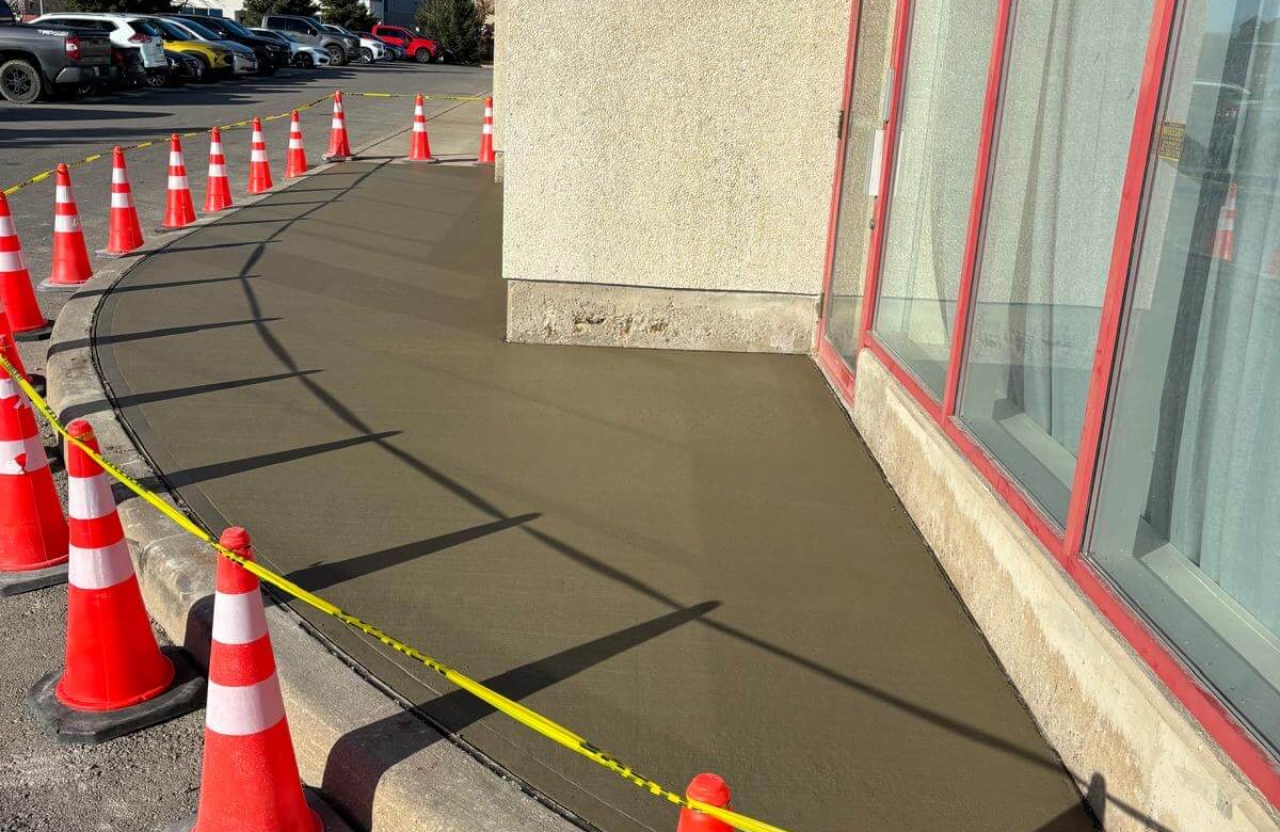
Most curb repair on concrete curbs is targeted. Damaged sections are saw-cut, removed and replaced with new concrete formed to match the existing profile. Joints are restored so the new section can move with the old ones. On asphalt curbs, repairs are usually patches that blend poorly and fail sooner.
1. Walk the site in spring and mark every chipped, cracked or displaced curb section.
2. Separate cosmetic damage from sections that no longer hold water or traffic.
3. Replace failed concrete curb sections and seal the curb-to-asphalt joint.
4. Upgrade high-damage asphalt parking lot curbs to concrete during resurfacing.
5. Add curb repair to your snow contract discussions so plow damage is tracked.
Timing matters. Concrete curbs are best poured in mild weather, and cold-weather pours need protection and extra curing time. Spring through fall is the main window across the GTA.
Which Curb Profile Fits Your Property?
Concrete curbs come in several profiles. Barrier curbs stand tall to stop vehicles and protect landscaped areas. Mountable or rolled curbs let vehicles cross occasionally, which suits fire routes and truck turning areas. Curb and gutter sections combine the curb with a drainage channel. Depressed curbs and curb ramps connect parking to accessible walkways.
Choosing the right profile for each part of the lot keeps parking lot curbs working the way they should. Our commercial pavement services can review your layout and recommend the right curb in each area.
What Should a Curb Repair Quote Include?
Curb quotes are easiest to compare when every contractor prices the same scope. Ask for a site map with each damaged section numbered and measured in linear metres, and a note on whether each section gets patching, partial replacement or full replacement. For parking lot curbs that will be upgraded from asphalt to concrete, the quote should also cover removal, base preparation and asphalt restoration along the new edge.
Good quotes also explain how the work affects tenants. Curb repair usually means short closures of drive aisles or stalls while forms are set, concrete is poured and the concrete cures. The quote should state how long each area stays closed, how traffic will be managed and when the curb can take vehicle loads.
Finally, ask about the warranty, the concrete mix specified for exterior freeze-thaw exposure and who handles disposal. Clear answers on these points make it easier for boards and procurement teams to approve parking lot curbs work quickly.
Choose Concrete Curbs That Last for Your GTA Property
For busy commercial lots, concrete curbs offer longer life, better winter performance and a cleaner look. Asphalt has a role as a temporary or low-traffic edge, but it rarely beats concrete over the long run. A smart plan mixes targeted curb repair now with concrete upgrades during the next resurfacing.
Seal Canada installs and repairs concrete curbs and parking lot curbs for property managers, condo corporations, plazas and industrial sites across Toronto, Vaughan, Mississauga and the GTA. Contact Seal Canada to book a free site assessment and get a detailed curb report for your property.
Frequently Asked Questions About Parking Lot Curbs
1. Are concrete curbs better than asphalt curbs?
For most busy commercial lots, yes. Concrete curbs resist plow damage, hold their shape and usually cost less over their life, while asphalt curbs are cheaper up front but need replacing sooner.
2. How long do concrete curbs last?
With good installation and periodic curb repair, concrete curbs often last decades. Plowing, salt and drainage affect lifespan.
3. Can asphalt curbs be replaced with concrete?
Yes. It is most efficient during resurfacing or reconstruction, when the pavement edge is already being rebuilt.
4. Who pays for snowplow damage to curbs?
It depends on your snow contract. Many property managers add language that makes the plow contractor responsible for documented curb repair.
5. Can curbs be repaired in winter?
Temporary measures are possible, but permanent concrete work is best done in mild weather from spring through fall.
Key Takeaways
• Concrete curbs usually beat asphalt on durability, appearance and life-cycle cost.
• Asphalt curbs suit temporary edges, low-traffic areas and short-term budgets.
• GTA winters and plowing are the main reason asphalt parking lot curbs fail early.
• Targeted curb repair replaces damaged concrete sections without redoing the whole run.
• Upgrade high-damage curbs to concrete during the next resurfacing project.