Tree root damage is one of the more persistent maintenance challenges for commercial parking lots with established landscaping. Roots exert upward pressure on pavement as they grow, creating raised surfaces, cracking, and drainage disruption that worsens progressively if ignored. This guide covers why tree root damage occurs, how to assess the scope, what repair approaches are available, and which prevention strategies work in a commercial property context.
Why Tree Roots Damage Pavement
Tree roots grow in response to moisture and nutrients. Beneath a parking lot surface, compacted soil layers restrict downward root growth and redirect root systems laterally. When those lateral roots encounter the underside of the pavement slab, continued growth generates upward pressure that lifts and cracks the surface above.
The pressure a single root system can exert is significant. Root growth does not stop when it meets resistance: it continues, and the pavement yields. The process is slow and easy to underestimate from visual inspection, which is why many properties address tree root damage reactively after significant surface deformation has already occurred.
Species and Proximity: The Two Variables That Matter Most
Not all trees carry the same risk to adjacent pavement. Species with aggressive, shallow, and wide-spreading root systems, including silver maple, willow, poplar, and Norway maple, create disproportionate pavement damage relative to their above-ground size. Species with deeper, more contained root systems, such as ginkgo and many ornamental trees, present lower risk.
Proximity is the other critical variable. Trees planted within 3 to 5 metres of a pavement edge are at high risk of causing surface damage as they mature. Many commercial properties in Ontario were planted before the long-term consequences were well understood, which is why parking lot repair requests for tree root damage are common on properties with established landscaping more than 15 years old.
What Tree Root Damage Looks Like in Practice
Surface deformation from root intrusion typically presents as raised or buckled pavement sections, often with a crack pattern radiating from the highest point where the root exerts maximum pressure. In asphalt, the surface lifts and the surrounding area cracks as the underlying pavement is forced to accommodate the displacement.
Adjacent cracking creates drainage disruption: water that previously drained toward catch basins now pools against the raised section. That pooled water infiltrates through the cracks, softening the base layer and accelerating further deterioration. What began as a root pressure problem became a combined root, crack, and drainage problem.
Repair Options: What Works and What Does Not
Surface patching over an active root without addressing the root itself is a temporary measure. The root continues to grow, and the repair fails within one to two seasons. Effective repair requires addressing the root before the surface. A qualified arborist should assess whether root pruning is appropriate for the specific tree: some root pruning is manageable without compromising tree stability, but removing major structural roots can destabilize mature trees. Work with an arborist and a paving contractor together on these repairs to avoid creating a new problem while solving the pavement one.
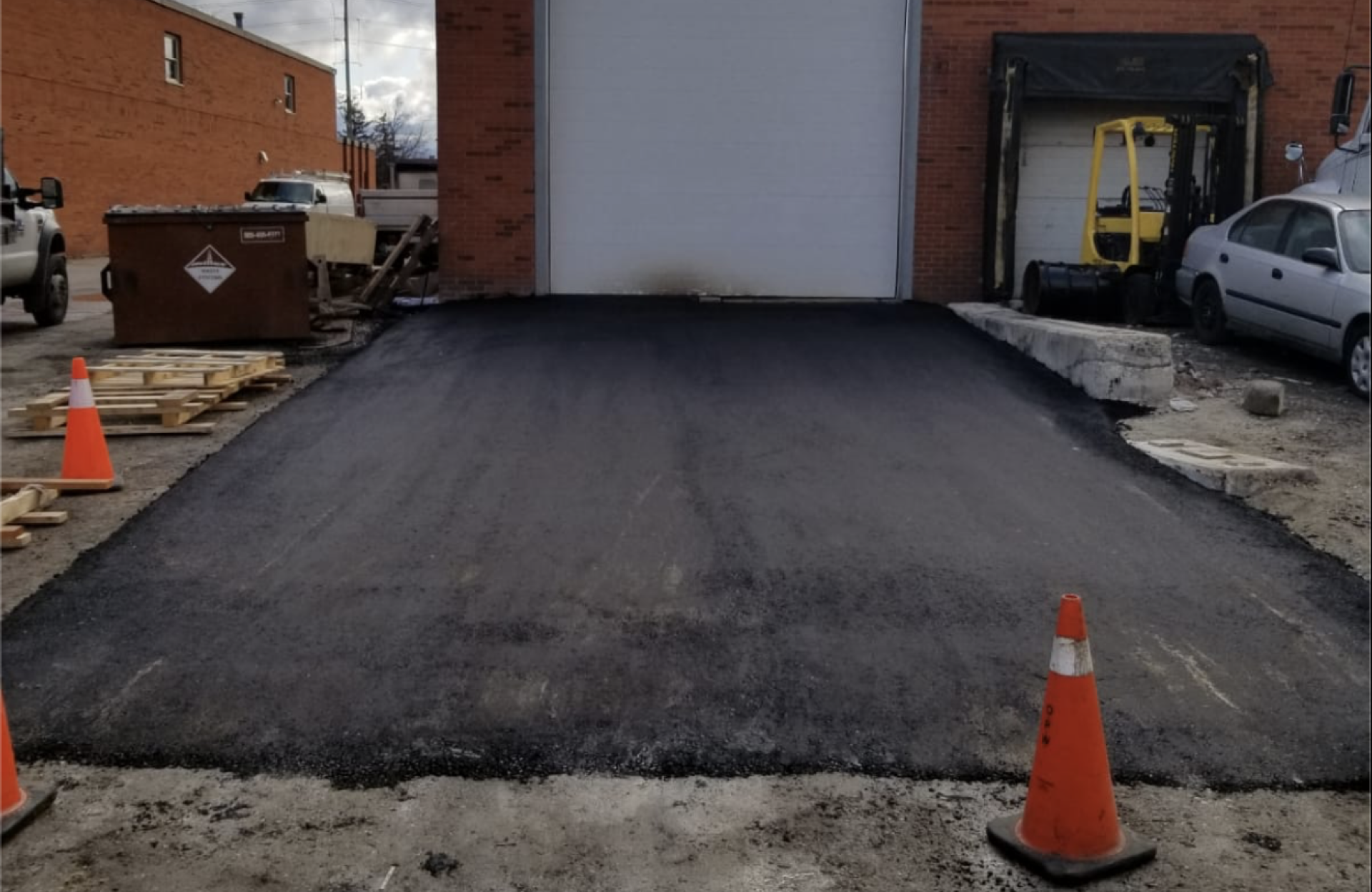
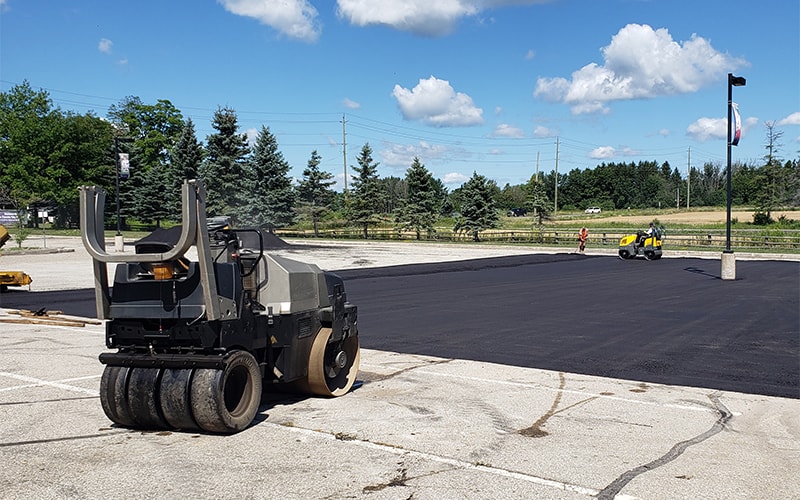
After root management, the raised section is removed, the base layer is re-graded and compacted, and new asphalt is placed and compacted to match the surrounding grade. If the root intrusion has disrupted drainage, this is the time to re-slope the repaired section toward the appropriate drainage outlet.
Root Barrier Installation: The Preventive Solution
For trees adjacent to parking lots that have not yet caused surface damage, root barriers are the most effective preventive measure. Barriers are installed vertically in the soil between the tree and the pavement, redirecting lateral root growth downward and away from the surface. HDPE and similar rigid polymer barriers are the most common commercial-grade option, available in depths from 450 millimetres to 900 millimetres depending on the root systems being managed. Root barriers are most cost-effective when installed at the same time as parking lot work is being done nearby, since excavation costs can be shared across the project.
Alternative Paving Solutions for Challenging Tree Zones
For areas where established trees cannot be removed and root barriers are not practical, flexible or permeable paving systems can reduce the severity of root damage and allow inspection and maintenance access to the root zone. Permeable paving systems, including porous asphalt and permeable interlocking concrete pavers, allow water and air to reach the root zone through the pavement surface, reducing the stress that drives roots to seek moisture laterally beneath solid pavement.
These systems also allow root growth to be monitored and managed more easily than conventional solid surfaces. Seal Canada’s commercial paving team can assess which approach is appropriate for tree zones on your property and design a repair or prevention plan accordingly.
Frequently Asked Questions
1. Can I just patch over the raised area without touching the root?
Patching without addressing the root is a short-term fix. The root continues to grow and will displace the patch within one to two growing seasons. Effective repair requires either root pruning (assessed and conducted by a qualified arborist) or, in some cases, tree removal before the surface is rebuilt.
2. How deep do root barriers need to be to be effective?
Most commercial root barriers are specified at 600 to 900 millimetres deep. The appropriate depth depends on the species and root depth of the trees being managed. Barriers that are too shallow are bypassed by roots growing below the bottom edge. A qualified arborist can recommend barrier depth for specific tree species on your site.
3. Will root pruning harm the tree?
Moderate root pruning, conducted carefully and within the limits appropriate for the species and tree size, can be done without significantly compromising tree health or stability. Removing major structural roots on one side of a mature tree is a different matter and can create windthrow risk. This assessment should always be made by a qualified arborist before any root work is undertaken.
4. What species are most likely to cause parking lot damage in Ontario?
In Ontario, silver maple, Norway maple, willow, cottonwood, and poplar species carry the highest risk of pavement damage due to their shallow, aggressively spreading root systems. Ginkgo, serviceberry, and most columnar tree cultivars present substantially lower risk and are preferred for planting near commercial pavement.
5. How much does tree root damage repair cost compared to regular pothole repair?
Tree root damage repair is more involved than standard pothole patching because it requires root management before the surface can be rebuilt. The total cost depends on the scope of root work required, the size of the damaged area, and whether drainage re-grading is needed. A site assessment will produce a realistic scope and cost before any commitment is made.
Address Root Damage Before It Undermines More of Your Surface
Seal Canada provides site assessments and asphalt repair services across Ontario, including root damage remediation, root barrier installation coordination, and surface rebuilding after root work is completed. Contact our team to schedule a free evaluation of your property’s tree root damage situation.
Key Takeaways
- Tree root damage escalates progressively. Surface deformation that seems minor becomes a combined root, crack, and drainage problem if not addressed.
- Silver maple, willow, Norway maple, and poplar species carry disproportionate pavement damage risk due to shallow, aggressively lateral root systems.
- Surface patching without root management produces repairs that fail within one to two growing seasons. Address the root before rebuilding the surface.
- Root pruning decisions should always involve a qualified arborist. Removing major structural roots can destabilize mature trees.
- Root barriers are most cost-effective when installed at the same time as nearby paving work, as excavation costs can be shared across the project.
- Permeable paving systems in tree-adjacent zones reduce root stress by allowing water and air to reach the root zone through the pavement surface.