Choosing between asphalt and concrete for a commercial parking lot affects upfront cost, long-term maintenance spend, performance in Canadian winters, and your timeline for getting the lot back in use. This guide compares both materials across the factors that matter most to property managers, so you can make a decision grounded in actual project economics rather than surface-level assumptions. For site-specific guidance, Seal Canada’s team can assess your property and recommend the right approach.
What Each Material Is Made Of
Asphalt is a mixture of aggregate materials, including sand, gravel, and crushed stone, bound together with bitumen, a petroleum-derived binder. It is applied hot, compacted mechanically, and cures to a flexible, load-bearing surface. The flexibility is both a strength and a limitation: asphalt accommodates minor ground movement without fracturing, but it also deforms under sustained heavy loads in high-temperature conditions.
Concrete is a mixture of cement, water, and aggregate that cures through a chemical hydration process into a rigid, high-compressive-strength slab. Unlike asphalt paving, concrete does not flex. It distributes loads across a wider area, which makes it better suited to point loads from heavy equipment, but it is more prone to cracking when the underlying base shifts or settles unevenly.
Upfront Installation Cost
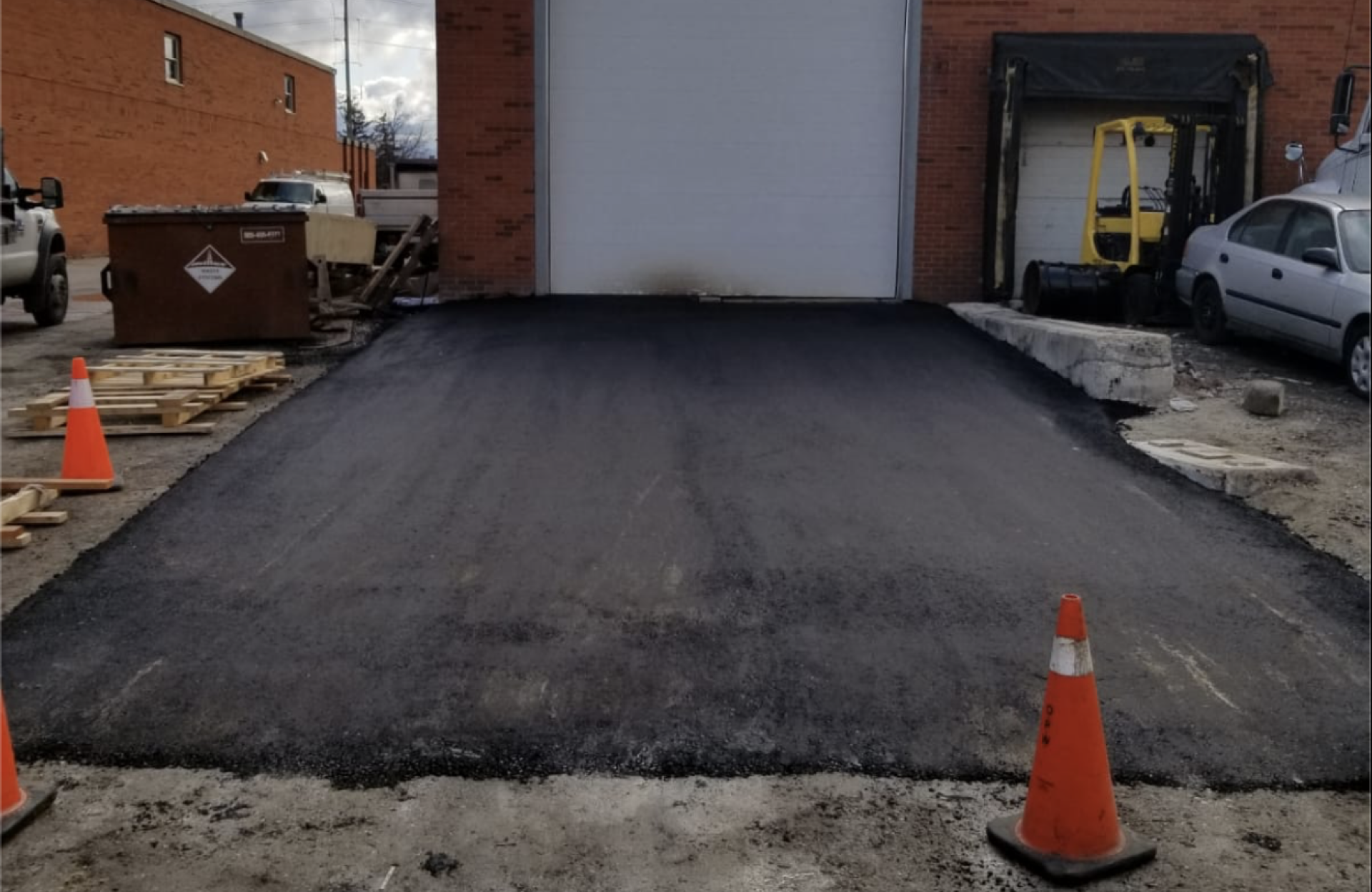
Asphalt paving installation is typically less expensive per square foot than concrete. For commercial projects across Ontario, asphalt generally comes in lower on initial material and labour costs. The exact difference depends on project scale, subgrade preparation requirements, and material market conditions at the time of installation.
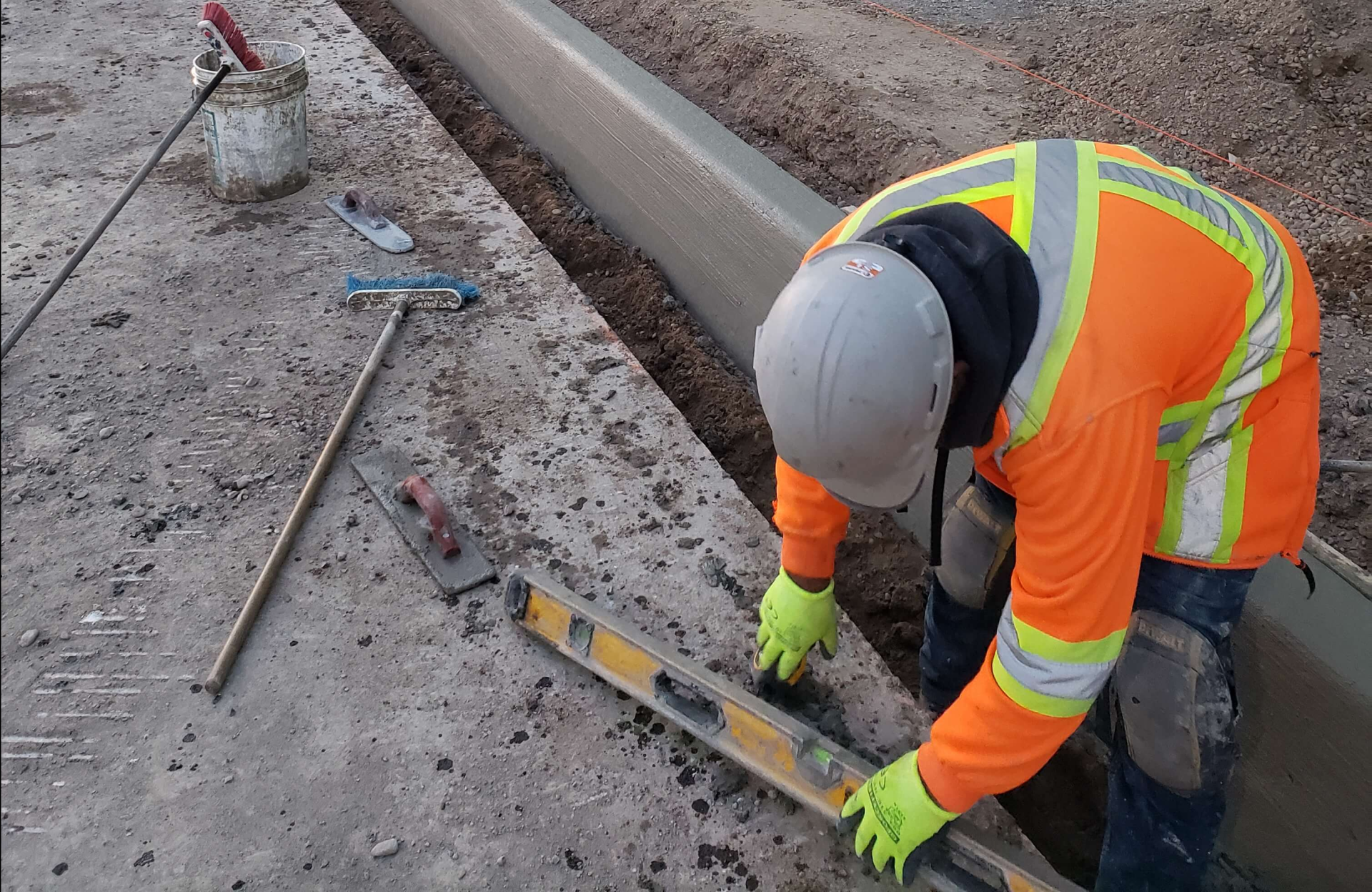
Concrete carries higher upfront costs, driven by cement prices, longer installation time, and the specialized finishing and curing management the material requires. A concrete parking lot will typically cost more to install than an equivalent asphalt surface, and that cost gap widens on larger projects.
For property managers working within a defined capital budget, asphalt’s lower installation cost often allows more surface area to be addressed within the same spend envelope. That said, the right comparison is lifecycle cost, not installation cost alone.
Durability and Lifespan in Canadian Conditions
A well-installed asphalt surface with a regular sealcoating and maintenance program typically lasts 20 to 25 years before requiring major rehabilitation. Concrete, under comparable conditions, can last 30 to 40 years. That longevity advantage is real, but it comes with caveats specific to Canadian climates.
Freeze-thaw cycling is the most damaging force acting on parking lot surfaces in Ontario and across most of Canada. Water infiltrates surface cracks, freezes, expands, and widens those cracks through repeated cycles each winter. Asphalt’s flexibility allows it to accommodate minor movement from frost heave more readily than rigid concrete slabs, which tend to crack along stress lines when base movement occurs.
De-icing salts compound the problem for concrete specifically. Chloride ions from road salt accelerate concrete deterioration through a process called chloride-induced corrosion and can cause surface scaling at a faster rate than comparable asphalt surfaces. This makes concrete a more demanding surface to maintain in regions with heavy winter salt application.
Maintenance Requirements Over Time
Asphalt requires more frequent maintenance interventions than concrete, but each intervention is less expensive. Sealcoating every two to three years protects against UV oxidation, water infiltration, and fuel spills. Crack sealing as cracks appear prevents water from reaching the base. When surface deterioration progresses past the point where sealing is sufficient, asphalt overlay or mill-and-fill repairs are well-understood and widely available.
Concrete requires less routine maintenance but is more expensive to repair when it does fail. Joint sealants need periodic replacement to prevent water infiltration at slab joints. Surface spalling from salt exposure requires grinding or overlay remediation. Full slab replacement, when required, involves saw-cutting, removal, and re-pouring, which is a significantly more disruptive and expensive operation than asphalt patching.
Installation Timeline and Business Disruption
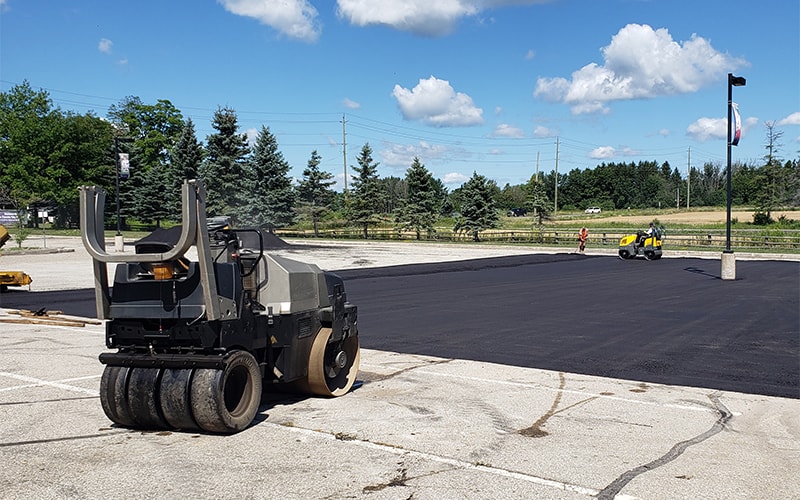
Asphalt paving projects can typically be completed in one to three days for standard commercial lots, with surfaces open to traffic within 24 to 48 hours of final compaction. This matters for properties that cannot afford extended closure, including retail centres, office complexes, and industrial facilities with active operations.
Concrete requires significantly more time. After placement, concrete must cure for a minimum of seven days before vehicle traffic, and full compressive strength develops over 28 days. For active commercial properties, a concrete installation creates a longer closure window, which may require phased construction to keep at least a portion of the lot operational.
Which Material Is Right for Your Property?
Asphalt is the more practical choice for most Ontario commercial parking lots. Its lower installation cost, faster return to service, better performance under freeze-thaw cycling, and lower sensitivity to de-icing salts make it the dominant choice for the Canadian climate. Its maintenance requirements are well-understood, and the contractor network for asphalt work is broad.
Concrete is worth considering for loading dock areas, heavy equipment zones, and sites where long-term durability under sustained point loads justifies the higher upfront investment. Commercial concrete is also preferred for indoor applications like warehouse floors and covered parking structures where UV exposure is not a factor and salt application is controlled.
The best answer for your property depends on current surface condition, traffic patterns, available budget, and how long you plan to hold the asset. A site assessment can clarify which material and approach delivers the best value over your planning horizon.
Frequently Asked Questions
1. Is asphalt or concrete better for Canadian winters?
Asphalt generally performs better in Canadian winter conditions. Its flexibility accommodates frost heave movement more gracefully than rigid concrete, and it is less susceptible to surface scaling from de-icing salts. Concrete can be engineered for cold-weather performance, but it requires air-entraining admixtures and careful curing management to minimize freeze-thaw damage.
2. How often does an asphalt parking lot need to be sealcoated?
Most commercial asphalt parking lots benefit from sealcoating every two to three years. High-traffic sites, lots in areas with intense UV exposure, and surfaces that see frequent fuel or oil spills may benefit from more frequent applications. A visual inspection by a qualified contractor is the most reliable way to determine whether the existing surface is ready for sealcoating or requires repairs first.
3. Can I convert an existing asphalt lot to concrete?
Yes, but conversion requires full removal of the existing asphalt surface and potentially the base course, followed by subgrade preparation appropriate for concrete. This is a more significant project than resurfacing and should be evaluated against the total lifecycle cost of maintaining the existing asphalt surface versus the investment in concrete replacement.
4. What causes asphalt to deteriorate faster than expected?
The most common accelerators of premature asphalt deterioration are deferred maintenance, inadequate subgrade preparation at installation, poor surface drainage that allows water to pool and infiltrate, and heavy vehicle loads beyond the pavement’s design capacity. Regular sealcoating and prompt crack sealing address the most significant preventable causes.
5. Is concrete more environmentally friendly than asphalt?
Both materials have environmental trade-offs. Asphalt is a petroleum product but has high recycling rates: reclaimed asphalt pavement (RAP) is one of the most recycled construction materials in North America. Concrete production is energy-intensive due to cement manufacturing. Neither material is categorically more sustainable without considering project-specific factors including material sourcing, transport distances, and end-of-life recycling.
Get a Material Recommendation Based on Your Actual Site
Seal Canada assesses commercial properties across Ontario and provides honest recommendations on whether asphalt, concrete, or a combination of both is the right solution for each application. Contact our team to schedule a free site assessment.
Key Takeaways
- Asphalt paving has lower upfront installation costs and faster return-to-service timelines than concrete, making it the practical choice for most Ontario commercial lots.
- Concrete’s longevity advantage is real but diminished in Canadian climates where freeze-thaw cycling and de-icing salts accelerate surface deterioration.
- Asphalt requires more frequent maintenance interventions, but each intervention is significantly less expensive than equivalent concrete repairs.
- Concrete is best suited to heavy load applications: loading docks, equipment pads, and covered structures where salt exposure is controlled.
- The right material choice depends on traffic patterns, budget, asset holding period, and current surface condition, not a general rule.
- Lifecycle cost, not installation cost, is the correct basis for comparing asphalt and concrete investments on commercial properties.