Commercial parking lot design is shifting from static infrastructure to adaptable assets capable of accommodating electric vehicles, smart guidance systems, and changing transportation patterns. Property owners and managers who plan for these changes during initial construction or major resurfacing projects reduce the cost of future upgrades significantly. This guide covers the design decisions, technology integrations, and sustainable paving practices that define a future-proof parking facility.
Why Future-Proofing Matters for Commercial Parking
A commercial parking lot built today will be in use for 20 to 30 years before a major reconstruction is warranted. Within that window, electric vehicle adoption, autonomous vehicle accommodation, and changing mobility preferences will reshape how that space is used and what users expect from it. Planning for those changes now costs far less than retrofitting later.
The cost to install conduit for EV charging during a parking lot resurfacing project is a fraction of what it costs to cut and patch asphalt to add it after the fact. The same logic applies to smart parking infrastructure, drainage improvements, and accessibility upgrades. Building the capability in at the design stage is always the more cost-effective approach.
Electric Vehicle Infrastructure: Conduit and Charging Ready Design
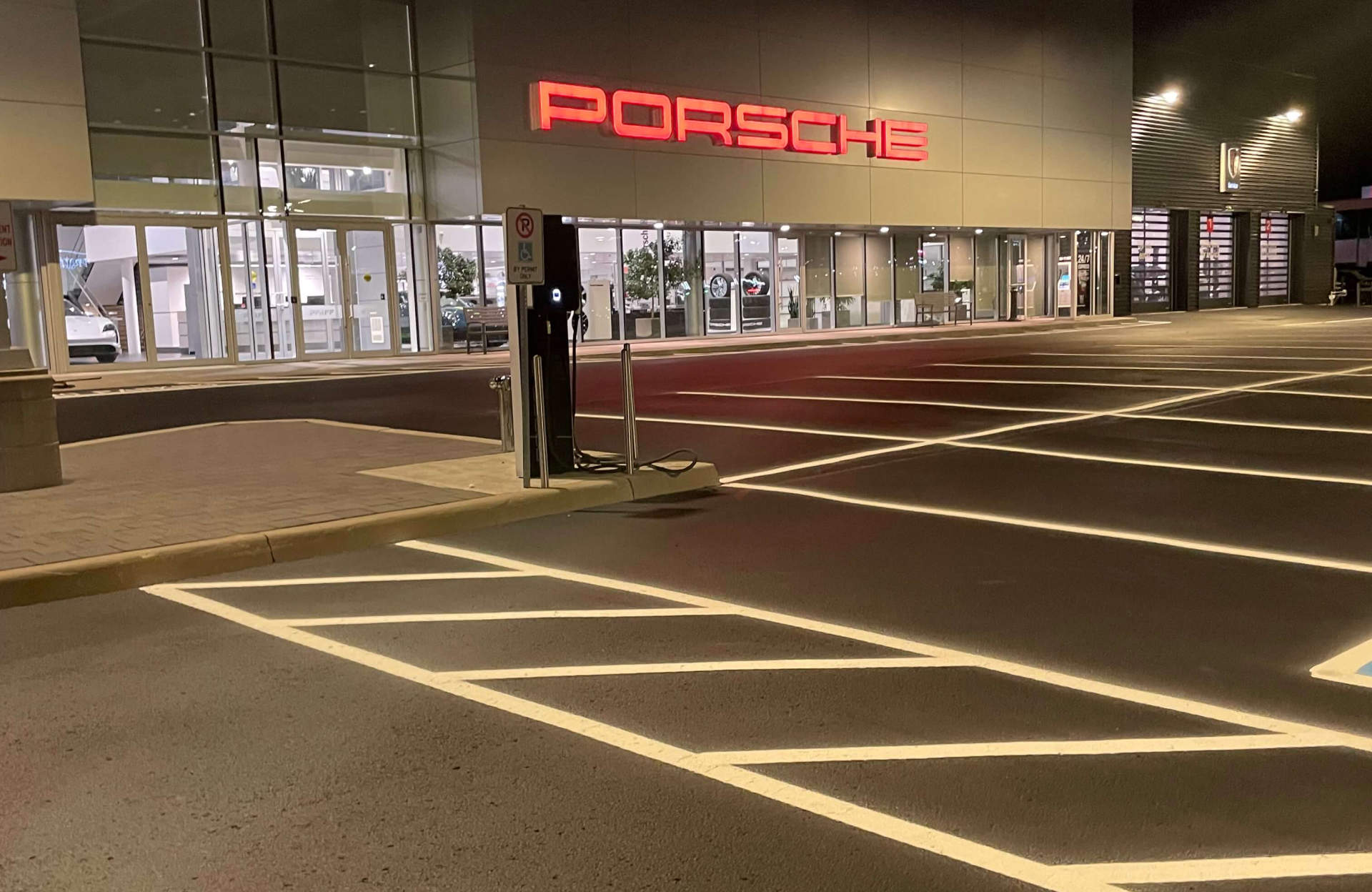
EV adoption in Canada is accelerating. Natural Resources Canada projects continued growth in EV registrations, with Ontario and British Columbia leading national uptake. Commercial properties that do not provide EV charging options risk losing tenants, customers, and visitors to competitors who do. Installing underground conduit for future charging stations during any resurfacing or new construction project costs relatively little upfront and eliminates future disruption. Designating specific bays near the conduit termination points as EV-ready spaces completes the preparation without requiring immediate charger installation.
Working with a commercial paving contractor who coordinates with electrical trades during the paving phase streamlines this process and prevents the coordination gaps that lead to rework.
Smart Parking Systems: Sensors, Guidance, and Real-Time Data
Smart parking systems use in-ground sensors or camera-based detection to identify occupied and vacant spaces in real time, feeding that data to dynamic signage that guides drivers directly to available spots. This reduces circulation time, fuel consumption, and driver frustration, particularly in large or multi-level facilities.
For properties where parking availability directly affects customer or tenant experience, smart guidance systems justify their installation cost through reduced congestion and improved throughput during peak periods. According to the International Parking and Mobility Institute, smart parking systems can reduce the time drivers spend searching for spaces by up to 30 percent in high-occupancy facilities.
Infrastructure pre-positioning, including conduit runs for sensor cabling, is most cost-effective when done in conjunction with major paving work. Adding it retroactively requires surface cuts and patching that compromise both the aesthetics and structural integrity of a recently resurfaced lot.
Designing for Autonomous Vehicle Accommodation
Autonomous vehicles navigate differently from human-driven vehicles. They require clearly readable lane markings, well-defined entry and exit routing, and in some configurations, dedicated drop-off zones separate from parking bays. Crisp, durable line markings are a basic prerequisite because the onboard sensors in autonomous vehicles depend on clearly painted road markings to navigate accurately.
Wider lane widths in designated areas also reduce the margin for positioning errors, which matters for self-parking applications. While fully autonomous parking is not yet standard in commercial facilities, designing lanes that meet future width requirements now avoids costly re-striping and, in some cases, physical reconfiguration later.
Sustainability Features That Reduce Long-Term Operating Costs
Permeable paving in surface drainage zones reduces stormwater runoff and can eliminate or reduce the need for conventional stormwater management infrastructure, which is a cost consideration at the permitting stage in many Ontario municipalities. Green perimeter landscaping provides shade, reduces surface heat, and improves the visual quality of the property.
Solar-powered lighting is increasingly cost-competitive with grid-powered alternatives over a 10-year horizon, particularly for facilities in regions with high electricity rates. For properties pursuing LEED or BOMA BEST certification, these features also contribute to scoring. For a detailed assessment of which sustainable features best fit your property’s situation, Seal Canada’s team can help you evaluate options during project planning.
Modular Design: Building in Flexibility From Day One
Modular design in commercial parking applies the principle that the configuration should be adjustable as needs change. This means reserving space for future expansion rather than maximizing the current footprint, using pavement materials compatible with easy removal and reconfiguration, and positioning infrastructure in ways that allow the lot to serve multiple uses.
Multi-use capability is increasingly valuable for commercial properties hosting events or managing variable occupancy. A lot designed to function as both daily parking and a weekend market or event space requires careful attention to drainage, surface grade, and pavement markings that can support both configurations without a full re-strip each time.
Frequently Asked Questions
1. How much does it cost to add EV charging conduit during a parking lot resurfacing project?
Conduit installation costs vary by the number of runs, the distance from the electrical panel, and site-specific factors. The consistent finding is that installing conduit during an active paving project costs significantly less than cutting and patching a completed surface later. Get a combined quote from your paving contractor and electrical trade to understand the cost delta for your specific site.
2. Do smart parking sensors work in Canadian winter conditions?
Most commercial-grade parking sensors are rated for cold-weather operation and designed to function reliably in temperatures typical of Canadian winters. Camera-based detection systems, which do not rely on in-ground hardware, are particularly well-suited to climates with significant freeze-thaw cycling. Consult with a smart parking systems provider to confirm hardware specifications for your climate zone.
3. What pavement marking standards should I specify for autonomous vehicle compatibility?
Clear, high-contrast lane markings in a reflective thermoplastic paint are currently the baseline specification for AV-compatible pavement markings. Lane width of at least 3.5 metres supports autonomous vehicle positioning tolerances. Markings should be refreshed more frequently than standard commercial lots to maintain AV sensor readability.
4. Is permeable paving suitable for Ontario’s freeze-thaw climate?
Yes, permeable paving systems designed for cold climates are available and in use across Ontario. The aggregate base must be designed to accommodate frost penetration, and the surface should be cleaned annually to prevent fine particle accumulation that reduces permeability. Consult a paving contractor familiar with Ontario climate conditions to specify the appropriate system for your site.
5. How do I future-proof a parking lot without exceeding my current capital budget?
Prioritize conduit and infrastructure pre-positioning, which has a relatively low upfront cost and the highest long-term cost avoidance value. Defer the surface features like charging station equipment and smart sensors until tenant demand or budget availability warrants them. The foundation work done now makes those future additions dramatically less expensive.
Build a Parking Lot That Works for the Next Decade, Not Just Today
Seal Canada works with commercial property owners and managers across Ontario to plan and execute paving projects that account for where transportation is heading, not just where it is now.
Whether you’re resurfacing an existing lot or designing a new facility, our team provides practical guidance on the decisions that reduce future costs and keep your property competitive. Contact our team to schedule a free site assessment.
Key Takeaways
- Future-proof parking lots accommodate EV charging, smart guidance systems, and autonomous vehicles through deliberate design choices.
- Installing EV conduit during active paving work costs significantly less than retrofitting after the surface is complete.
- Smart parking sensors reduce driver circulation time and improve the user experience in high-occupancy facilities.
- Clear, high-contrast pavement markings are a basic requirement for autonomous vehicle compatibility.
- Permeable paving, solar lighting, and green landscaping reduce long-term operating costs and support sustainability certifications.
- Modular and multi-use design allows the same parking infrastructure to serve different needs as property use evolves.