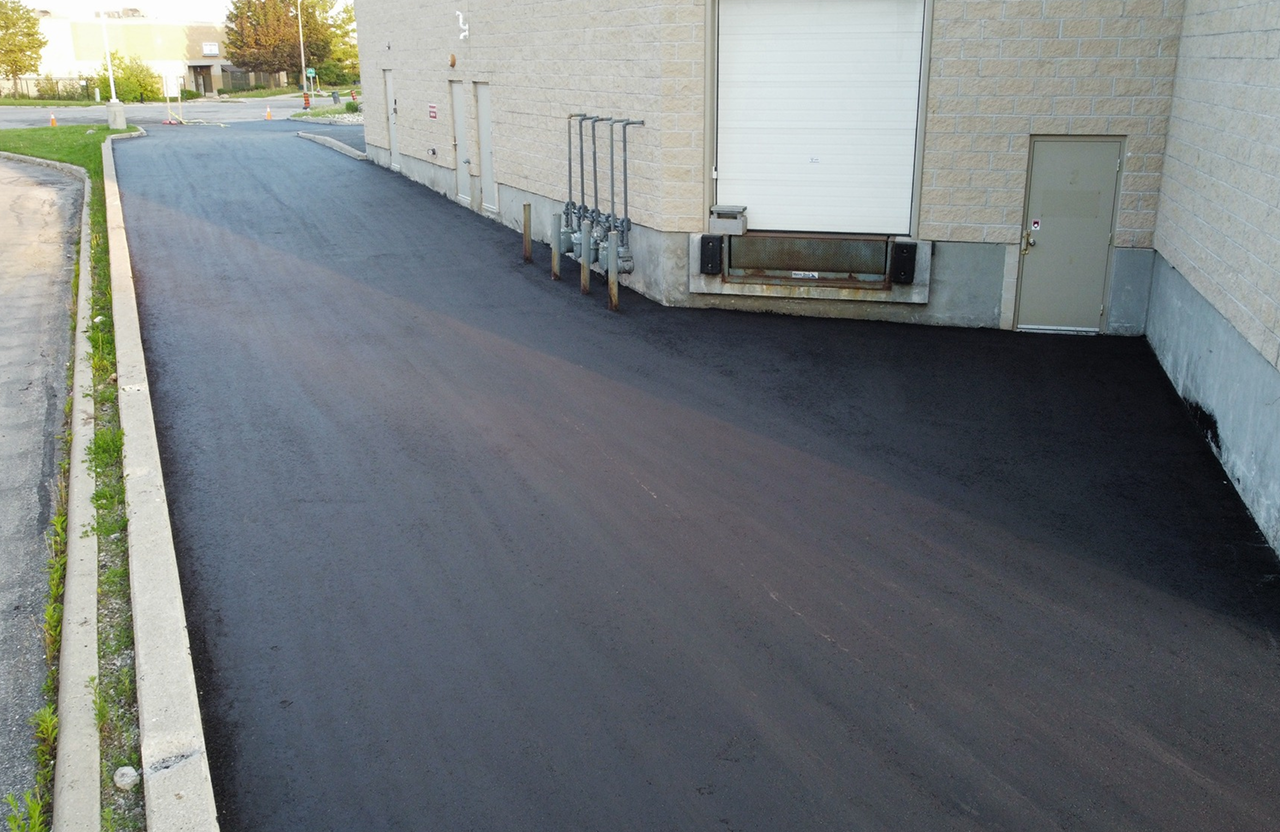
Biodegradable materials are transforming commercial paving by offering lower carbon output, reduced landfill waste, and improved soil compatibility. This guide covers the types of biodegradable materials used in pavement projects, their environmental and economic benefits, and what Canadian property owners should know before specifying them. Seal Canada helps clients incorporate sustainable paving practices into every phase of their commercial paving programs.
Why Biodegradable Materials Are Gaining Ground
Commercial construction is under growing pressure to reduce environmental impact without sacrificing surface performance. Biodegradable materials represent a practical route toward that goal for property managers across Ontario.
Unlike conventional paving inputs that persist in the waste stream indefinitely, biodegradable materials are designed to break down through natural processes. For commercial property owners, properly specified biodegradable materials can reduce disposal costs, lower total lifecycle carbon output, and support ESG reporting requirements now standard in corporate real estate management.
When selecting eco-friendly paving options, it helps to understand exactly how these materials function at each stage of a project. Seal Canada’s commercial paving services include site assessments that identify where biodegradable materials deliver both environmental and operational value.
What Are Biodegradable Materials in Paving?
Biodegradable materials are substances that decompose through the action of bacteria, fungi, or sunlight. In commercial asphalt paving applications, these materials appear at several project stages:
- As binders derived from bio-based sources rather than petroleum
- As filler additives made from recycled organic content
- As ancillary materials such as erosion control fabrics, silt barriers, and temporary markings
- As compostable site management products replacing single-use plastics
It is worth distinguishing biodegradable materials from recycled asphalt content. Recycled asphalt pavement (RAP) and recycled concrete aggregate (RCA) are not biodegradable, but they reduce demand for virgin resources and remain an important component of any green construction materials program.
Types of Biodegradable Materials in Pavement Projects
Bio-Based Asphalt Binders
Conventional asphalt binders are petroleum derivatives. Research into bio-based binders has produced alternatives derived from lignin (a byproduct of paper manufacturing), waste cooking oils, and plant-derived resins. These biodegradable materials reduce dependence on fossil fuels at the binder stage while maintaining the flexibility and adhesion properties that asphalt requires.
Compostable Plastic Site Products
During construction, single-use products such as safety signage bases, temporary barriers, and packaging are consumed. Biodegradable alternatives made from plant starch derivatives are increasingly available as replacements. Their environmental advantage is realized at end of life, when they decompose rather than persist in the waste stream.
Natural Fibre Reinforcements
Geotextile fabrics used in subbase stabilization have traditionally been made from synthetic fibres. Biodegradable options such as jute, coir, and hemp offer similar functionality with the added benefit of decomposing over time, reducing long-term waste when used in temporary stabilization applications.
Recycled Rubber Aggregates
While not biodegradable in the strict sense, recycled rubber from end-of-life tires is widely used in asphalt modification and rubberized sealants. It reduces landfill pressure and improves pavement flexibility, which is particularly valuable in Canadian climates where freeze-thaw cycles demand more elastic surfaces. Learn more about how asphalt lifespan is affected by material choice and climate conditions.
Environmental Benefits of Biodegradable Materials
Reduced Landfill Waste
Biodegradable materials that reach the end of life decompose rather than accumulate. For commercial properties managing large volumes of construction waste, specifying biodegradable materials where appropriate can meaningfully reduce disposal costs and diversion program requirements. The Canada Green Building Council provides guidance on sustainable construction material choices that align with LEED certification requirements.
Lower Carbon Footprint
Bio-based binders and plant-derived inputs typically carry a lower embodied carbon profile than petroleum equivalents. Seal Canada’s eco-friendly paving approach incorporates these principles into every commercial project. According to Natural Resources Canada, reducing embodied carbon in construction materials is a key component of Canada’s national sustainability goals.
Improved Soil Compatibility
Biodegradable materials that migrate into surrounding soil over time tend to improve rather than degrade soil quality. This is particularly relevant near green spaces, stormwater infiltration zones, and environmentally sensitive sites. For properties near watercourses or protected areas, using biodegradable materials for erosion control helps meet environmental permitting requirements.
Economic Case for Biodegradable Materials
Biodegradable materials are sometimes assumed to be more expensive than conventional alternatives. While certain bio-based binders carry a cost premium at point of purchase, total lifecycle costs frequently favor biodegradable materials when disposal costs, regulatory compliance, and maintenance intervals are factored in.
For corporate and institutional property owners, the ESG reporting value of specifying sustainable paving materials carries financial weight. Understanding asphalt repair costs alongside lifecycle benefits helps property managers build an accurate capital planning picture.
How to Specify Biodegradable Materials for Your Project
Successful specification of biodegradable materials requires close coordination between the property manager, the paving contractor, and the materials supplier. The Transportation Association of Canada offers technical resources on pavement material specifications relevant to Canadian climate conditions.
Key steps include:
- Define the project scope and identify which phases offer viable substitution opportunities for biodegradable materials
- Review available product certifications, including compostability standards and bio-content verification
- Evaluate performance data for Canadian climate conditions, particularly freeze-thaw resistance
- Confirm disposal and end-of-life handling protocols for any biodegradable materials specified
- Document biodegradable materials use for ESG and sustainability reporting purposes
Biodegradable Materials and Pavement Maintenance
The use of biodegradable materials does not reduce the need for regular maintenance. Asphalt sealcoating and crack sealing remain critical to extending pavement life, regardless of the materials specified during initial construction.
Properties that invest in biodegradable materials at the construction stage should pair that commitment with regular sealcoating services to protect the surface over its full operational life. When surface damage does occur, asphalt resurfacing using recycled asphalt content (RAP) keeps removed material in productive use rather than sending it to landfill.
Conclusion
Biodegradable materials are becoming a standard consideration rather than a niche specification in commercial paving. As bio-based binder technology matures and supply chains for natural fibre reinforcements deepen, the performance and cost gap between biodegradable and conventional inputs will continue to narrow. Property managers who begin evaluating these materials now will be better positioned to meet future regulatory requirements and stakeholder expectations without disrupting capital planning cycles.
Frequently Asked Questions
1. Are biodegradable materials suitable for high-traffic commercial paving?
Some biodegradable materials, particularly bio-based binders, are engineered to meet commercial performance standards. However, not all biodegradable materials are appropriate for every application. A paving specialist can assess which materials are viable for a given traffic load and climate exposure.
2. What is the difference between biodegradable and recycled paving materials?
Biodegradable materials break down through natural processes at end of life. Recycled materials, such as reclaimed asphalt pavement, are reprocessed and reused rather than broken down. Both contribute to sustainable paving programs but serve different functions in the material lifecycle.
3. Do biodegradable materials cost more than conventional paving options?
Bio-based binders carry a higher unit cost at point of purchase. However, reduced disposal costs, potential ESG reporting value, and longer maintenance intervals mean total lifecycle costs for biodegradable materials can compare favorably to conventional alternatives.
4. How do biodegradable materials perform in Canadian winters?
Freeze-thaw resistance is a critical performance requirement. Natural fibre geotextiles and compostable site products generally perform well, while bio-based binders require careful formulation to maintain flexibility at low temperatures.
5. Can biodegradable materials help meet municipal environmental requirements?
Yes. Many municipalities look favorably on biodegradable materials for erosion control, stormwater management, and near-watercourse applications. Documentation of use can support environmental permitting and compliance reporting.
Key Takeaways
- Biodegradable materials in paving include bio-based binders, compostable site products, and natural fibre reinforcements
- Primary environmental benefits include reduced landfill waste, lower embodied carbon, and improved soil compatibility
- Total lifecycle costs are frequently competitive with conventional alternatives when disposal and maintenance are factored in
- Canadian climate conditions require careful selection, particularly for freeze-thaw performance
- Regular sealcoating and crack sealing remain necessary regardless of biodegradable materials specified at construction
- ESG reporting requirements are increasing the practical and financial value of specifying biodegradable materials
Talk to Seal Canada About Sustainable Paving
Seal Canada serves commercial, industrial, and municipal clients across Ontario with paving programs designed for long-term performance and environmental responsibility. Our team incorporates biodegradable materials, recycled asphalt content, and responsible site management practices across every project. Contact Seal Canada today to schedule a free site assessment and explore how sustainable paving practices can work for your property.