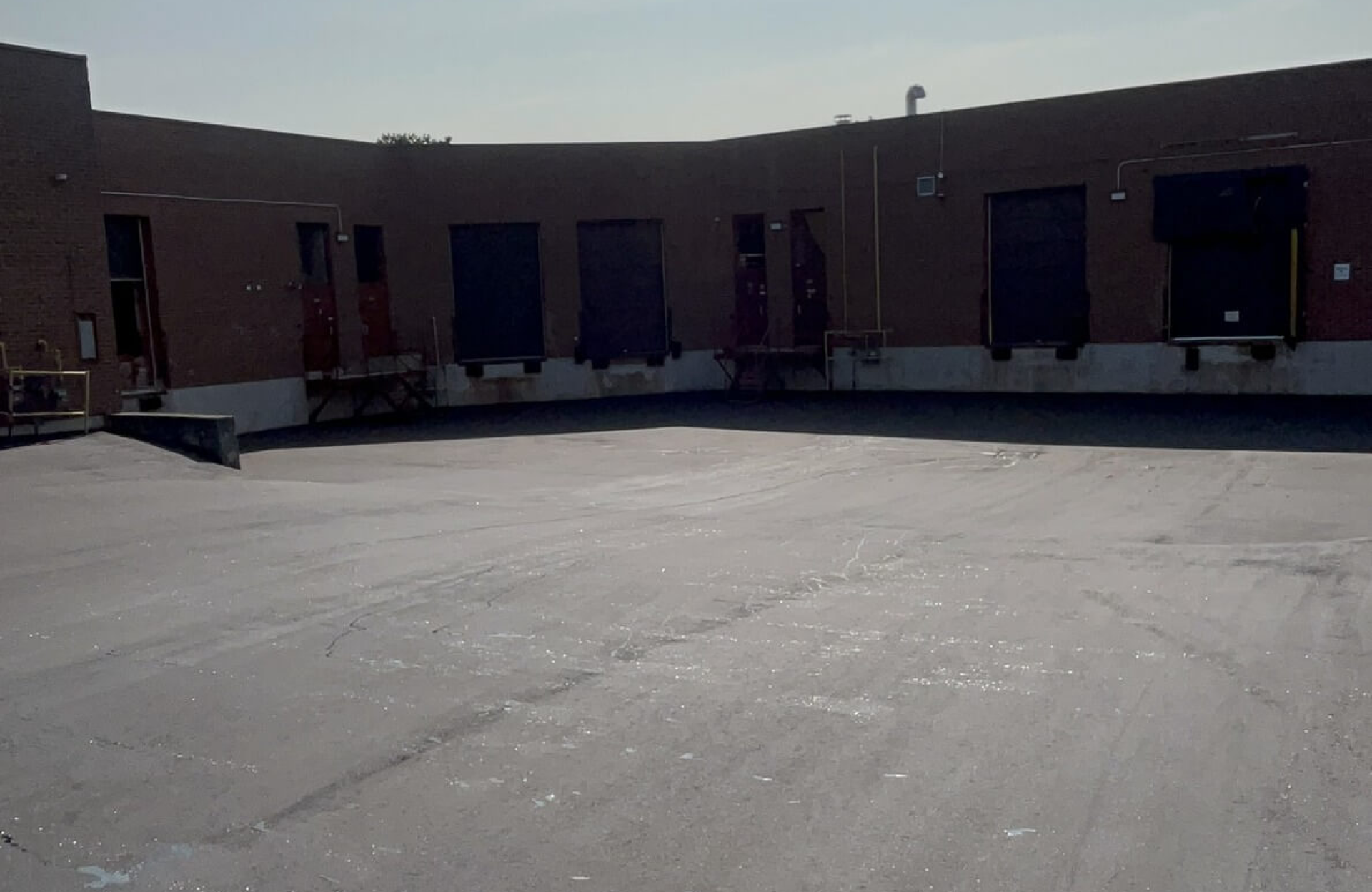
Oil stains on a commercial parking lot are rarely just a cosmetic issue. Petroleum products break down the binder that holds asphalt together, so a dark stain often marks a spot where the surface is already weakening beneath it. This kind of asphalt oil damage is one of the more overlooked issues in routine commercial parking lot maintenance, and Seal Canada helps property managers across the Greater Toronto Area tell the difference between a stain that needs cleaning and one that signals a repair is coming.
Why Do Oil Stains Damage Asphalt?
Asphalt binder is a petroleum-based product, and other petroleum products such as motor oil, hydraulic fluid, and fuel dissolve it on contact. A fresh spill softens the surface locally, and repeated exposure in the same spot, such as under a delivery truck’s regular parking position, gradually strips the binder away from the aggregate beneath it. That is why oil stains tend to reappear or spread in the same stalls and loading areas rather than showing up randomly across a lot.
How Can You Tell a Surface Stain From Structural Damage?
A surface stain sits flat, does not flex or crumble underfoot, and often lifts with a degreaser and a stiff brush. Structural damage from oil shows as soft or spongy asphalt, visible pitting, or aggregate that comes loose when scraped. A spot that has gone from staining to pitting has moved past a cleaning problem and into a repair one, since the binder in that section is already compromised.
What Happens If Oil Damage Is Left Untreated?
Once the binder is stripped in a localized area, water and freeze-thaw cycling move in faster there than in the surrounding pavement, since that section has lost the protection an intact surface provides. Small pitted areas from oil exposure commonly become potholes within one or two winters if they are not addressed. Routine parking lot inspections that specifically flag oil-stained areas, not just cracks and potholes, catch this kind of damage while it is still a surface fix.
Can Sealcoating Prevent Future Oil Damage?
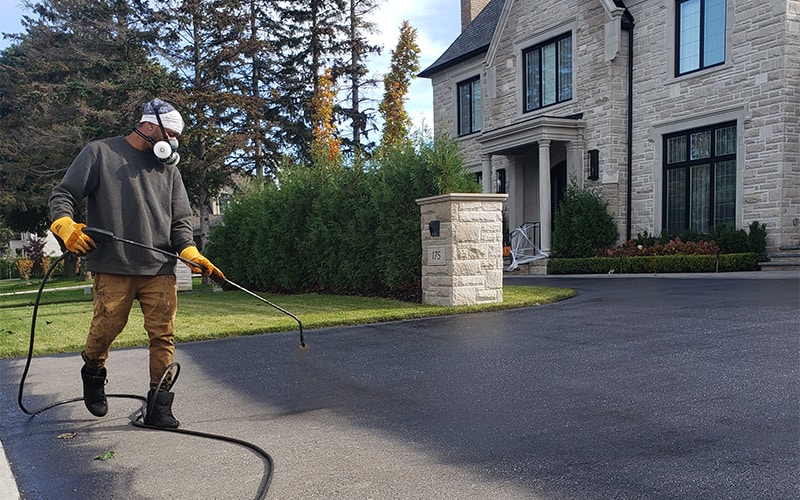
A properly applied sealcoat adds a protective layer over the asphalt binder that resists fuel, oil, and hydraulic fluid, making sealcoating for fuel and oil resistance especially valuable for lots with regular vehicle turnover, loading docks, or fuel exposure compared to a typical residential driveway. Not every sealcoat product performs the same way under chemical exposure. Property managers evaluating a contractor should ask specifically about choosing a sealcoating product suited to fuel and oil exposure, since a product suited to light traffic will not hold up the same way in a loading zone or automotive service area.
When Should a Property Manager Call a Professional Instead of Cleaning It Themselves?
Fresh surface staining is reasonable to address with routine cleaning and a degreaser as part of regular lot maintenance. Once a stained area shows pitting, softening, or crumbling at the edges, the fix is a repair and resealing job rather than a cleaning one. At that point, a commercial asphalt sealcoating assessment can confirm whether the affected section needs patching before the whole lot is resealed, or whether the damage is still isolated enough for a targeted repair.
Frequently Asked Questions
Do all oil stains mean the asphalt is damaged?
No. A fresh surface stain that has not softened or pitted the asphalt is usually still just a cosmetic issue that responds to cleaning. Staining becomes a structural concern once the surface underneath starts to soften or crumble.
How often should a commercial lot be checked for oil damage?
Checking for oil staining during the same spring and fall inspections used for cracks and potholes is enough to catch most damage while it is still a surface-level fix.
Can sealcoating be applied over an existing oil stain?
An oil-affected area typically needs to be cleaned and, if the asphalt has softened, repaired before sealcoating is applied over it, since sealcoat will not bond properly to a surface still saturated with oil.
Are some areas of a parking lot more prone to oil damage than others?
Loading docks, delivery truck parking, and stalls used consistently by the same vehicles see the most repeated exposure, which is why these areas often show wear before the rest of the lot.
Does regular sealcoating reduce the risk of oil damage?
Yes. A sealcoat product suited to fuel and oil exposure adds a protective barrier that resists penetration from these substances, which reduces how much they affect the binder underneath.
Protecting Pavement Investment From Chemical Wear
Oil and fuel exposure is one of the more preventable causes of early pavement failure on a commercial property, and it is also one of the easiest to catch during a routine walkthrough. Property managers who treat oil stains as a maintenance flag rather than a cosmetic annoyance, and who build property manager pavement care into their seasonal schedule, typically spend less over the life of the lot than those who wait until the pitting has already spread. Request a free site assessment to have any stained or pitted areas evaluated before the next season.
Key Takeaways
- Oil stains on asphalt are a maintenance flag, not just a cosmetic issue, since petroleum products break down asphalt binder.
- Pitting, softening, or crumbling at a stained area signals the damage has moved from surface-level to structural.
- Untreated oil damage commonly becomes a pothole within one or two winters.
- Sealcoat products suited to fuel and oil exposure protect high-traffic and loading areas better than standard sealers.
- Checking for oil staining during routine spring and fall inspections catches most damage while it is still a surface fix.