Not all sealcoating products protect asphalt equally in Ontario’s climate. The right choice depends on your traffic type, chemical exposure, local regulations, and subgrade condition. This guide breaks down each product type and the decision factors that determine which one belongs on your parking lot.
Why Sealcoating Product Selection Changes Everything
Sealcoating extends asphalt life by shielding the binder from UV oxidation, moisture infiltration, and chemical damage. But the protection level depends entirely on whether the right sealcoating product was matched to the right conditions. A product that performs well on a low-traffic residential driveway may fail quickly on a high-load commercial lot with regular fuel exposure.
Getting the selection wrong wastes the cost of application and leaves the pavement exposed to the exact damage the sealer was meant to prevent. The benefits of sealcoating are only realized when the product is correctly specified and properly applied.
The Main Types of Sealcoating Products
Coal Tar Emulsion
Coal tar emulsion has been the industry standard for commercial parking lots in North America for decades. It delivers exceptional resistance to fuel, motor oil, hydraulic fluid, and other petroleum products, making it the default choice for lots with fuel station exposure, automotive service areas, or industrial loading operations.
The limitation is environmental. Coal tar contains polycyclic aromatic hydrocarbons (PAHs) that are regulated in a growing number of Ontario municipalities. Before specifying coal tar, verify current local bylaws. In municipalities where it is restricted, asphalt emulsion is the compliant alternative.
Asphalt Emulsion
Asphalt emulsion sealers are manufactured from asphalt cement and water, making them chemically compatible with asphalt substrates at a molecular level. They carry none of the PAH concerns associated with coal tar and perform well across Ontario’s temperature range, remaining flexible through both summer heat and winter cold.
The trade-off is chemical resistance. Standard asphalt emulsion is not as resistant to fuel and oil spills as coal tar. Modified asphalt emulsion products with chemical resistance additives close much of this gap and are appropriate for lots with moderate chemical exposure.
Acrylic Sealers
Acrylic polymer sealers provide superior UV protection and produce a clean, dark finish that enhances curb appeal for high-visibility commercial properties. They are the preferred choice for decorative concrete surfaces and asphalt in retail or corporate environments where aesthetics are a priority alongside protection.
Acrylic sealers cost more than coal tar or asphalt emulsion and require more frequent reapplication on high-traffic surfaces. Factor in the reapplication cycle when evaluating total cost per year of protection.
Fast-Cure Sealers
Fast-cure formulations reach traffic-bearing cure in two to four hours compared to twelve to twenty-four hours for standard products. This is valuable for commercial lots that cannot close large sections of parking during business hours. Fast-cure products are available in both coal tar and asphalt emulsion base chemistry.
Standard products of equivalent chemistry generally outperform fast-cure variants slightly on longevity, so the faster cure comes with a modest trade-off in protection interval.
How to Match Sealcoating Product to Your Site
Climate and Temperature Range
Ontario’s climate spans summer highs above 30 degrees Celsius and winter lows below minus 20. A sealcoating product that cannot remain flexible through this range will crack and separate, defeating its protective purpose. Asphalt emulsion and properly formulated coal tar emulsion both handle Ontario’s full seasonal range. Acrylic sealers can become brittle at the lower end of the temperature range under sustained cold exposure.
Traffic Volume and Vehicle Type
High-load commercial lots with delivery trucks, buses, or multi-axle vehicles need a sealer that resists scuffing under repeated hard braking and heavy turning loads. Coal tar emulsion and modified asphalt emulsion with aggregate additives handle high-shear traffic conditions better than standard acrylic products.
Chemical Exposure Level
Lots adjacent to fuel stations, automotive service bays, or industrial operations require a sealer with strong petroleum chemical resistance. Coal tar emulsion is the standard specification for these applications. Where coal tar is restricted by local bylaw, a modified asphalt emulsion with chemical resistance additives is the appropriate alternative.
Regulatory Compliance in Ontario
Check municipal bylaws before finalizing product selection. Coal tar products are restricted or under review in a growing number of Ontario municipalities. Even where not currently restricted, the regulatory direction favors asphalt emulsion and compliant alternatives. Many commercial property managers have moved to asphalt emulsion as a default regardless of current local status to avoid future retrofit costs.
For broader context on environmentally responsible pavement choices, the Environmental Protection Agency publishes pavement material guidance relevant to both US and Canadian commercial properties. The Transportation Association of Canada also maintains sustainable pavement frameworks aligned with Canadian climate and regulatory conditions.
The Application Process and Why It Matters
Surface Preparation Is Not Optional
No sealcoating product performs well on a dirty, oily, or structurally compromised surface. Proper preparation requires cleaning debris and biological growth from the surface, removing oil stains with appropriate degreasers, and completing crack sealing on all active cracks before any sealer is applied. Applying sealer over open cracks traps moisture and provides only the appearance of protection.
Application Method Affects Coverage Quality
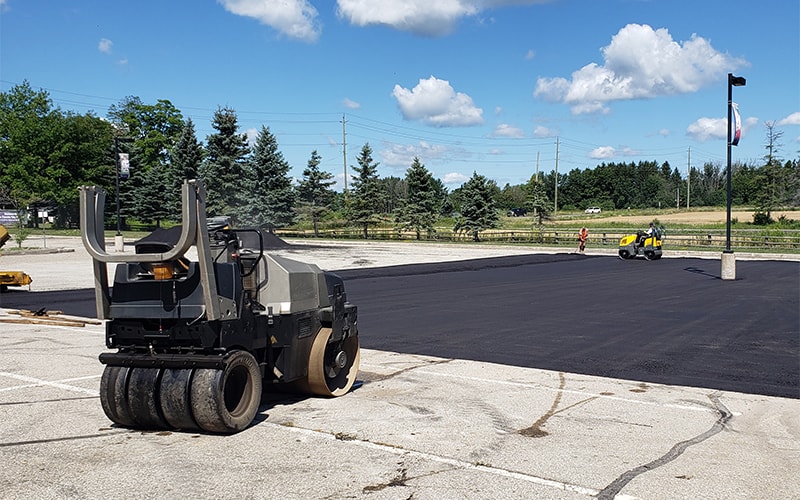
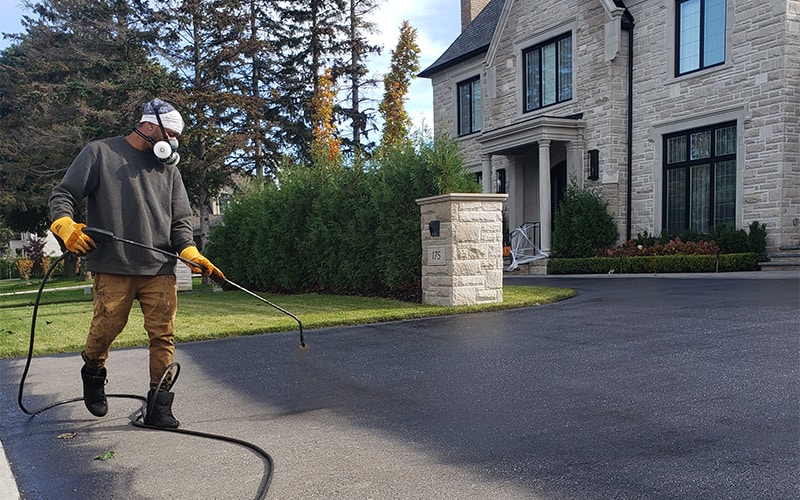
Commercial lots are sealed using spray application or squeegee application depending on surface texture and product viscosity. Spray application produces consistent coverage on smooth, uniform surfaces. Squeegee application works the product into surface texture on aged or rough pavement and is preferred when the surface has significant texture variation.
Two-coat application is the commercial standard. A base coat followed by a finish coat after the first has partially cured provides measurably better protection and longevity than a single heavy coat. Contractors who propose single-coat application on a commercial lot are reducing their material cost at your pavement’s expense.
Cure Time and Traffic Management
Standard sealcoating formulations require twelve to twenty-four hours of curing before vehicle traffic. Temperature below 10 degrees Celsius or high humidity significantly extends required cure time. Fast-cure products reduce this to two to four hours under appropriate conditions. Plan traffic management and tenant communication around these windows before scheduling work.
The Ontario Ministry of Transportation sets pavement preservation standards for provincial infrastructure, and commercial contractors working to equivalent standards should be able to confirm application specifications. For reference on how sealcoating fits into a full pavement maintenance program, how sealcoating extends asphalt life provides a complete lifecycle overview.
Matching the Product to the Pavement Condition
New asphalt should be allowed to cure for sixty to ninety days before first sealcoating. Applying sealer too early traps volatile compounds from fresh asphalt and can affect adhesion. For older pavement that has oxidized and lost binder flexibility, an asphalt rejuvenating primer applied before sealcoating improves adhesion and penetration.
Pavement with active surface cracking needs crack sealing before any sealcoating is applied. Sealing over open cracks without filling them first creates a false surface that conceals deterioration rather than stopping it. Seal Canada’s commercial paving team assesses pavement condition before recommending a sealcoating product and schedule, ensuring the right preparation is completed before any sealer goes down. After sealcoating, line striping should be completed to restore parking lot markings to full visibility.
Frequently Asked Questions
1. What is the best sealcoating product for a commercial parking lot in Ontario?
For most commercial lots, high-quality asphalt emulsion or coal tar emulsion (where municipally permitted) applied in two coats on a properly prepared surface delivers the best protection. The right product depends on traffic type, chemical exposure, and current local regulations.
2. How often should commercial asphalt be sealcoated?
Commercial lots typically need sealcoating every three to five years. High-traffic surfaces or lots with significant UV or chemical exposure may need reapplication every three years. Annual condition inspections help determine the right interval for each specific property.
3. Can sealcoating be applied over cracked asphalt?
Not without proper crack treatment first. Active cracks must be sealed with hot-pour rubberized crack sealant before any sealcoating product is applied. Sealing over open cracks does not stop water infiltration; it only creates the appearance of a sealed surface.
4. Is coal tar sealcoating banned in Ontario?
Coal tar is not banned province-wide, but individual Ontario municipalities have introduced restrictions due to PAH content. Verify current local bylaw status before specifying coal tar. Asphalt emulsion is the recommended compliant alternative in restricted areas.
5. How does two-coat sealcoating compare to single-coat application?
Two-coat application consistently outperforms single-coat in both protection depth and longevity. The second coat fills any pinhole voids left by the first and creates a more complete barrier against UV exposure, moisture, and chemical damage.
6. What happens if sealcoating is applied in cold or wet conditions?
Temperatures below 10 degrees Celsius and high humidity significantly extend cure time and can prevent proper adhesion. In extreme cases, product applied in unsuitable conditions peels and fails within weeks. Work should be scheduled for warm, dry conditions with a twenty-four hour dry weather window.
7. How soon after paving can new asphalt be sealcoated?
New asphalt should cure for sixty to ninety days before first sealcoating. Applying sealer too early traps volatiles from fresh asphalt and can affect adhesion quality. Your contractor should confirm cure time before scheduling sealcoating on newly paved surfaces.
Getting the Sealcoating Decision Right the First Time
The right sealcoating product for your commercial parking lot is not the cheapest one or the most heavily marketed one. It is the product matched to your specific traffic load, chemical exposure, climate conditions, and local regulatory requirements, applied at the right time to a properly prepared surface.
Seal Canada assesses each site before recommending a product, confirms surface preparation requirements, and applies using commercial-grade equipment with two-coat coverage standards. Contact our team to schedule a sealcoating assessment for your property.
Key Takeaways
- Product selection must match site conditions: traffic load, chemical exposure, climate, and Ontario municipal regulations all affect which sealcoating product is appropriate.
- Coal tar emulsion provides the best chemical resistance but is restricted in some Ontario municipalities. Verify local bylaw status before specifying.
- Asphalt emulsion is the compliant alternative to coal tar and performs well across Ontario’s climate range when properly formulated.
- Surface preparation, including crack sealing and oil stain removal, is as important as product quality for sealcoating performance.
- Two-coat application is the commercial standard and consistently outperforms single-coat application in protection depth and longevity.
- New asphalt must cure for sixty to ninety days before sealcoating to avoid adhesion problems and premature peeling.
- Fast-cure formulations reduce traffic management downtime but involve a modest trade-off in protection interval compared to standard products of equivalent chemistry.