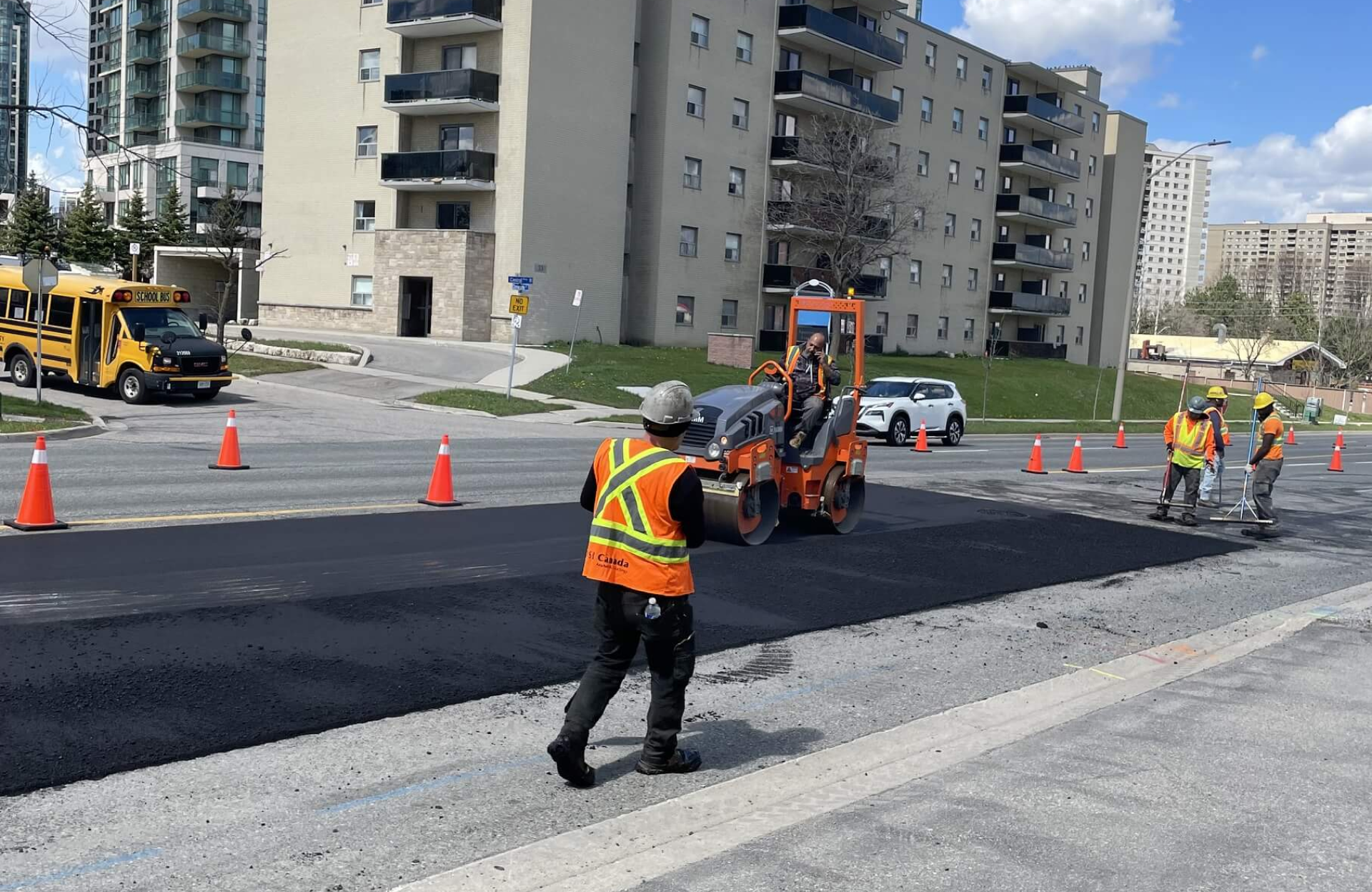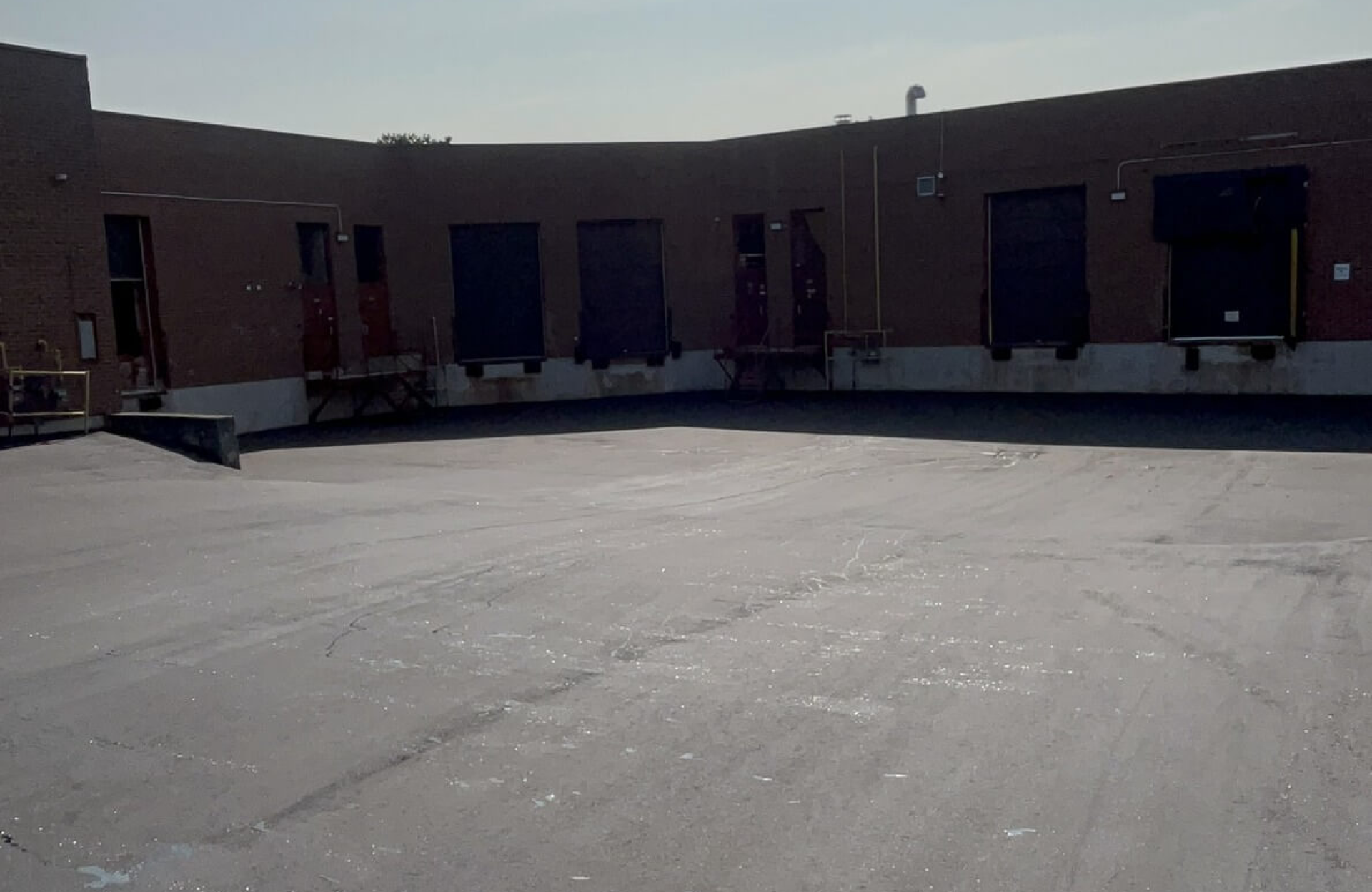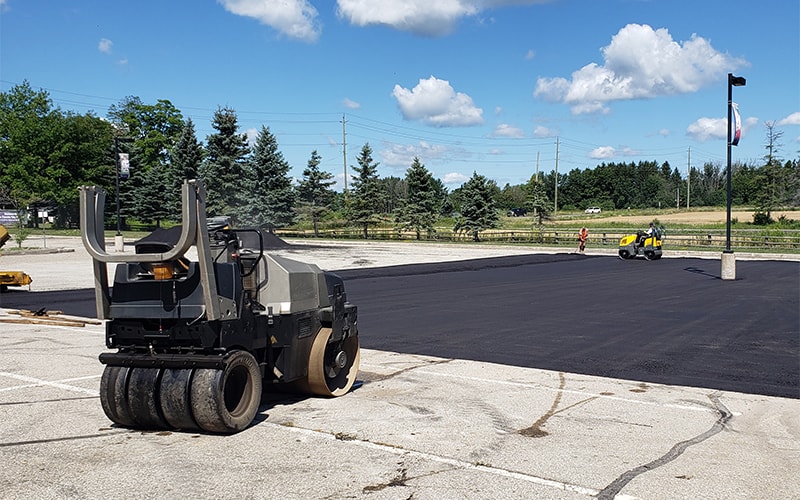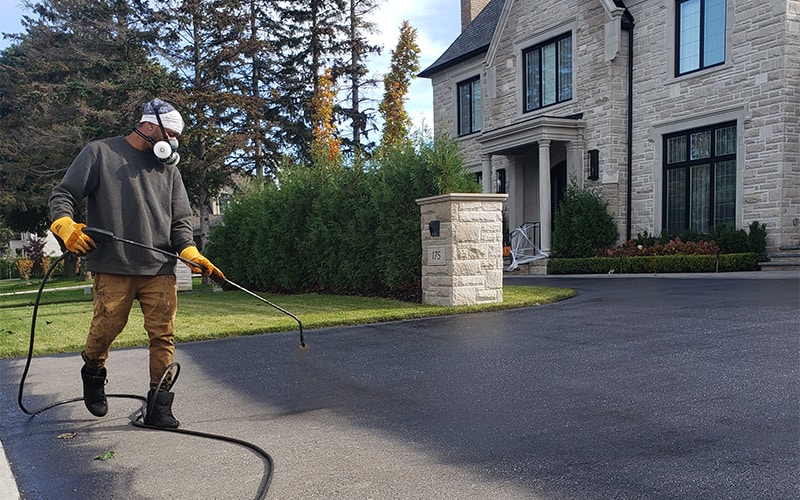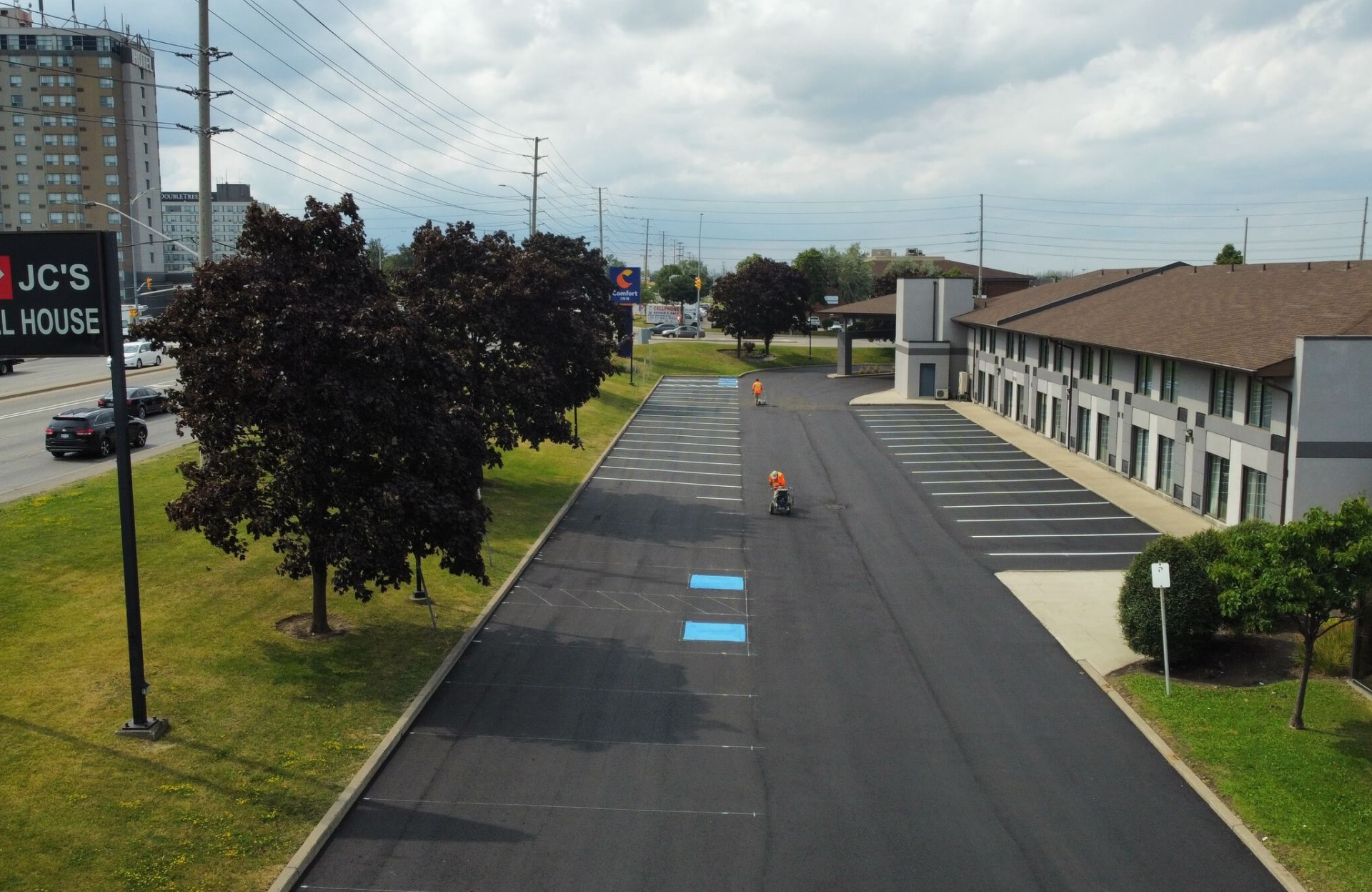
Townhouse and condo shared driveways absorb more daily traffic than a single home’s driveway, which shortens the window between sealcoating applications. Sealcoating for townhouse and condo properties works best as part of a scheduled program rather than a reaction to visible cracking, since consistent shared driveway sealcoating helps property managers avoid the far higher cost of full-depth repaving. Seal Canada works directly with condo corporations and property management companies across the Greater Toronto Area, supporting condo corporation asphalt maintenance and planning sealcoating around resident parking and building schedules.
What Makes Townhouse and Condo Driveways Different From Single Homes?
A shared driveway network at a townhouse complex or condo property carries the combined daily traffic of every unit it serves, not just one household. That concentrated load, repeated turning at tight radii, and consistent parking in the same stalls wear the surface unevenly compared to a single detached driveway. The result is that shared asphalt networks typically need their first sealcoating sooner and benefit from a shorter reapplication interval than a standalone residential driveway of the same age.
When Should Property Managers Schedule Sealcoating for Shared Driveways?
New asphalt at a multi-residential property should cure for a minimum of ninety days before its first sealcoating application, and longer where possible, so the binder has fully set before a sealer is applied over it. After that first application, most Ontario complexes hold up well on a two-to-three-year schedule, with older sections under heavy tree canopy or consistent visitor traffic needing to stay closer to the two-year mark. Building an inspection into each spring walkthrough gives property managers a consistent trigger point instead of reacting only once cracking is visible.
What Happens If a Shared Driveway Goes Unsealed?
Unsealed asphalt loses its protective tar content within the first year through oxidation, leaving the surface grey, brittle, and open to water penetration. At a multi-residential property, that moisture works into the base beneath dozens of parking stalls and drive aisles rather than one driveway, so freeze-thaw cracking and heaving tend to spread faster across the shared network. Left unaddressed, a complex that could have stretched a driveway’s service life past fifteen years can instead face full sections needing replacement within seven to ten.
How Should Sealcoating Be Coordinated Across Multiple Units?
Shared driveways cannot be closed the way a single-family driveway can, since residents still need to come and go. A contractor experienced with condo and townhouse properties should section the lot into zones, work with property management to schedule each zone on a rotating basis, and give residents enough written notice to relocate vehicles. This is a different scope of coordination than a residential job, and it is worth confirming a contractor’s experience with multi-residential parking lot sealcoating specifically, rather than assuming a residential driveway sealer can manage a phased, multi-unit project.
What Should Condo Corporations Look for in a Sealcoating Contractor?
A condo corporation or property management company should confirm the contractor’s product is matched to the traffic and climate the driveway network actually sees, since a sealer suited to light residential use can wear through quickly under repeated turning and parking loads. Reviewing how a contractor approaches choosing the right sealcoating product for high-traffic surfaces is a reasonable first question to ask before a scope is finalized. References from other condo corporations, a written scope with a clear timeline, and a warranty on the finished work are the remaining checks worth making before signing off.
Protecting a Shared Asphalt Investment for the Long Term
A shared driveway is one of the larger physical assets a condo corporation is responsible for maintaining, and the benefits of a planned sealcoating program compound over each cycle rather than showing up as a single line item. Property managers who budget for sealcoating on a set schedule, as part of routine property management asphalt care, rather than waiting for a resident complaint about a pothole, consistently spend less over the life of the asphalt than those who defer maintenance until a full resurfacing is unavoidable.
Frequently Asked Questions
1. How often should a townhouse complex sealcoat its shared driveways?
Most Ontario townhouse and condo complexes hold up well on a two-to-three-year sealcoating cycle after the first application, with sections under heavy shade or consistent traffic needing to stay closer to every two years.
2. Can sealcoating be done while residents are still parking on site?
Yes. Contractors experienced with multi-residential properties section the driveway into zones and work with property management to schedule each zone on a rotating basis, so residents only need to relocate vehicles temporarily from the section being worked on.
3. What is the difference between sealcoating a single driveway and a shared driveway network?
A shared network carries the combined traffic of every unit it serves, wears unevenly at turning points and shared parking stalls, and typically needs a shorter interval between applications than a single detached driveway of the same age.
4. Does sealcoating help with liability for property managers?
A well-maintained driveway surface reduces the tripping and vehicle-damage hazards that come with deep cracking and potholes, which is one of the reasons many condo corporations budget for sealcoating as part of routine property maintenance rather than as an optional expense.
5. How much does sealcoating cost for a multi-residential complex?
Cost depends on the total surface area, the condition of the existing asphalt, and how much crack preparation is needed before the sealer is applied. A site assessment is the most accurate way to get a scope and cost specific to your property.
Ready to Schedule a Sealcoating Assessment for Your Property?
Seal Canada works with property management companies and condo corporations across Toronto, Vaughan, and the surrounding Greater Toronto Area to plan sealcoating projects around residents and building schedules. Request a free site assessment to get a scope and timeline built around your property.
Key Takeaways
- Shared driveways at townhouse and condo complexes wear faster than a single home’s driveway due to combined unit traffic.
- New asphalt should cure at least ninety days before the first sealcoating application.
- A two-to-three-year sealcoating cycle is standard for most Ontario multi-residential properties.
- Sealcoating projects at shared properties need to be phased so residents can still access parking.
- Confirming a contractor’s experience with condo and multi-residential properties matters more than for a single driveway.