Commercial concrete surfaces face constant pressure from Ontario’s freeze-thaw cycles, chemical exposure, and heavy traffic. Without a structured maintenance plan, even well-installed concrete degrades faster than it should. This guide outlines practical strategies property managers can act on now to extend surface life and reduce long-term repair costs.
Protecting Your Commercial Concrete Investment in Ontario
Concrete is the backbone of many commercial properties across Ontario. Loading docks, parking areas, curbs, sidewalks, and warehouse floors all rely on concrete’s strength and durability. But commercial concrete surfaces are not maintenance-free. Exposure to freeze-thaw cycling, de-icing chemicals, vehicle loads, and UV radiation gradually degrades even the highest-quality concrete. The difference between a surface that lasts 20 years and one that requires costly replacement in a decade often comes down to whether a structured maintenance plan is in place.
Property managers, facility directors, and asset managers in the Greater Toronto Area know this challenge firsthand. Seal Canada works with commercial clients to develop maintenance programs that extend surface life, reduce capital expenditure, and keep properties looking professional year-round.
Why Commercial Concrete Surfaces Deteriorate Faster in Ontario
Ontario’s climate is particularly hard on concrete. The province experiences some of the most aggressive freeze-thaw cycling in North America, with surface temperatures shifting dramatically between seasons and sometimes within a single week in spring and fall. Each freeze-thaw cycle forces water trapped in micro-pores to expand, gradually widening voids and weakening the concrete matrix.
Beyond climate, commercial concrete surfaces face chemical exposure from vehicle fluids, de-icing salts, and industrial spills. Salt is among the most damaging agents for concrete, accelerating the corrosion of embedded steel reinforcement and promoting surface scaling. The Portland Cement Association notes that chloride ingress from road salts is one of the leading causes of premature concrete deterioration in cold-climate regions.
Heavy vehicle traffic adds load stress that the surface was not always designed to accommodate over time. Delivery trucks, forklifts, and waste collection vehicles repeatedly stress the same zones, leading to micro-cracking that water then exploits. Understanding these combined forces is the first step in building a maintenance approach that actually holds.
Common Challenges Facing Commercial Concrete Surfaces
Surface Scaling and Spalling
Scaling occurs when the top layer of concrete flakes away, exposing the aggregate beneath. It is almost always linked to freeze-thaw damage combined with de-icing salt exposure. Spalling goes deeper, with sections of concrete breaking away from the surface. Both conditions are signs that water has penetrated and is damaging the internal structure.
Cracking
Cracks in commercial concrete surfaces range from hairline shrinkage cracks, which are largely cosmetic, to structural cracks that signal base movement or load failure. Ontario’s seasonal temperature swings make thermal cracking especially common in large concrete slabs without adequate expansion joints. Addressing cracks early prevents water infiltration that accelerates deterioration. Our concrete repair services cover both surface and structural crack treatment.
Joint Deterioration
Expansion joints allow concrete slabs to move without cracking. When joint sealant degrades or is missing, water, debris, and incompressible material fill the gap, creating pressure that chips slab edges and causes joint spalling. Resealing joints is a low-cost maintenance step that prevents expensive edge repairs.
Drainage and Pooling
Standing water on concrete accelerates surface deterioration and creates liability risk. Poorly graded surfaces channel water toward building foundations or allow it to pool in traffic areas. Concrete’s relatively low permeability means surface water persists longer than on other materials, compounding freeze-thaw risk in those areas.
Maintenance Strategies That Extend Concrete Surface Life
Regular Cleaning
Dirt, oil, and chemical residue are not just cosmetic problems. Oil stains degrade the concrete binder, and salt residue left on surfaces between seasons contributes to ongoing scaling. A scheduled cleaning program using appropriate concrete degreasers removes these agents before they cause lasting damage. The National Research Council Canada recommends annual cleaning as a baseline practice for any high-traffic commercial concrete area.
Sealcoating and Surface Protection
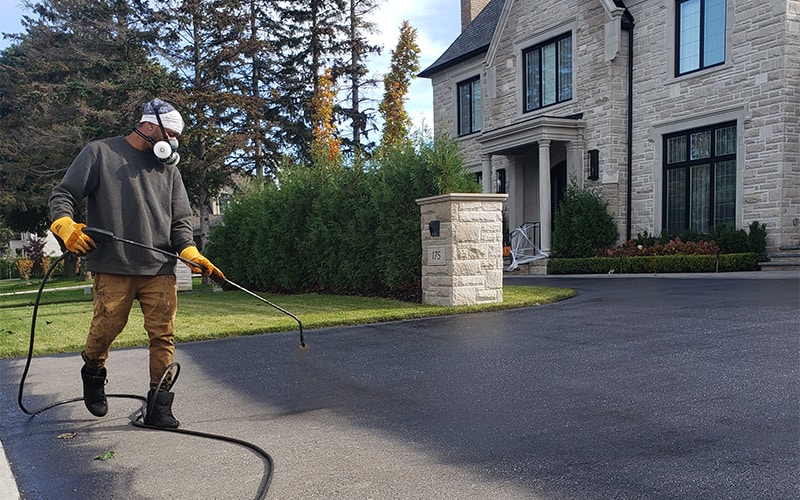
Applying a penetrating or film-forming concrete sealer creates a barrier against water, chloride, and chemical ingress. Penetrating sealers, such as silane or siloxane formulations, are typically preferred for outdoor commercial concrete surfaces because they do not alter surface appearance and allow the concrete to breathe. Sealers should be reapplied every two to three years depending on traffic volume and exposure conditions. Seal Canada’s sealcoating services cover both concrete and asphalt protection across the GTA.
Prompt Crack and Joint Repair
Any crack wider than 3 mm should be addressed before the next freeze season. Routing and sealing is the standard method for active cracks, using flexible polyurethane or epoxy sealants matched to the crack type and traffic condition. Joint sealant replacement is a similarly fast and cost-effective intervention. Seal Canada’s crack sealing process applies to both asphalt and concrete surfaces.
Drainage Improvements
Regrading low spots, installing catch basins, or adding trench drains in problem areas eliminates chronic water pooling. For properties with older concrete, a drainage audit is often one of the highest-return interventions available because it addresses the root cause of multiple surface issues simultaneously.
De-Icing Product Selection
Not all de-icing products are equal in their impact on concrete. Sodium chloride (rock salt) is the most damaging option. Calcium magnesium acetate (CMA) and sand-based traction products are significantly less harmful. For concrete less than one year old, the American Concrete Institute recommends avoiding all chemical de-icers entirely during the first winter, as the concrete is still gaining strength and is more vulnerable to chemical attack.
Annual Inspections
A post-winter inspection in March or April, before spring rainfall begins, gives property managers the clearest picture of freeze-thaw damage sustained over the season. Documenting crack locations, joint conditions, and scaling areas creates a baseline for tracking deterioration over time and planning maintenance budgets accurately.
How Seal Canada Supports Commercial Concrete Maintenance
Seal Canada provides commercial concrete maintenance services for property managers, asset managers, restoration companies, and facility directors across Ontario. Every project starts with a site assessment to document current surface conditions, identify risk areas, and develop a maintenance plan calibrated to the property’s traffic levels, age, and exposure conditions.
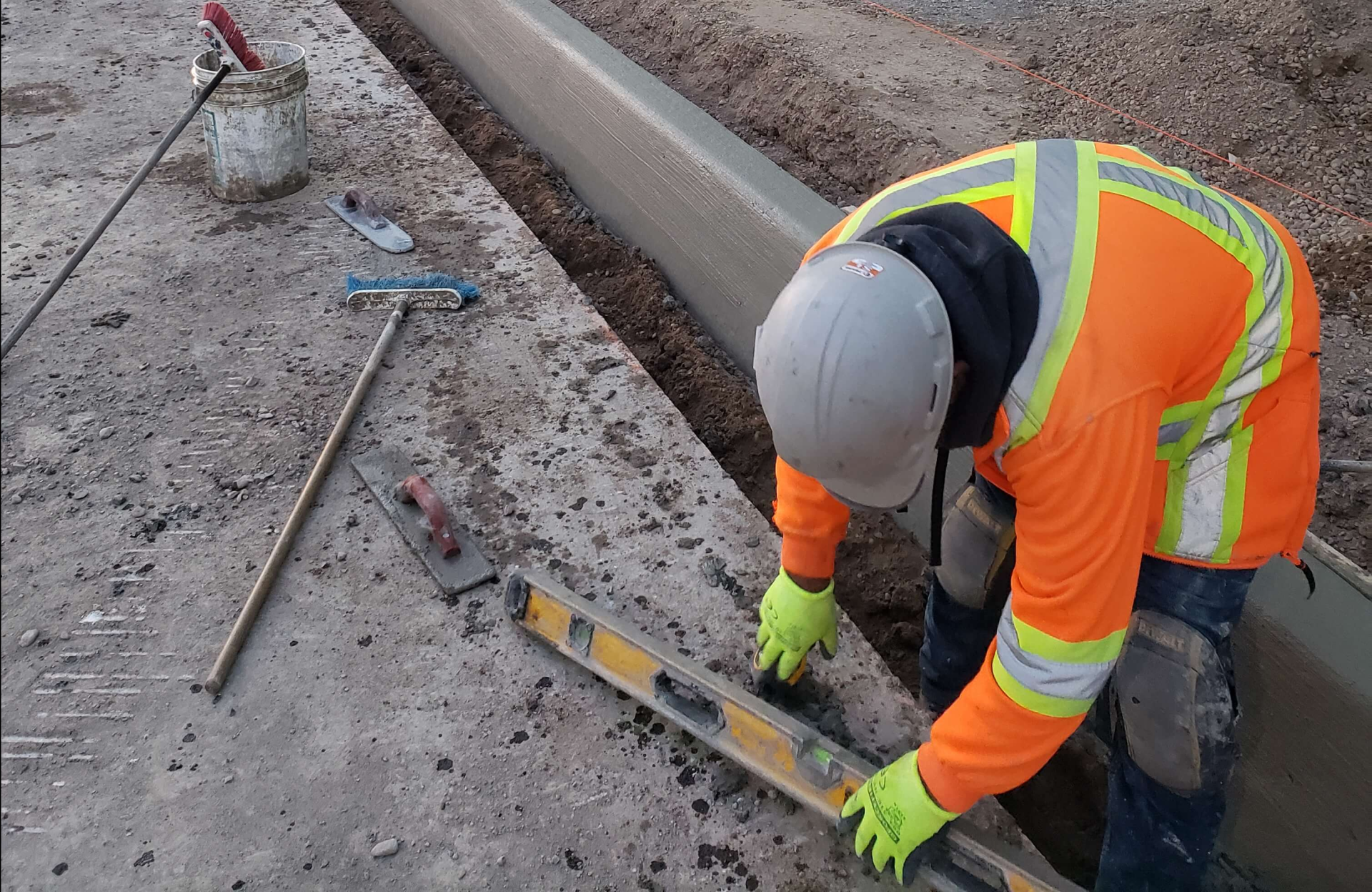
Our services include surface sealing, crack and spalling repair, joint resealing, drainage improvements, and concrete curb and sidewalk restoration. We work on commercial, industrial, and multi-residential properties across the GTA. Whether a property needs its first structured maintenance program or targeted remediation of existing damage, our expert team develops scopes of work that fit the client’s timeline and budget.
A Structured Plan Pays for Itself
Commercial concrete deterioration is not inevitable at a fixed rate. Properties with regular maintenance programs consistently outperform those managed reactively. Scaling that could have been addressed with a $500 sealer application becomes a $15,000 slab replacement if ignored for three winters. The math favors proactive maintenance by a significant margin, and the operational advantage of surfaces that stay in good condition year-round is equally valuable.
If your property’s concrete surfaces have not been assessed recently, now is the right time. Contact Seal Canada to schedule a free site assessment and start building a maintenance plan that protects your investment for the long term.
Frequently Asked Questions
1. How often should commercial concrete surfaces be sealed?
Most commercial concrete surfaces benefit from resealing every two to three years, though surfaces in high-traffic zones or those exposed to chemical spills may need annual treatment. A site assessment is the most reliable way to determine the right interval for a specific property, as exposure conditions and concrete age both affect how quickly sealers degrade.
2. What is the difference between scaling and spalling on concrete?
Scaling refers to the flaking of the top surface layer, usually affecting only a few millimetres of depth. It is most often caused by freeze-thaw damage combined with de-icing salt exposure. Spalling is a more severe condition where deeper sections of concrete break away, often exposing aggregate or reinforcement. Spalling typically requires more extensive patching or overlay treatments.
3. Can concrete cracks be repaired, or does the slab need replacement?
Most cracks in commercial concrete surfaces can be repaired without full slab replacement. Hairline and narrow cracks are typically routed and sealed with flexible sealant. Wider or structural cracks may require epoxy injection or partial slab removal and replacement. The key factor is addressing cracks before water infiltration worsens the underlying damage. Replacement becomes the better option when cracking is so extensive that the structural integrity of the base is compromised.
4. Are de-icing salts harmful to concrete parking areas?
Yes. Sodium chloride (rock salt) is particularly damaging to concrete because it promotes freeze-thaw cycling at lower temperatures and drives chloride ions into the concrete, accelerating corrosion of steel reinforcement. Calcium magnesium acetate (CMA) is a less harmful alternative. Applying a quality concrete sealer each fall significantly reduces chloride ingress during winter months. More guidance on de-icer selection is available from the Portland Cement Association.
5. How do I know if drainage is causing damage to my concrete surfaces?
Common signs include persistent staining along slab edges, recurring scaling in areas where water consistently pools, cracks that worsen faster than typical wear patterns, and visible settling or heaving near drainage channels. A site assessment that includes a drainage review is the most reliable diagnostic approach, as subsurface drainage problems are not always visible from the surface.
6. What is the typical lifespan of commercial concrete surfaces?
Well-installed commercial concrete with a structured maintenance program typically lasts 25 to 40 years before requiring major rehabilitation. Without maintenance, surfaces in Ontario’s climate often show significant deterioration within 10 to 15 years. Sealcoating, crack repair, and joint maintenance are the three interventions with the highest impact on extending that lifespan.
Request a Free Concrete Surface Assessment
If you manage commercial, industrial, or multi-residential properties in Ontario, a free site assessment from Seal Canada gives you a clear picture of your concrete surfaces’ current condition and a prioritized maintenance plan to act on.
Call us at 1-866-672-2022 or 416-827-5072 to schedule your assessment.
Key Takeaways
- Ontario’s freeze-thaw cycles and de-icing salt use are the primary drivers of premature deterioration in commercial concrete surfaces.
- Scaling, spalling, cracking, and joint deterioration are all preventable with a structured maintenance plan.
- Sealing commercial concrete surfaces every two to three years significantly reduces water and chloride ingress.
- Cracks wider than 3 mm should be sealed before the first freeze season each year to prevent water infiltration.
- CMA and sand-based traction products are significantly less damaging to concrete than sodium chloride de-icers.
- A post-winter inspection each spring is the most cost-effective way to track deterioration and plan maintenance budgets accurately.