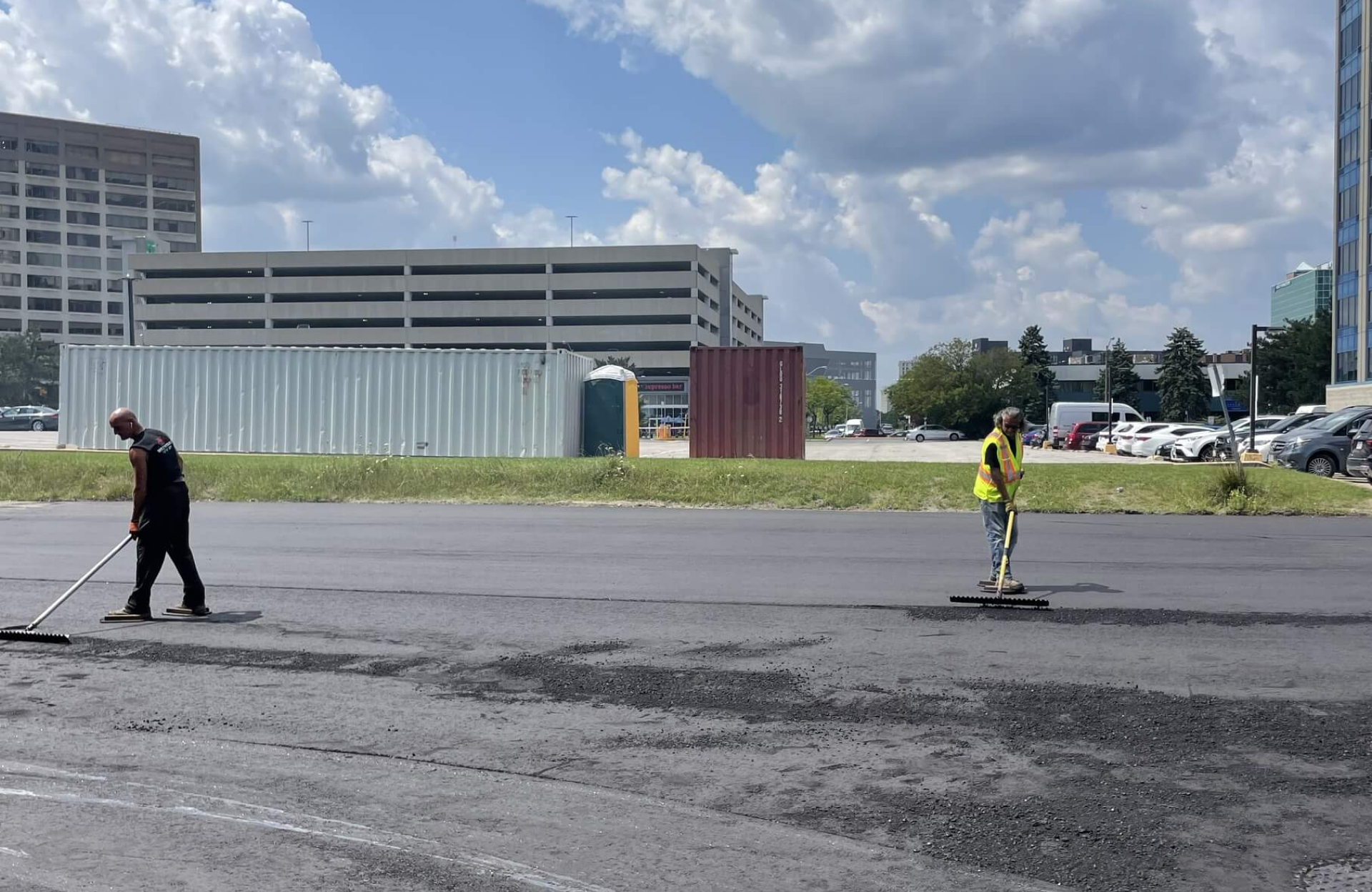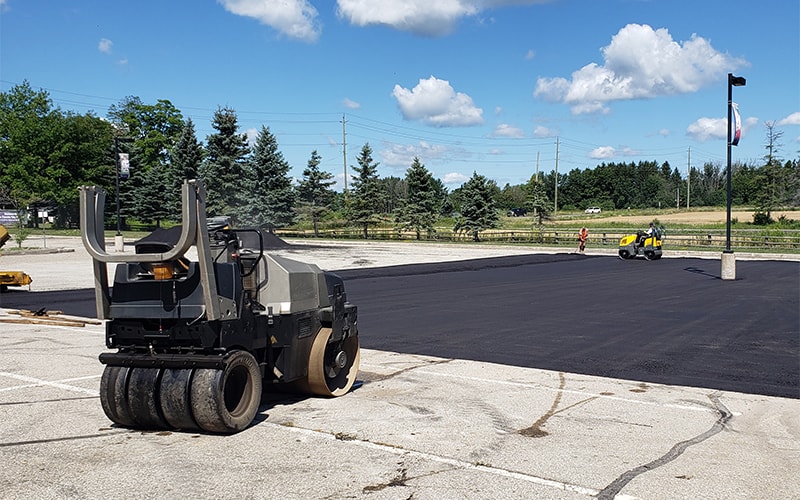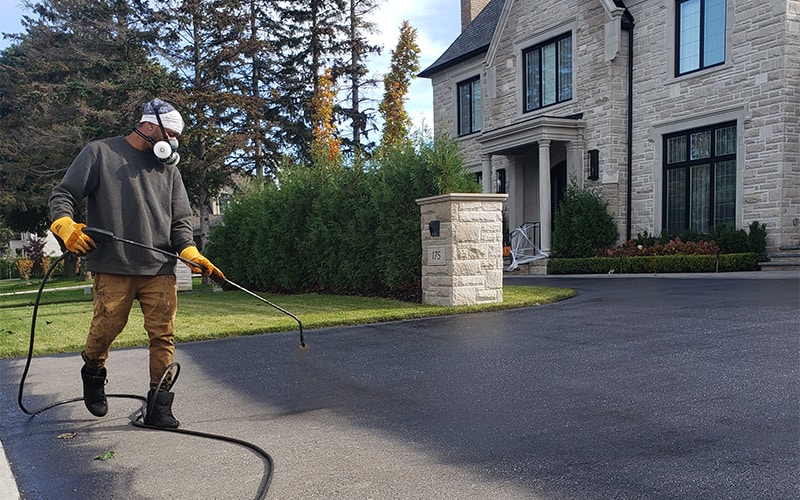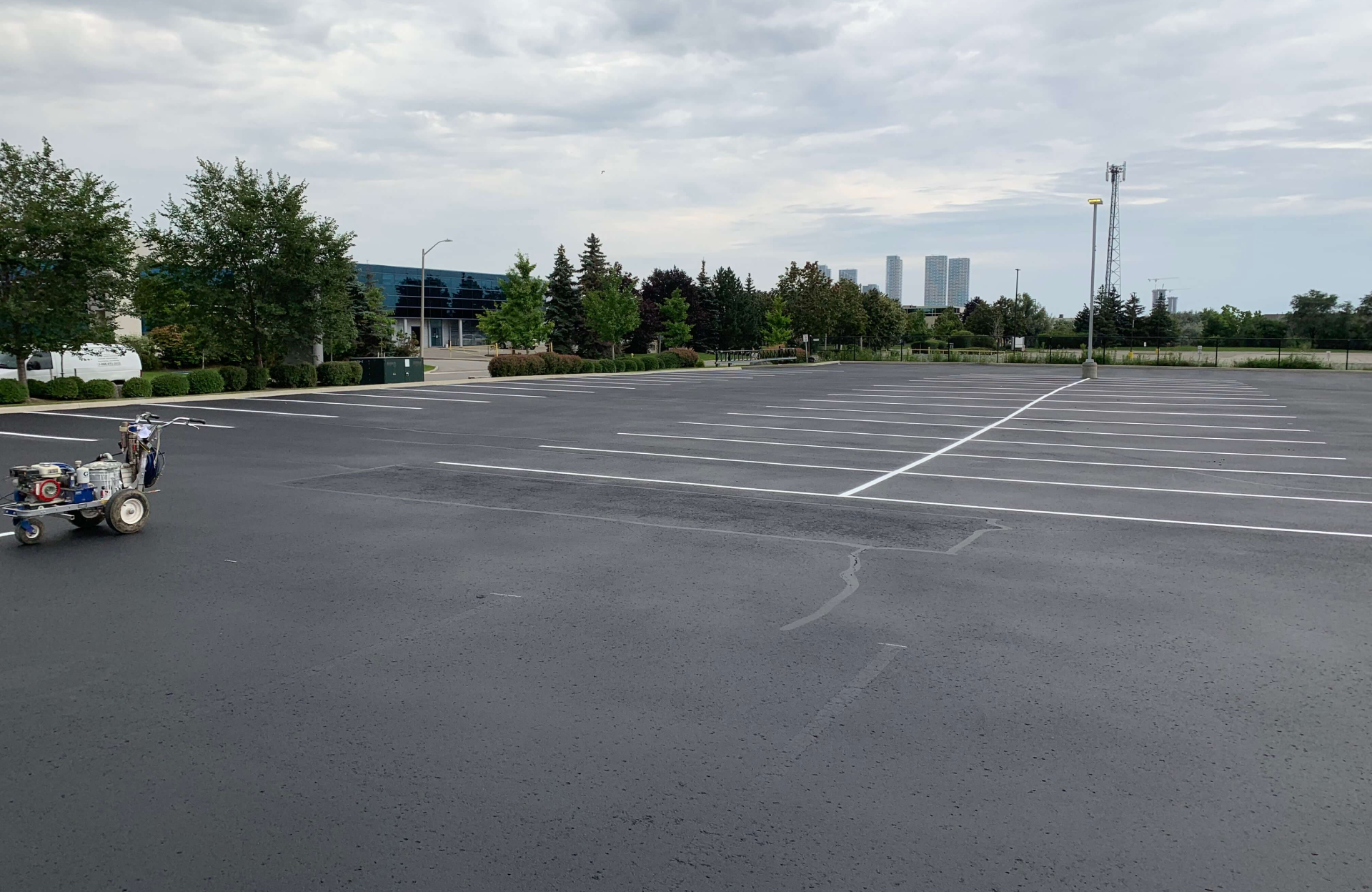
Adding pavement to an existing commercial lot is not the same scope as a fresh installation, even though the paving itself looks similar. Expanding an existing commercial parking lot involves specific details around the seam between old and new asphalt, matching the base underneath, and getting the finished colour to blend. Seal Canada plans expansion projects around these details from the assessment stage, not after paving has already started.
Why Can’t a Lot Addition Just Match the Existing Pavement Depth?
The new section needs a subbase built to the same depth and compaction standard as the original lot, not simply matched to the visible surface thickness. A new section built on a thinner or less compacted base than the original will settle at a different rate, which creates an uneven transition and puts stress directly on the seam between old and new pavement. Confirming the original lot’s base specifications, where records exist, or testing the existing base directly is part of scoping an accurate widening commercial asphalt lot project.
Why Does the Seam Matter More Than the Rest of the Job?
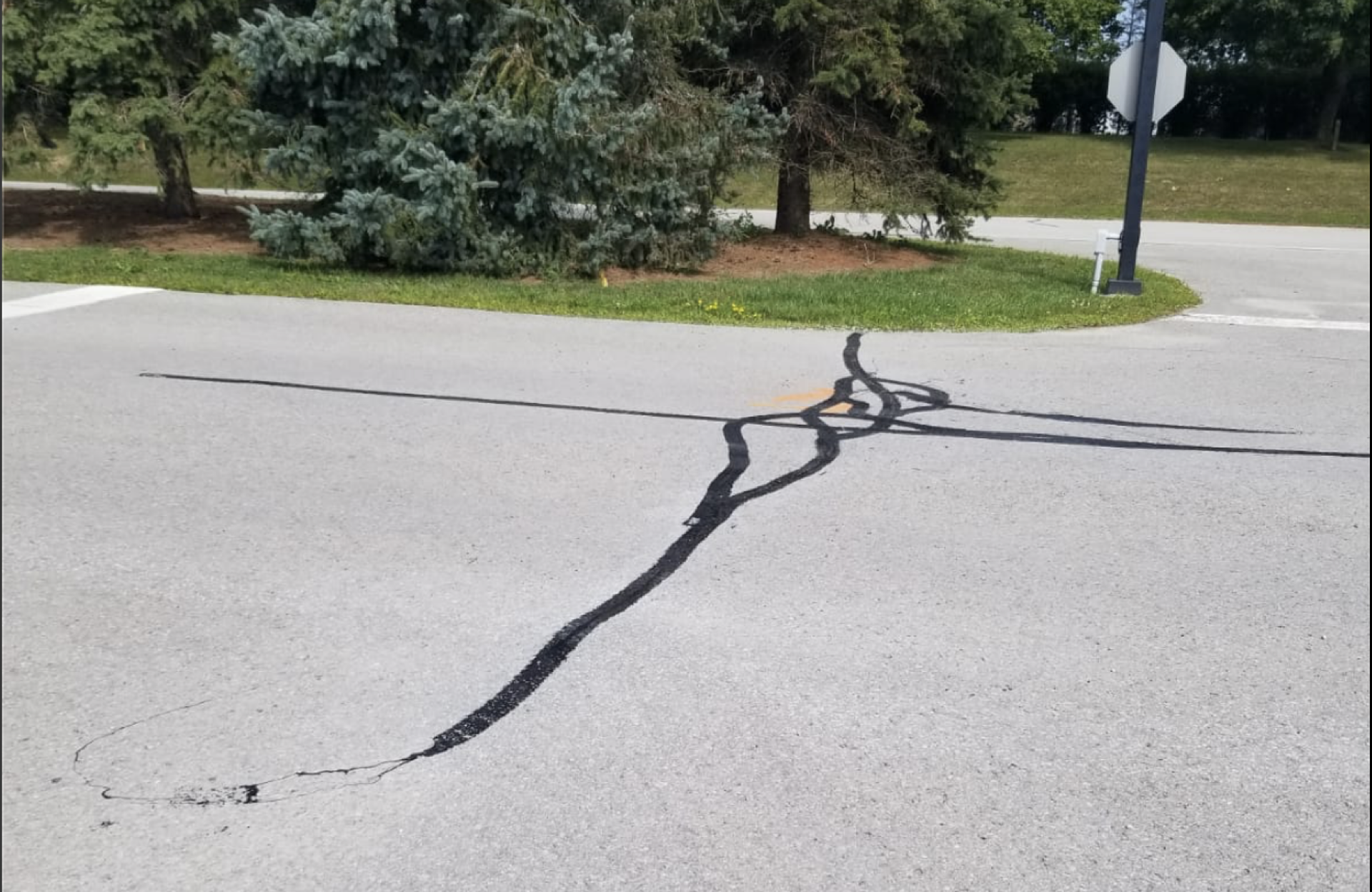
The joint where new asphalt meets the existing surface, the parking lot addition seam, is the single point most likely to crack first, since it is where two sections with different ages and slightly different settling behaviour meet. A properly cut, clean edge on the existing pavement, combined with a tack coat at the joint, gives the new asphalt a bonded transition rather than two sections simply sitting next to each other. Skipping this step is the most common reason a lot addition develops a visible crack line at the seam within the first year or two.
Will the New Pavement Match the Existing Lot’s Colour?
Freshly paved asphalt is noticeably darker than an older, sun-oxidized surface, and that difference is visible immediately after the addition is completed. Property managers who want a uniform look across the full lot typically plan a full-lot sealcoating pass after the new section has cured, which handles matching asphalt on lot expansion by bringing both the new and existing pavement to a matching finish rather than leaving a visible line between old and new asphalt.
Do Permits Apply to Expanding a Commercial Lot?
Expanding a lot’s footprint, adding new curb cuts, or changing how the property connects to a municipal road often falls under commercial paving permit requirements, depending on the property’s zoning and location. This is separate from the paving work itself and needs to be confirmed with the municipality before construction starts, since a completed expansion that does not meet approved site plan requirements can create costly rework.
How Does Drainage Change When a Lot Gets Bigger?
Adding paved surface area increases the volume of stormwater runoff the site’s drainage system needs to handle, which can expose an existing drainage design that was sized for a smaller lot. Reviewing how a property’s drainage system handles runoff before finalizing an expansion plan avoids adding pavement that the current catch basins and grading cannot adequately manage.
Frequently Asked Questions
Does a parking lot addition need the same base as the original pavement?
Yes. The new section’s subbase should match the depth and compaction of the existing lot, since a mismatched base causes uneven settling and stress at the seam.
Why do lot additions commonly crack at the seam?
The seam is where two sections with different ages and settling behaviour meet. Without a properly cut edge and tack coat, this joint is the first place cracking typically appears.
Will new asphalt look different from the existing lot?
Yes, new asphalt is noticeably darker than older, oxidized pavement. A full-lot sealcoating pass after the new section cures typically evens out the appearance.
Are permits required to expand a commercial parking lot?
Often, depending on zoning and whether the expansion adds curb cuts or changes site drainage. This should be confirmed with the municipality before construction begins.
Does expanding a lot affect its drainage requirements?
Yes. More paved surface area increases stormwater runoff, which can expose a drainage system that was originally sized for a smaller lot.
Planning a Lot Expansion That Holds Up Long Term
An expansion project that matches the base, treats the seam properly, and accounts for drainage capacity performs as one unified lot rather than two sections that happen to be next to each other. Request a free site assessment to scope an expansion specific to your property’s existing pavement and drainage conditions.
Key Takeaways
- A lot addition needs a subbase matched to the existing pavement’s depth and compaction, not just its visible thickness.
- The seam between old and new asphalt is the most likely point of early cracking without proper edge preparation and a tack coat.
- New asphalt will look darker than existing pavement until a full-lot sealcoating pass evens out the finish.
- Municipal permits often apply to lot expansions, particularly where curb cuts or site drainage are affected.
- Added pavement area increases runoff, which should be checked against existing drainage capacity before expansion.