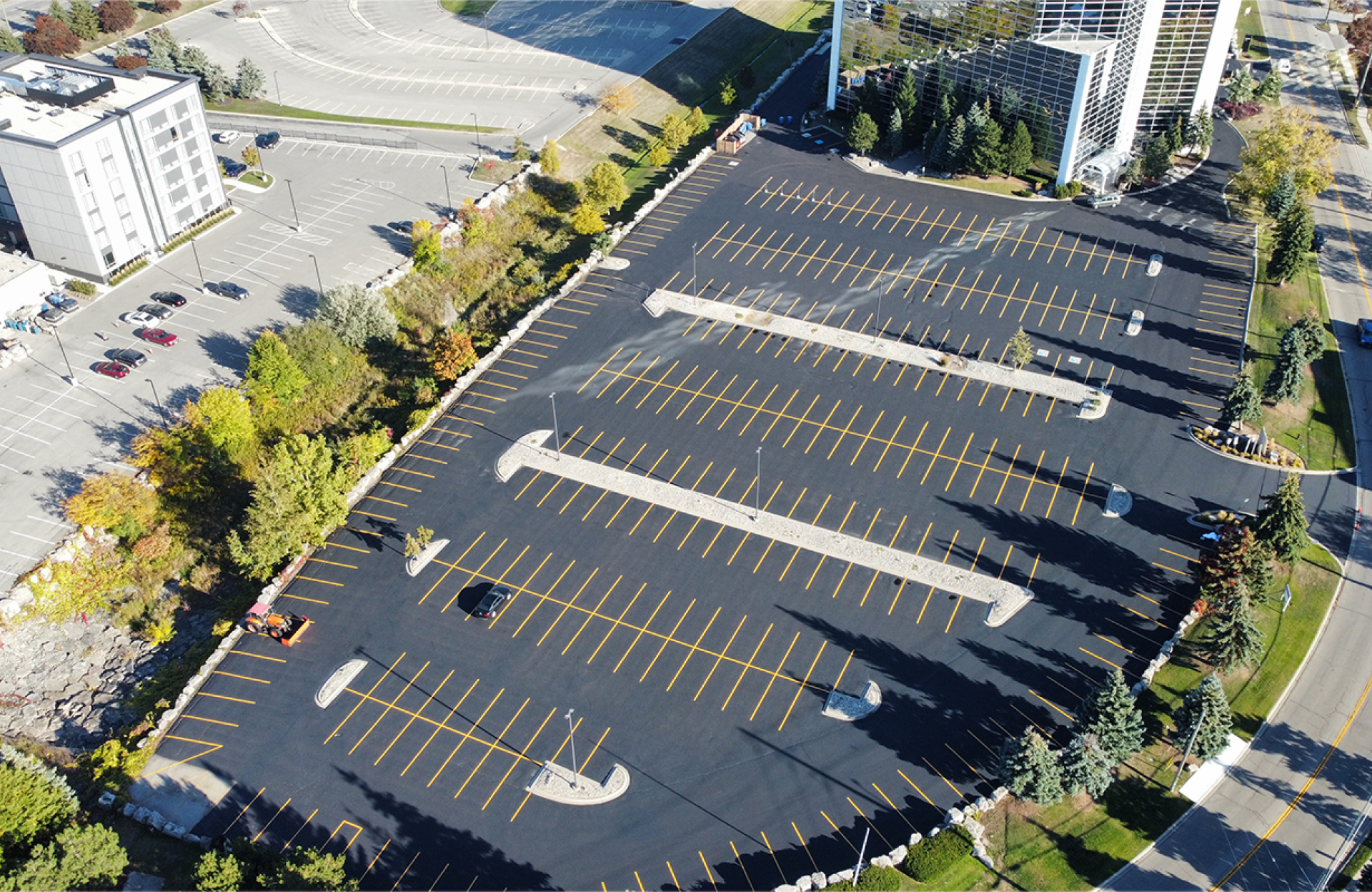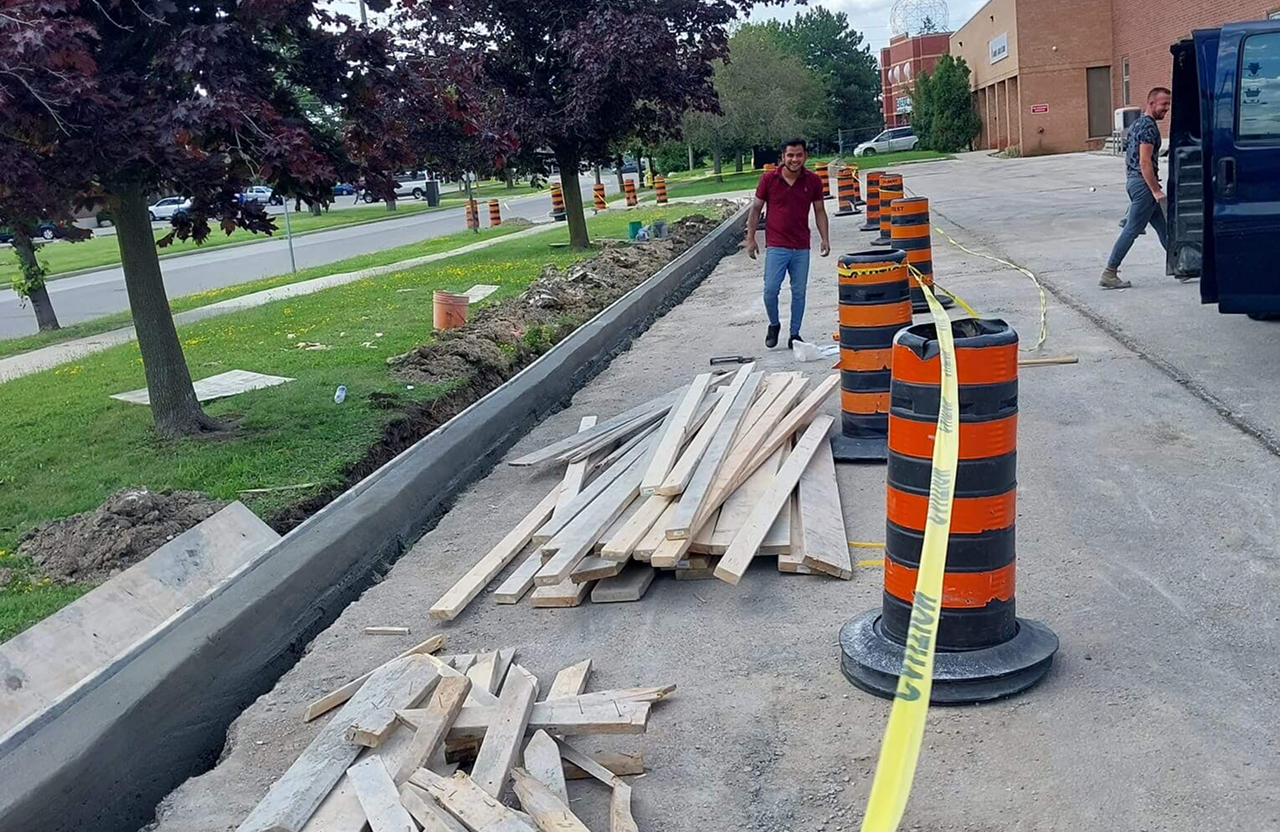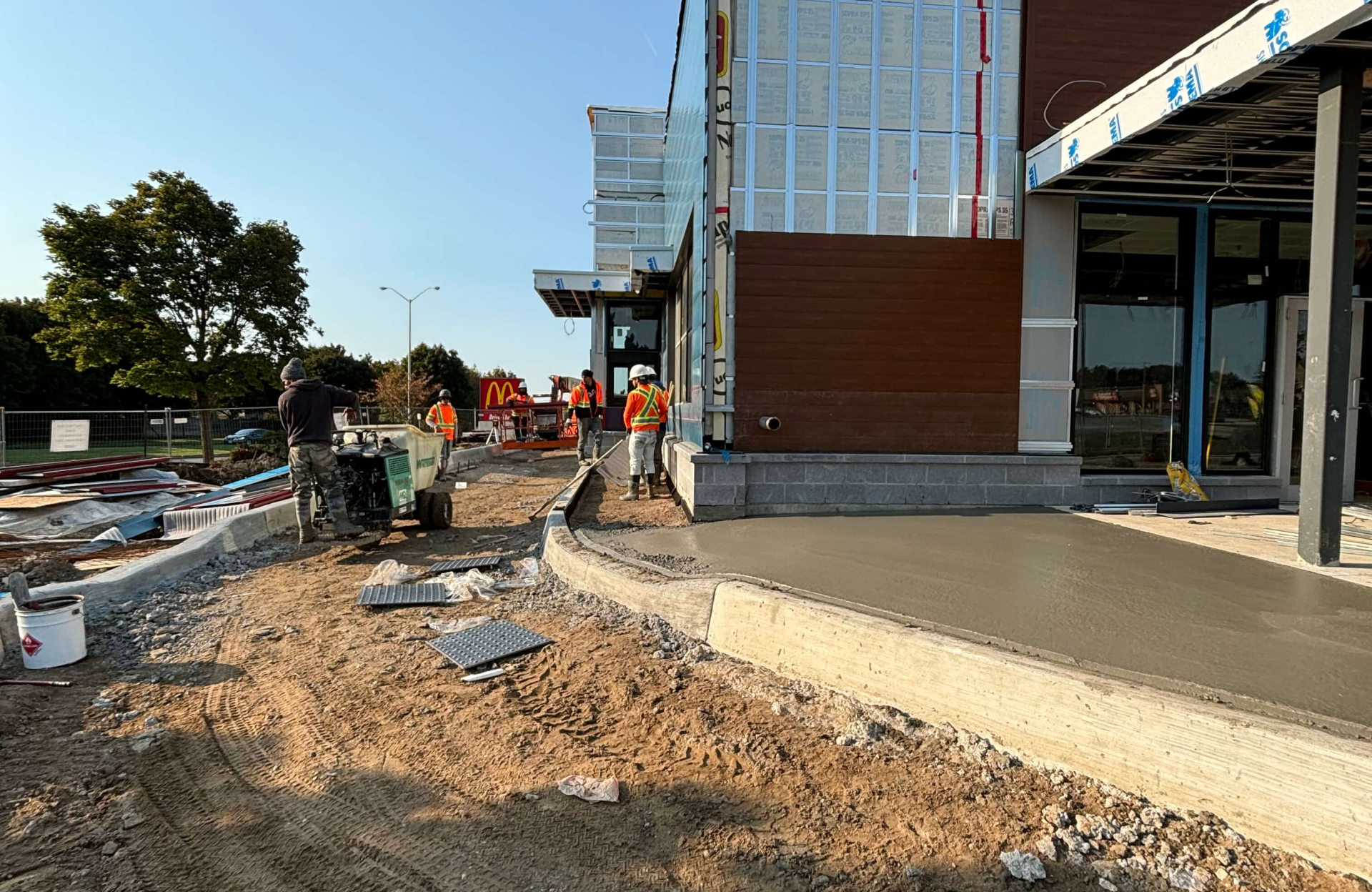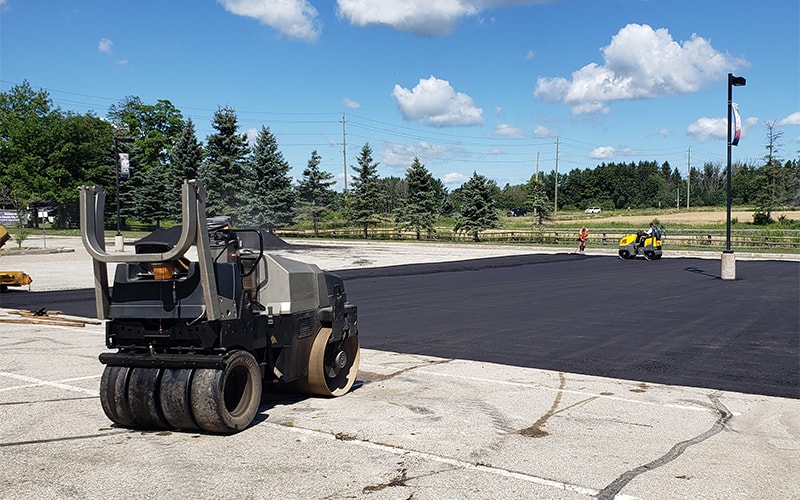
Servicing a commercial site includes the underground work that connects a property to municipal infrastructure: storm sewers and catch basins, sanitary sewers, and domestic and fire water lines, plus the excavation, bedding, backfill, testing and connections that go with them. On commercial developments, site servicing Brampton projects require is designed by engineers, approved by the municipality and built before grading, curbs and commercial paving Brampton sites finish with. Good sequencing avoids cutting new pavement later.
Site Servicing Brampton: What Does It Include?
What is included in site servicing? Everything underground that a building and its lot need to work: storm sewers that carry rainwater off the property, sanitary sewers that carry wastewater from the building, and water lines for domestic use and fire protection. The scope also covers manholes, catch basins, valves and hydrants, along with trenching, pipe bedding, backfill, testing and the final connections to municipal mains.
For developers and asset managers, site servicing Brampton projects need is often the least visible and most schedule-critical part of a build. It happens first, it sits under everything else, and mistakes are expensive to dig up once curbs and commercial paving Brampton work are in place.
Seal Canada, a commercial paving and concrete contractor based in Vaughan, delivers underground servicing, grading, concrete and commercial paving Brampton industrial and commercial developments rely on.
What Are Storm, Sanitary and Water Services?
The three systems are designed separately and must stay separate in the ground. The table summarizes what each covers on a typical commercial lot.
| System | What it includes | Key design points |
| Storm | Catch basins, manholes, pipes, stormwater storage, oil-grit separators | Lot grading, flow control and water quality targets |
| Sanitary | Building lateral, manholes, connection to the municipal sewer | Slope, depth, cleanouts, inspection access |
| Water | Domestic and fire service lines, valves, hydrants, meter connection | Pressure, fire flow, frost cover, backflow protection |
On site servicing Brampton jobs, each system has its own drawings, materials and tests. Storm design also ties closely to the grading plan and to the final pavement surface, which is why servicing and commercial paving Brampton work should be planned together.
How Does Site Servicing Brampton Sequence With Paving?
A typical sequence on a new commercial site looks like this:
1. Survey, layout and utility locates.
2. Install the deepest pipes first, usually sanitary, then storm, then water.
3. Build manholes, catch basins and stormwater structures to rough grade.
4. Rough grade the lot and place granular base for parking and drive aisles.
5. Form and pour concrete curbs so they define the paving edges.
6. Place the base course of asphalt to carry construction traffic.
7. Adjust catch basin and manhole frames, then place the surface course near the end of construction.
8. Finish sidewalks, line painting and landscaping.
Paving in two stages is common on commercial builds. The base course protects the granular from construction traffic, and the surface course goes down once heavy trades are done, giving commercial paving Brampton developments a clean final surface without cuts and patches. Our underground servicing and drainage team plans this sequence from the first trench to the final lift.
What Municipal Approvals Are Usually Needed?
Commercial servicing is typically designed by a civil engineer as part of site plan approval. Drawings normally include a servicing plan, a grading plan and a stormwater management report. Work in the municipal road allowance, such as connections to mains under the street, generally needs separate permits and inspections.
In Brampton, storm sewers have been managed by the City of Brampton, while water and wastewater have historically been handled by the Region of Peel. Responsibilities in Peel have been under review, so confirm the current approval and connection process with the City of Brampton and Peel Region before site servicing Brampton work is scheduled. Approvals may also involve securities, inspections during construction and as-built drawings at the end.
What Testing Happens Before Paving?
New underground services are usually tested before they are buried under asphalt. Common tests include camera inspection of sewers, pressure and leakage tests on water lines, disinfection and sampling of water services, and checks that structures and frames are set to the right grades. The engineer and municipality specify what is required.
Passing those tests before commercial paving Brampton crews place the base course is far cheaper than finding a problem after the lot is finished. A site servicing Brampton contractor should build testing into the schedule, not leave it to the last week.
What Drives the Cost of Site Servicing Brampton Projects?
Every site is different, so pricing depends on the design and ground conditions. The main cost drivers are:
• Pipe lengths, sizes and depths for each system.
• Soil conditions, groundwater, rock and dewatering needs.
• Stormwater storage or treatment structures required by the design.
• Connections in the road allowance, including traffic control and road restoration.
• Testing, inspection and engineering coordination.
• Phasing to keep an existing building or neighbouring tenants operating.
Ask for site servicing Brampton quotes broken down by system and by item so you can compare bids line by line and track changes during construction.
What Mistakes Delay Commercial Servicing Projects?
Most delays on site servicing Brampton projects trace back to a few avoidable issues. Utility locates and existing service records are not checked early, so crews hit unknown pipes. Groundwater is underestimated and dewatering is added mid-job. Testing is left until the end, so one failed test holds up the base course. Frames are set to final grade too early and get damaged by construction traffic.
Another common problem is treating paving as an afterthought. When commercial paving Brampton crews arrive to find soft granular, settled trenches or structures at the wrong height, they either pave over problems or wait for repairs. Bringing the paving team into site servicing Brampton planning from the start avoids both and keeps commercial paving Brampton schedules realistic.
Why Use One Contractor for Servicing and Paving?
When different contractors handle underground work, curbs and commercial paving Brampton sites need, the handoffs create gaps: frames set at the wrong height, base disturbed by late trenching, or nobody responsible for settlement around a structure. One contractor for servicing, grading, concrete and paving means one schedule and one point of accountability.
Our commercial pavement services for property managers continue after construction, with maintenance, crack sealing and line painting to protect the investment.
Plan Site Servicing Brampton Developments Around One Schedule
Underground work sets the pace for everything above it. Planning site servicing Brampton developments need alongside grading, curbs and paving avoids rework, protects the budget and gets the site open on time.
Seal Canada handles site servicing Brampton developers and asset managers can rely on, together with the concrete and commercial paving Brampton projects finish with, backed by detailed reports, flexible scheduling and a strong workmanship warranty. Contact Seal Canada to book a free site assessment and review your servicing drawings with our team.
Frequently Asked Questions About Site Servicing
1. What is included in site servicing?
Storm sewers and catch basins, sanitary sewers, and domestic and fire water lines, plus excavation, bedding, backfill, testing and connections to municipal mains.
2. Who designs site servicing for a commercial build?
A civil engineer designs it as part of site plan approval. A site servicing Brampton contractor then builds and tests it to those drawings.
3. Does servicing happen before paving?
Yes. Site servicing Brampton crews install underground work first, followed by grading, curbs, base asphalt and, near the end, the surface course.
4. Who approves connections to municipal mains in Brampton?
Confirm with the City of Brampton and Peel Region, since water, wastewater and storm responsibilities have been under review.
5. Why pave in two stages?
The base course carries construction traffic, and the surface course goes on once heavy work is done, so commercial paving Brampton sites finish with a clean surface.
Key Takeaways
• Servicing covers storm, sanitary and water systems and their connections to municipal mains.
• Site servicing Brampton work comes first and must be tested before paving.
• Sequence deep pipes, structures, grading and curbs before commercial paving Brampton base and surface courses.
• Confirm approvals with the City of Brampton and Peel Region before scheduling.
• One contractor for servicing, concrete and commercial paving Brampton sites need reduces handoff risk.