Commercial paving is one of the construction industry’s largest consumers of raw materials. Circular economy principles offer a practical, performance-compatible framework for reducing waste, extending material life, and lowering the environmental footprint of paving projects. Seal Canada builds sustainability into how we source materials, design for longevity, and structure maintenance programs for commercial clients across Ontario.
What the Circular Economy Means for Commercial Paving
The circular economy replaces the traditional linear model of extract, produce, use, and discard with a closed-loop system that keeps materials in productive use as long as possible. For commercial paving, this translates into three practical priorities:
• Designing pavements for maximum lifespan through quality materials and proper construction
• Using recycled and reclaimed materials to reduce demand for virgin aggregates and bitumen
• Implementing structured maintenance programs that extend service life and defer costly reconstruction
These are not aspirational goals. Each is achievable with current materials, technology, and professional execution in Ontario commercial paving projects.
Seal Canada’s commercial paving services are built around these circular economy priorities from project design through long-term maintenance.
Recycled Materials in Commercial Paving
Reclaimed Asphalt Pavement (RAP)
RAP is milled asphalt recovered from existing roads and parking lots during resurfacing or reconstruction. When processed correctly, it retains bitumen binder properties that contribute to the performance of new asphalt mixes. Incorporating RAP reduces raw material costs and diverts construction waste from landfill without compromising pavement performance.
RAP use is standard practice in quality commercial paving in Ontario. Properties being resurfaced can also generate their own RAP, which can be reincorporated into the new surface, closing the material loop on-site.
Learn more about Seal Canada’s asphalt resurfacing process and how reclaimed materials are managed on commercial projects.
Recycled Concrete Aggregate (RCA)
Crushed concrete from demolished structures and old pavement slabs can be used as subbase aggregate in new pavement construction. RCA reduces the volume of virgin crushed stone required and provides a productive use for construction demolition material that would otherwise be hauled to landfill.
Seal Canada’s concrete services include commercial concrete work and consultation on subbase materials appropriate for your site conditions and sustainability objectives.
Rubber from Recycled Tires
Crumb rubber from end-of-life tires is used in rubberized asphalt binders, improving flexibility, noise absorption, and resistance to temperature-related cracking. Rubberized asphalt is particularly valuable in Ontario’s variable climate, where freeze-thaw cycles create significant stress on conventional bitumen binders.
Tire-derived rubber in pavement applications also diverts a high-volume waste material from landfill or incineration. Ontario generates millions of waste tires annually, and pavement is one of the highest-volume productive end markets for this material.
Designing for Longevity
The most cost-effective circular economy practice in commercial paving is building surfaces that require less frequent intervention. This starts with proper subbase preparation, including compaction, drainage management, and appropriate base course depth, followed by correctly specified asphalt or concrete layers for the anticipated traffic loading.
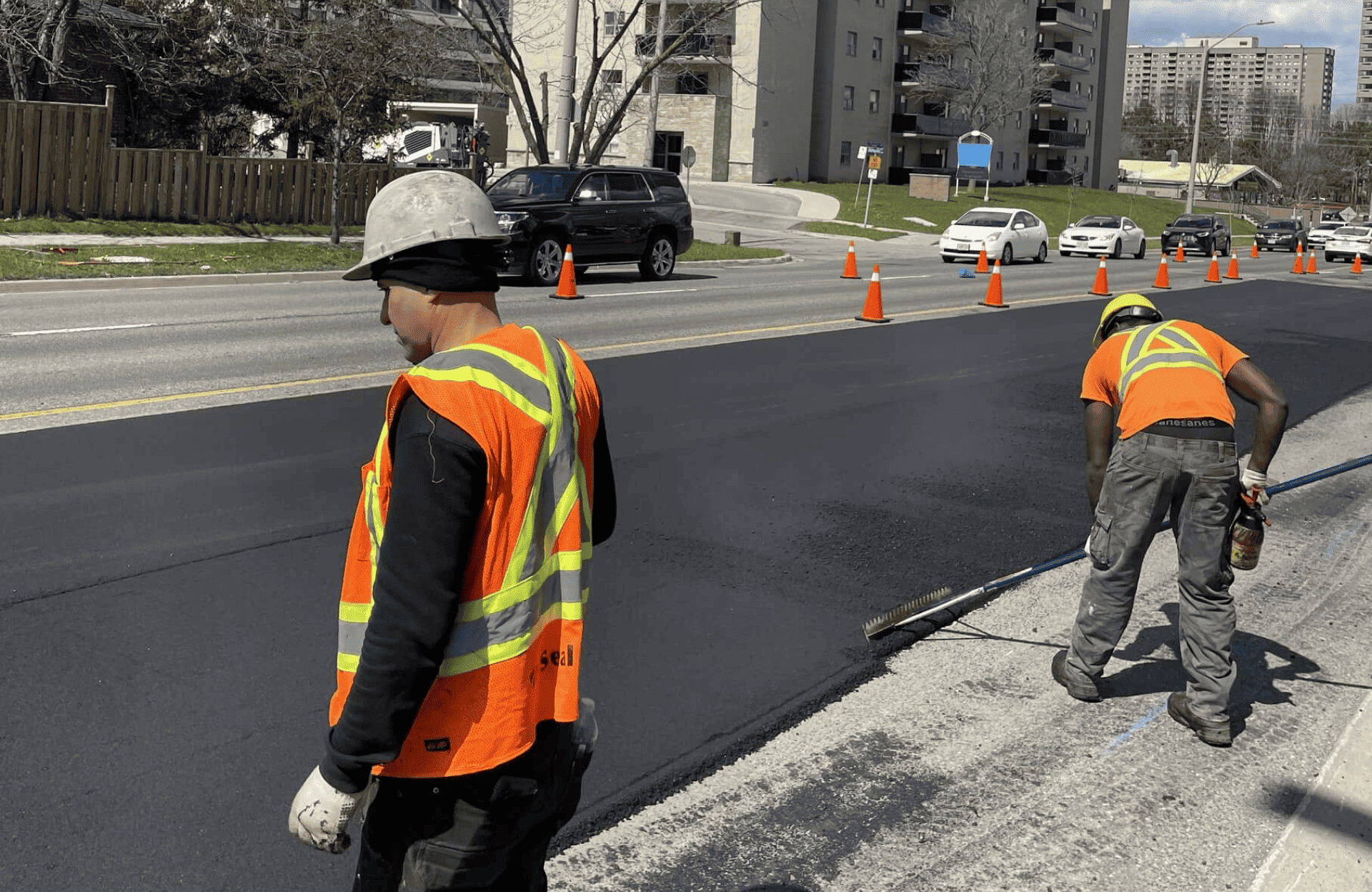
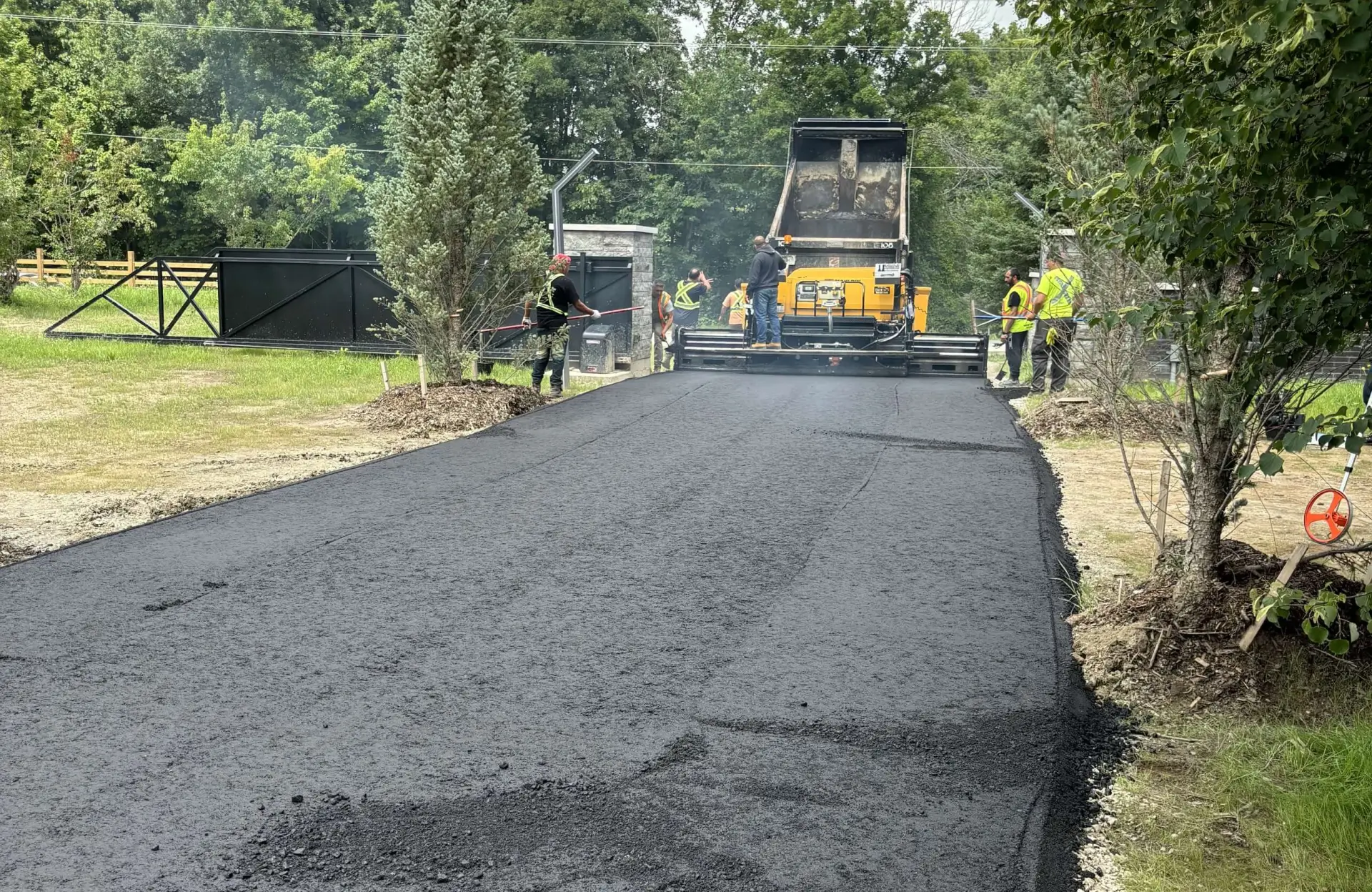
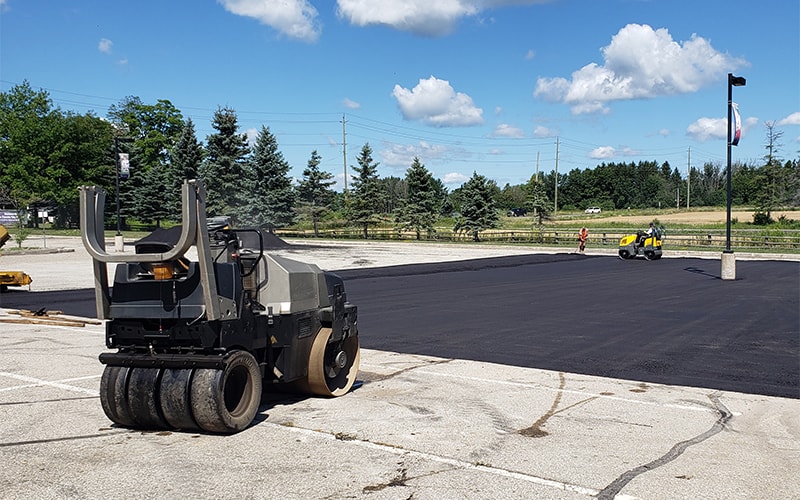
When pavement does reach the end of its functional life, asphalt resurfacing is a significantly less resource-intensive alternative to full reconstruction. It preserves the existing subbase investment, minimizes construction waste, and produces a like-new surface for a fraction of the material and cost of full replacement.
Seal Canada’s asphalt resurfacing services deliver this lifecycle extension for commercial properties across the Greater Toronto Area and throughout Ontario.
Structured Maintenance as a Circular Practice
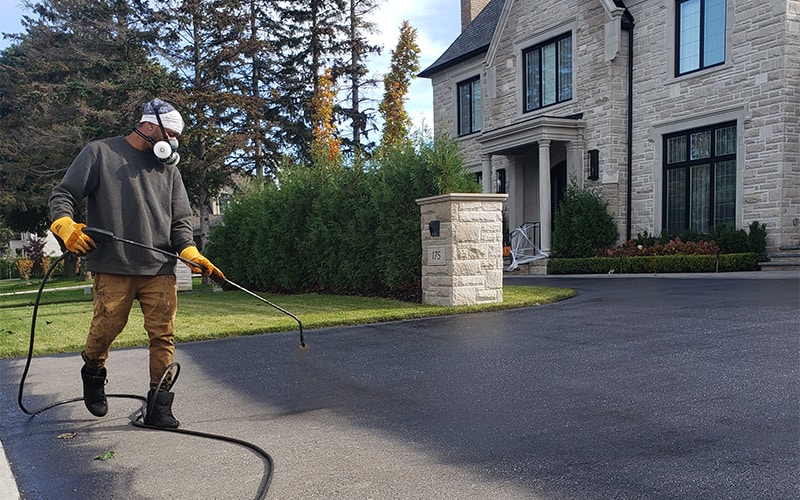
A planned maintenance program is among the most impactful circular economy actions available to commercial property owners. Crack sealing, sealcoating, and targeted patching at defined intervals prevent minor surface deterioration from cascading into structural failure. Each maintenance intervention defers the resource demand of a full pavement replacement.
The economics are straightforward. A sealcoating application costs a fraction of resurfacing. A crack sealing program costs a fraction of pothole repair. A well-maintained surface that lasts 25 years consumes far fewer raw materials than a neglected surface that requires reconstruction after 12.
Learn how regular sealcoating extends commercial pavement life: Seal Canada’s sealcoating service page.
Understand the economics of early crack protection: asphalt crack sealing explained.
Circular Economy Paving and Regulatory Alignment
Ontario’s construction sector is operating under increasing regulatory and client-driven pressure to demonstrate environmental performance. Properties seeking LEED certification, development approvals in environmentally sensitive areas, or compliance with corporate ESG reporting benefit from paving programs that document material origins, recycled content, and waste diversion.
Seal Canada can provide material documentation and maintenance records that support sustainability reporting and certification applications.
For further reference on circular economy standards relevant to construction, the
Ellen MacArthur Foundation Ellen MacArthur Foundation provides widely referenced circular economy frameworks applicable to construction materials.
The Canada Green Building Council’s Canada Green Building Council’s LEED certification standards specify how recycled material content in pavement contributes to green building credits.
Environment and Climate Change CanadaEnvironment and Climate Change Canada tracks waste diversion performance and circular economy policy development relevant to the construction sector.
Frequently Asked Questions
- What are circular economy principles in commercial paving?
Circular economy principles in commercial paving refer to an approach that prioritizes keeping materials in productive use through recycling, reuse, and durability-focused design, rather than following a linear extract-use-dispose model. In practice, this means using RAP and recycled concrete aggregate, building for longevity, and maintaining surfaces to defer reconstruction.
- What recycled materials are used in commercial paving?
The most common options include reclaimed asphalt pavement (RAP), recycled concrete aggregate (RCA), and crumb rubber from recycled tires. Seal Canada incorporates these materials in applicable projects to reduce raw material demand and divert waste from landfill without compromising pavement performance.
- How do circular paving practices save money?
Recycled materials lower procurement costs relative to virgin aggregates and bitumen. Longevity-focused design reduces the frequency of major resurfacing. Structured maintenance defers full reconstruction. Together these factors reduce total lifecycle expenditure significantly compared to a conventional approach.
- How does Seal Canada support circular economy goals in commercial paving?
Seal Canada incorporates recycled materials in applicable projects, designs for pavement longevity, and delivers maintenance programs that extend surface life. We can also provide material documentation and maintenance records that support LEED certification and corporate sustainability reporting. Contact our team to discuss your specific objectives.
- What is the most impactful circular practice for a commercial parking lot?
Implementing a structured maintenance program combining crack sealing, sealcoating, and condition-based repairs is the highest-impact circular economy practice available to most commercial property owners. It consistently extends pavement life, reduces total material consumption over time, and produces a significantly lower lifecycle cost than deferred maintenance followed by full reconstruction.
Ready to Move Forward?
Seal Canada works with commercial property owners and facility managers across Ontario to deliver pavement built for long-term performance. Whether you are planning a new project or reviewing your current maintenance program, our team provides honest assessments and clear recommendations.
Contact our team at sealcanada.com/contact/ or call us directly:
Toronto: +1 (416) 827-5072 | Toll-Free: +1 (866) 672-2022
Key Takeaways
• Circular economy principles in commercial paving translate directly into lower lifecycle costs, reduced waste, and stronger sustainability credentials for commercial properties
• RAP, RCA, and recycled tire rubber are commercially available, performance-tested materials that reduce demand for virgin resources without compromising pavement quality
• Designing for longevity through proper subbase preparation and material specification is the most impactful single circular decision in a paving project
• Structured maintenance programs are the most cost-effective ongoing circular practice, consistently deferring reconstruction and reducing material consumption
• Seal Canada delivers circular-aligned commercial paving and maintenance across Ontario, with documentation to support LEED and ESG reporting requirements